Reverse osmosis is neither a scam nor the right answer for every home. It is a well-established membrane process that can reduce many dissolved contaminants, microorganisms, salts, and minerals. Its disadvantages are practical: reject water, pressure, maintenance, slower production, space, and the possibility of using an intensive process when a simpler filter would be enough.
The useful question is not “Is RO good or bad?” It is whether the feed water contains a problem that RO is verified to address, and whether the household accepts the operating tradeoffs.
How Reverse Osmosis Works
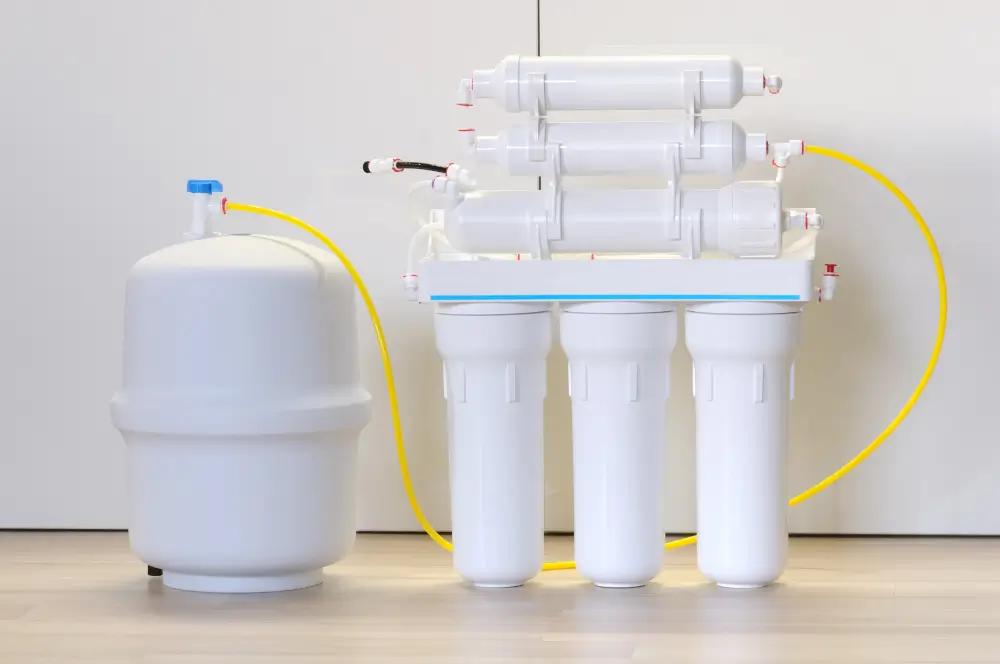
Pressure pushes water through a semi-permeable membrane. Treated water passes to a faucet or storage tank, while a reject stream carries away concentrated dissolved material. Most home systems also use sediment and carbon prefilters, and some include post-carbon or remineralization.
The CDC notes that RO can remove parasites, bacteria, viruses, and selected chemicals, including lead, copper, chromium, chloride, and sodium. Users must check the exact model label because no membrane system should be assumed to remove every contaminant under every condition.
Reverse Osmosis Benefits
- Strong reduction of many dissolved salts and minerals
- Potential reduction of specific metals and chemicals when documented
- Point-of-use treatment focused on drinking and cooking water
- Useful protection for applications needing lower dissolved mineral content
- Measurable membrane performance through pressure, flow, and conductivity trends
Reverse Osmosis Disadvantages
Reject Water
RO does not convert all feed water into product water. The EPA WaterSense program says typical point-of-use systems may send five or more gallons to drain for each gallon treated, and inefficient systems can use even more. WaterSense-labeled systems must use no more than 2.3 gallons of reject water per gallon of treated water.
Actual efficiency changes with pressure, temperature, membrane condition, feed chemistry, and tank backpressure. Compare the certified efficiency of the exact model, not a universal ratio.
Maintenance and Sanitation
Prefilters protect the membrane and must be replaced. The membrane, tank, tubing, faucet, flow restrictor, and check valves also require inspection. Neglected systems can lose production, waste more water, or develop hygiene problems.
Pressure, Flow, and Space
Low pressure and cold water reduce production. A storage tank takes cabinet space, and a conventional point-of-use system produces water more slowly than an open tap. Booster pumps or tankless designs can help but add cost and components.
Mineral Removal and Taste
RO reduces calcium and magnesium along with unwanted dissolved substances. It is inaccurate to claim that this automatically creates dangerous “hungry water” or causes mineral deficiency. Food is normally the main mineral source, while water can contribute varying amounts. Some users prefer remineralization or blending for taste and chemistry.
Does RO Cause Corrosion?
Low-mineral water can have different corrosion behavior, but corrosivity cannot be predicted from TDS alone. pH, alkalinity, dissolved gases, chloride, temperature, materials, and stagnation all matter. Do not use a general “hungry water” label instead of evaluating the actual product water and plumbing.
When RO Is Worth It
- A laboratory or utility report identifies a dissolved contaminant the model is verified to reduce.
- The goal is lower nitrate, arsenic, fluoride, salinity, or another suitable target.
- Treatment is needed mainly at the drinking-water tap.
- The household can maintain the filters and membrane.
- Reject water and available pressure have been considered.
When a Simpler Filter May Be Better
If the only issue is chlorine taste, odor, or selected organic compounds, an appropriate carbon filter may provide the desired result with less wastewater. If the concern is scale deposits throughout the home, an under-sink RO unit does not protect showers, the water heater, and all plumbing.
RO vs LotusDY and Whole-House Treatment
LotusDY is presented by TipaTech as a point-of-use drinking-water option. Its current treatment claims should be compared with the exact contaminants and performance targets in the customer’s water. A water filtration plan may combine whole-house treatment with a specialized point-of-use stage, but additional stages should only be used when they have a defined function.
How to Choose an Efficient RO System
- Test the water and identify the target contaminant.
- Verify the model-specific reduction claim and rated capacity.
- Compare certified water efficiency and daily production.
- Check minimum pressure, temperature range, and storage needs.
- Price replacement filters and membrane service.
- Plan sanitation and leak protection.
- Retest when the contaminant or application makes verification important.
The Bottom Line
Reverse osmosis is a powerful point-of-use technology with real benefits and real tradeoffs. It is worth considering for suitable dissolved contaminants, but it should not be sold through fear of minerals or dismissed as inherently unhealthy. Match the system to the water, compare efficiency, and maintain it correctly.
Frequently Asked Questions
Is reverse osmosis water safe to drink?
Properly designed and maintained RO water can be suitable for drinking. RO lowers many dissolved substances, including minerals, but mineral removal alone does not make the water unsafe.
What are the main disadvantages of reverse osmosis?
Common tradeoffs include reject water, slower production, pressure requirements, cartridge and membrane maintenance, storage space, and removal of minerals that affect taste.
How much water does reverse osmosis waste?
Efficiency varies. EPA says typical point-of-use systems may send five or more gallons to drain per gallon treated, while WaterSense-labeled models must meet a limit of 2.3 gallons of reject water or less per gallon treated.
Does reverse osmosis remove beneficial minerals?
RO reduces calcium, magnesium, and many other dissolved ions. Most dietary minerals generally come from food, but taste and individual preferences may lead users to choose blending or remineralization.
Is reverse osmosis worth it?
It can be worth it for a documented dissolved contaminant or a specific drinking-water goal. It may be unnecessary when a simpler certified filter can solve the problem with less water, cost, and maintenance.