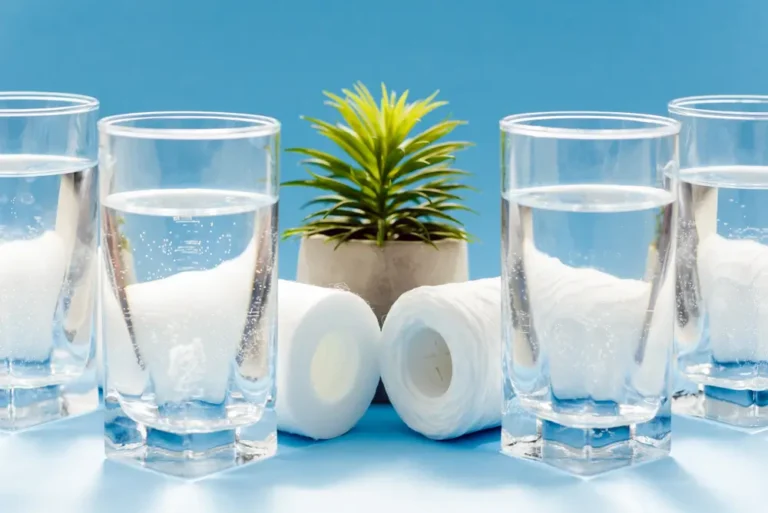
The best home water filter system is not the one with the longest contaminant list. It is the system that fits your water source, the specific concern you want to address, the required flow rate, the available installation space, and the maintenance you will actually complete.
That is especially important because home water problems are not all the same. Chlorine taste, sediment, hardness, lead from plumbing, private-well bacteria, microplastics, PFAS, iron, manganese, and radon require different questions and often different treatment technologies. The CDC notes that different home water treatment systems remove different germs or chemicals, so the decision should start with the actual concern.
Start With the Water Source
Public water and private wells need different decision paths. If your home uses public water, begin with the utility’s Consumer Confidence Report and then consider whether building plumbing could add issues such as lead, copper, rust, or taste changes at the tap. If your home uses a private well, testing is your responsibility. The EPA explains that private well owners are responsible for protecting and testing their own water.
A home water filter system should not be selected from fear or from a generic promise of pure water. It should be selected because it addresses a defined condition with a documented process.
Whole-House and Point-of-Use Systems Solve Different Problems
A whole-house, or point-of-entry, system treats water as it enters the home. It can be useful when the problem affects multiple fixtures, showers, appliances, plumbing, or scale formation. It must be sized for household flow, pressure drop, water temperature, maintenance access, and the actual water chemistry.
A point-of-use system treats one tap, usually the kitchen sink. It is often the practical choice when the main goal is drinking and cooking water. Because the flow is lower, a point-of-use system can often use tighter filtration or more contact time without restricting the whole property.
Match the Technology to the Concern
| Concern | Common starting point | What to verify |
|---|---|---|
| Sediment, sand, rust | Sediment cartridge or backwashing filter | Particle rating, pressure drop, replacement schedule |
| Chlorine taste and odor | Activated carbon | Chlorine or chloramine claim, capacity, flow |
| Hardness and scale | Softener or scale conditioner | Hardness result, scale goal, salt use, documented performance |
| Lead | Certified point-of-use filter, RO, or other verified process | Exact lead-reduction claim for the exact model |
| Microorganisms | UV, disinfection, or suitable membrane | Organism claim, pretreatment, dose or integrity |
| Dissolved chemicals | RO, ion exchange, or specialty media | Water chemistry, contaminant claim, post-treatment testing |
How to Verify a Home Water Filter Claim
A standard number or badge is not enough on its own. Certification applies to an exact model, an exact standard, and exact claims listed by the certifier. For example, NSF/ANSI 42 often relates to aesthetic claims such as chlorine taste and odor, while NSF/ANSI 53 and 58 can include specified health-related claims depending on the product. TipaTech’s guide to NSF and IAPMO certified water filters explains how to verify listings rather than relying on a logo alone.
For lead specifically, EPA provides a tool for identifying point-of-use and pitcher filters certified to reduce lead. That does not mean every filter from a brand reduces lead. It means the exact product and replacement cartridge must be checked.
Where TipaTech Fits
The TipaTech T-18 is positioned as a whole-house option for point-of-entry filtration and scale management. The Lotus DY is positioned as a point-of-use drinking-water system. They serve different roles, and a household may need one, both, or neither depending on the water problem and installation conditions.
The better recommendation is not the most expensive setup. It is the smallest, clearest treatment plan that addresses the documented need and can be maintained correctly.
The Bottom Line
Choose a home water filter system by evidence, not by stage count or broad promises. Identify the source, define the concern, decide whether treatment belongs at the entry point or drinking tap, verify the exact model claims, and budget for maintenance. That process creates a stronger decision for the home and a more honest comparison between systems.
Frequently Asked Questions
What is the best home water filter system?
The best system is the one that matches the water source, the tested concern, household flow, installation limits, and maintenance plan. There is no single filter that is best for every home.
Do I need whole-house filtration or an under-sink filter?
Use whole-house treatment when the issue affects showers, fixtures, appliances, or the incoming supply. Use point-of-use treatment when the main goal is drinking and cooking water at one tap.
Can one home filter remove every contaminant?
No. Sediment, carbon, membranes, UV, softening, and scale conditioning solve different problems. Verify the exact model and the exact reduction claim for the concern you want to address.
Should I test my water before buying a system?
Yes. A utility report, private-well test, or targeted laboratory result gives a better starting point than choosing by stage count, micron rating, or broad marketing claims.
Where do TipaTech T-18 and Lotus DY fit?
The T-18 is positioned for whole-house point-of-entry treatment and scale management, while Lotus DY is positioned for drinking-water treatment at the point of use. The right choice depends on the problem and the installation.