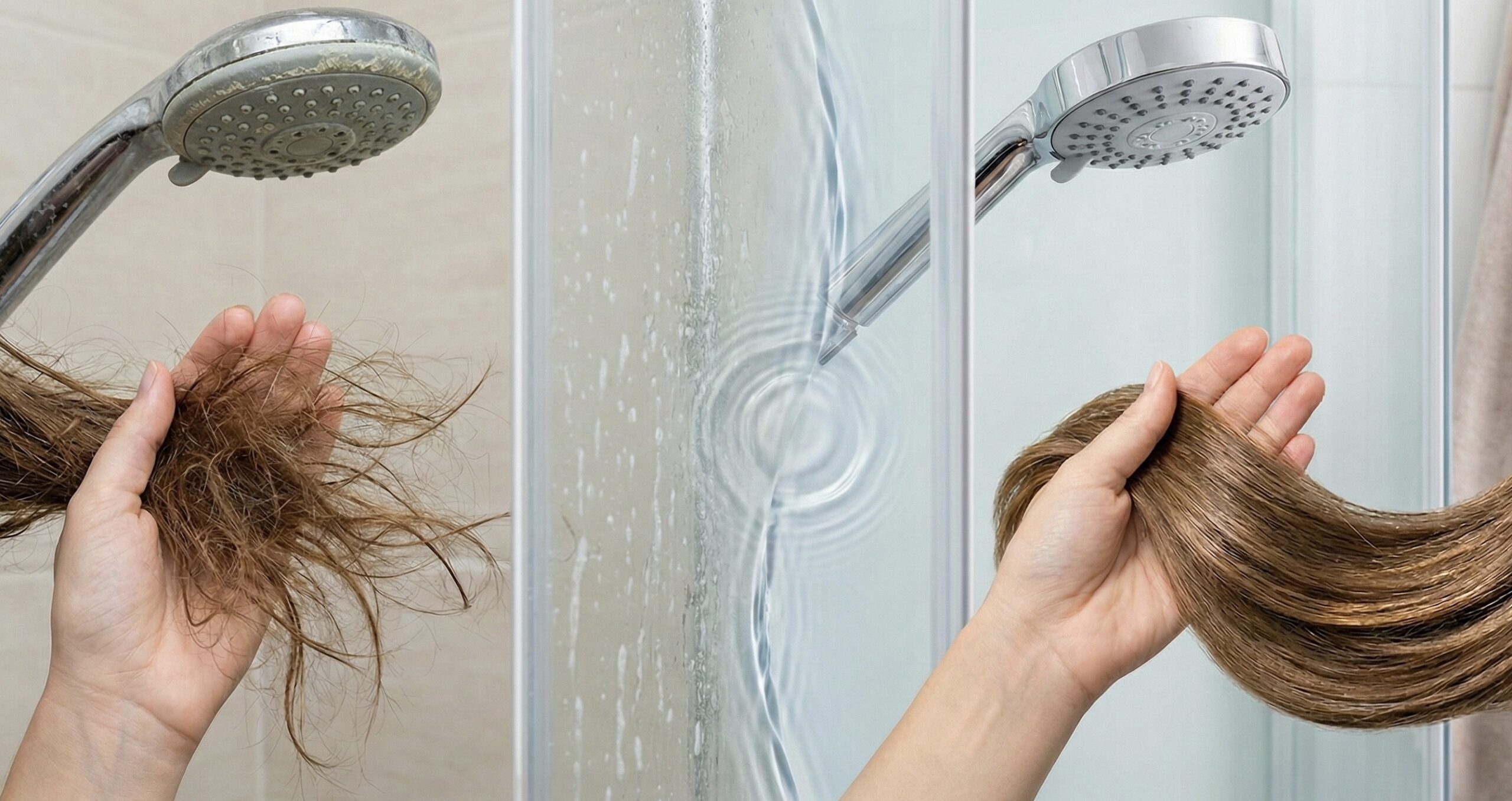
Hard water can leave mineral deposits on fixtures, shower glass, and hair. People commonly report roughness, dullness, tangling, or difficulty rinsing products. Those effects can increase friction and breakage, but they should not be confused with medically diagnosed hair loss from the follicle.
The responsible answer is that hard water may affect hair condition, while evidence that it directly causes permanent alopecia is limited and inconsistent.
What Hard Water Is
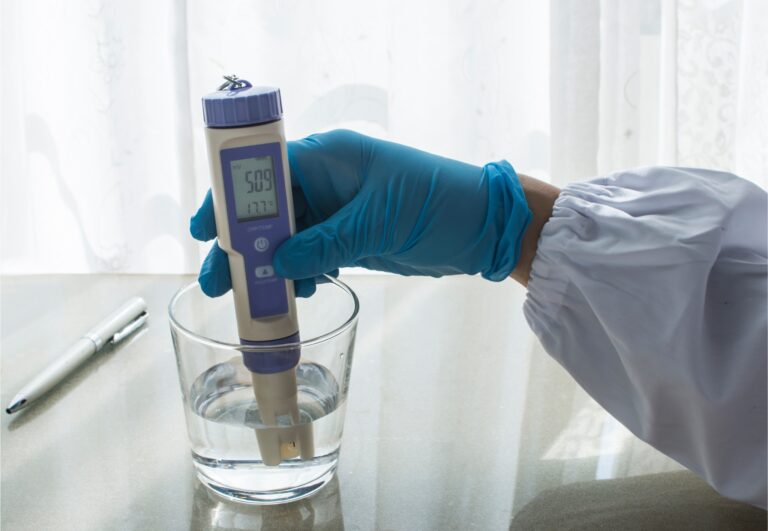
Hardness mainly reflects dissolved calcium and magnesium. It varies by geology and water source. Signs around the home include limescale, poor soap lather, spots on glass, and residue in kettles. A test is needed to quantify it.
General background is available in this overview of hard water, but treatment decisions should rely on local utility data or laboratory testing.
What Hard Water Can Do to Hair
Mineral deposition
Calcium, magnesium, iron, and other substances can accumulate on the hair surface depending on the water and hair condition. Buildup may make hair feel coated and interfere with cleansing or conditioning.
Increased friction and breakage
Rough, tangled hair is more likely to break during washing, drying, or brushing. Small studies have examined hair strength and mineral exposure, but they do not prove that hard water causes common pattern hair loss. One study cited in the original article is available through PubMed Central.
Scalp discomfort
Hard water, detergent residue, fragrance, eczema, psoriasis, seborrheic dermatitis, and other conditions can contribute to itching or irritation. A filter should not be presented as treatment for a skin or scalp disease.
Breakage Is Not the Same as Hair Loss
Follicular hair loss includes conditions such as androgenetic alopecia, alopecia areata, telogen effluvium, scarring alopecia, and hair loss related to medication, illness, iron deficiency, thyroid disease, or hormonal change. Water quality does not explain every case.
Broken hairs tend to vary in length and may lack the root bulb seen on shed hairs. Persistent thinning, sudden shedding, bald patches, pain, scaling, or inflammation deserves assessment by a dermatologist.
What About Chlorine?
Disinfectants can affect odor and hair feel, especially with repeated exposure, but normal regulated tap-water levels are not established as a universal cause of hair loss. Swimming-pool exposure and household tap water are also different conditions.
Do Shower Filters Remove Hardness?
Most compact shower filters use carbon, vitamin C, KDF, or mixed media. They may reduce selected disinfectants or sediment under defined conditions, but most do not function like a whole-house ion-exchange softener and should not be assumed to remove calcium and magnesium.
Check the exact claim, temperature rating, flow, capacity, and test method. Product reviews are not a substitute for performance data.
Practical Steps for Hair and Water
- Measure the water hardness and check for iron or other local issues.
- Use a clarifying or chelating product only as directed.
- Condition hair and reduce high heat and aggressive brushing.
- Rinse thoroughly and clean showerheads where deposits accumulate.
- Consult a dermatologist for true shedding or scalp disease.
Whole-House Treatment
When hardness affects plumbing, appliances, skin feel, and cleaning throughout the home, whole-house treatment may be more appropriate than a shower cartridge. TipaTech presents the T-18 as one whole-house option. Its suitability should be evaluated against measured water conditions and documented performance.
Additional studies cited in the original article include research on hair and water exposure. These studies should be read with their sample sizes and limitations in mind.
Bottom Line
Hard water can contribute to buildup, roughness, tangling, and breakage. It is not proven to be a direct universal cause of permanent hair loss. Treat the water problem for the benefits it can reasonably provide, and investigate medical hair loss medically.
Frequently Asked Questions
Does hard water directly cause permanent hair loss?
Current evidence does not establish hard water as a direct cause of permanent follicle hair loss. It may contribute to buildup, dryness, tangling, and breakage that can look like thinning.
How can I tell breakage from hair shedding?
Broken hairs are often shorter and lack a bulb at the end. Shedding comes from the follicle. A dermatologist can evaluate persistent thinning, bald patches, scalp inflammation, or sudden shedding.
Can a shower filter soften hard water?
Most small shower filters do not remove significant calcium and magnesium hardness. They may reduce selected disinfectants or sediment if the exact product is designed and tested for them.
Will treating hard water regrow lost hair?
Water treatment is not a hair-regrowth treatment. It may improve manageability or reduce mineral buildup, but medical hair loss requires diagnosis and appropriate care.
What can reduce hard-water buildup on hair?
Options include periodic clarifying or chelating products, correct conditioner use, lower heat, gentle handling, and water treatment selected for the measured hardness problem.