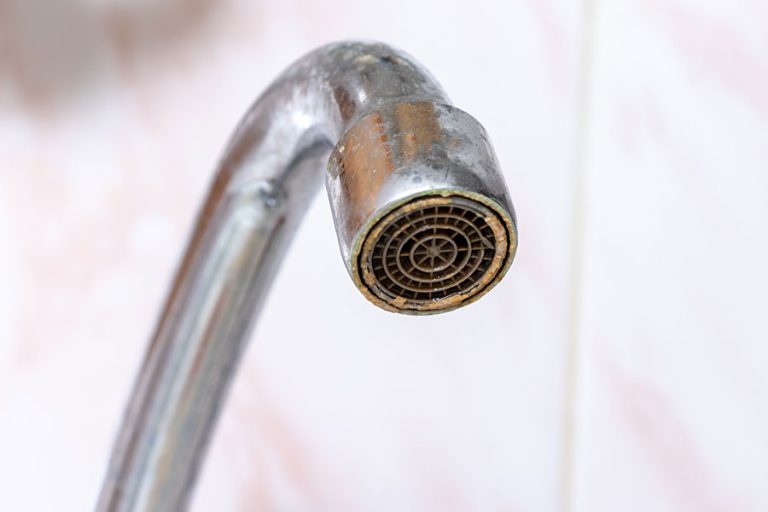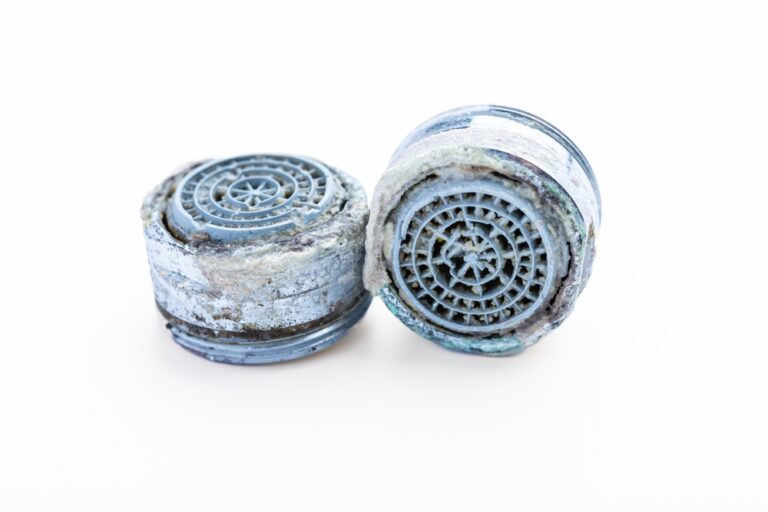
Is limescale harmful? In most homes, limescale is mainly an operational problem caused by calcium carbonate deposits from hard water. It can coat heating elements, restrict flow, mark fixtures, and increase cleaning. It is not a reliable sign that the water is either healthy or contaminated.
A widely discussed laboratory study added an unexpected twist: boiling hard water caused calcium carbonate to precipitate and capture some nano- and microplastic particles. That finding is interesting, but it does not mean limescale inside household pipes is a proven defense against microplastics.
What Limescale Actually Is
Hard water commonly contains dissolved calcium, magnesium, bicarbonate, and other ions. When conditions change through heating, pressure, or evaporation, calcium carbonate can precipitate as a solid deposit.
The result may appear as:
- White deposits on faucets and shower glass
- Scale inside kettles and water heaters
- Reduced efficiency of heating surfaces
- Restricted flow in valves and small passages
- More frequent cleaning and maintenance
Hardness is not the same as contamination. Water can be hard and meet drinking-water requirements, or soft and contain a contaminant that needs treatment.
What the Boiling Study Found
In a controlled laboratory study published in 2024, researchers examined whether boiling tap water could reduce nano- and microplastic particles. In harder water, heating caused calcium carbonate to form solid particles. Some plastic particles became incorporated into or attached to the mineral precipitate.
The reported reduction increased with water hardness under the study conditions. The process also required the formed solids to be separated from the water after boiling, such as through settling or filtration.
This is a study of a defined boiling and separation process. It should not be simplified into claims that:
- All limescale removes microplastics
- Scale inside pipes protects the household
- Boiling removes every plastic particle
- Hard water is automatically safer than soft water
- A scale-treatment product has proven microplastic performance
Why Pipe Scale Is Not the Same as the Study Process
Scale in plumbing forms under uncontrolled conditions and remains attached to surfaces. It may trap some material, release deposits, harbor biofilm, or reduce flow. The laboratory process involved heating water, forming precipitates, and then separating the solids from the water.
Using uncontrolled limescale as a treatment method would be impractical and could create other maintenance problems. The study is better understood as a possible low-cost household technique that requires more research, not as a reason to preserve scale in appliances and pipes.
What We Know About Microplastics in Water
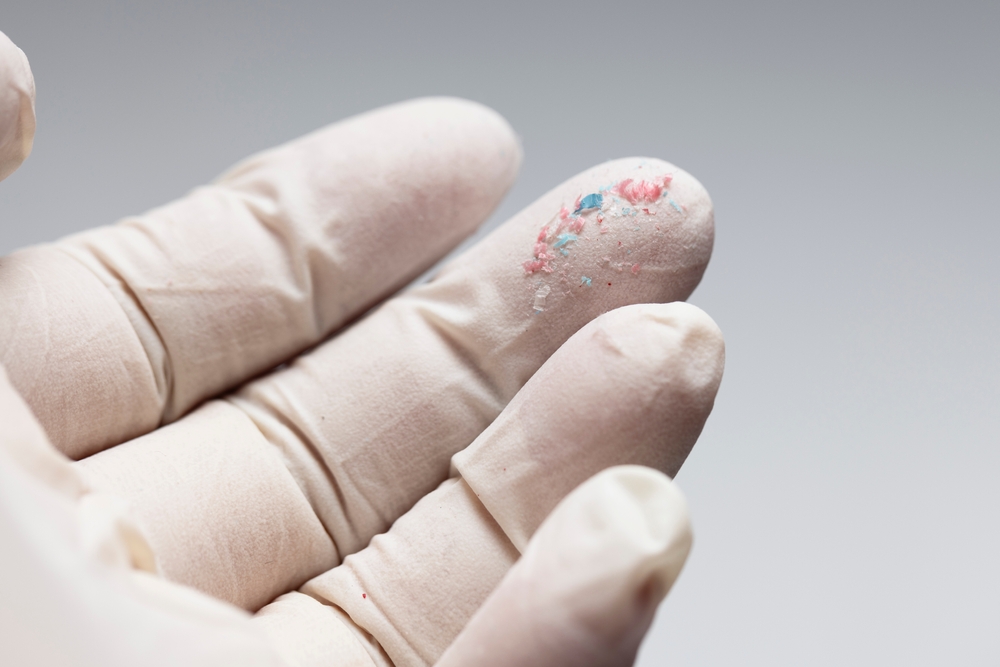
Microplastics are plastic particles generally smaller than 5 millimeters, with nanoplastics at the much smaller end of the spectrum. They differ in polymer, size, shape, additives, and surface chemistry.
Research is still developing on exposure, measurement methods, treatment performance, and possible health effects. The EPA microplastics research program describes ongoing work to improve detection and understand occurrence and risk.
A study showing particles in water does not prove that a specific home filter reduces them. A filter claim should identify the particle sizes, test method, challenge water, flow, capacity, and exact model.
Can Household Filters Reduce Microplastics?
Particle Filters
Mechanical filtration can reduce particles above the effective pore range. Nominal and absolute ratings differ, and real performance depends on seals, bypass, fouling, and flow.
Ultrafiltration and Membranes
Membrane systems can reduce smaller particles according to their validated performance. The technology name alone does not establish a universal percentage.
Reverse Osmosis
RO membranes can reduce very small particles and many dissolved substances when the system is intact and maintained. They also have tradeoffs, including reject water, pressure requirements, and mineral reduction.
Activated Carbon
Carbon is valuable for chlorine, taste, odor, and selected organic compounds. It should not be assumed to provide defined microplastic reduction unless the exact system has been tested for that purpose.
How to Address Limescale and Microplastics Separately
A household may have both concerns, but they are not the same treatment problem.
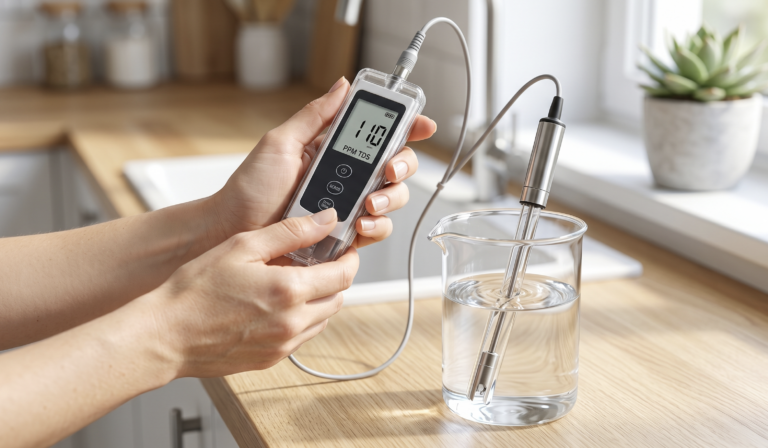
- Measure hardness and review the operational effect on the property.
- Choose softening or scale conditioning based on the desired result.
- Define the microplastic particle sizes and treatment claim being sought.
- Review independent testing for the exact filtration system.
- Maintain cartridges and membranes to preserve performance.
- Avoid claims that one treatment automatically solves the other issue.
For more context, see Limescale in Water and Microplastics in Tap Water.
Where TipaTech Fits
TipaTech positions the T-18 as a whole-house system for fine-particle filtration and salt-free scale management. These are separate functions. Any microplastic-reduction statement should be based on testing that defines the particle range and exact system configuration.
The Lotus DY is positioned for finer point-of-use filtration. Its stated micron rating should not be expanded into a claim that all microplastics, nanoplastics, PFAS, or other contaminants are removed without matching test evidence.
The Bottom Line
Limescale is mainly a hard-water maintenance issue. Research showing that boiling hard water can capture some microplastics is promising but specific to a controlled process with solid separation. It does not turn pipe scale into a protective filtration system. Treat hardness and microplastics as separate questions, and require evidence for each.
Frequently Asked Questions
Is limescale harmful to drink?
Limescale is mainly calcium carbonate formed from hard water. It is usually an operational and aesthetic issue, but a white deposit does not prove that the water is free of contaminants.
Can boiling hard water reduce microplastics?
A laboratory study found that boiling hard water could cause calcium carbonate to precipitate and capture some nano- and microplastic particles. The result depended on hardness and included a separation step after boiling.
Does limescale in pipes protect a home from microplastics?
No established evidence supports using pipe scale as a protective treatment. Deposits can reduce flow and affect equipment, and the laboratory boiling process is different from uncontrolled scale inside plumbing.
Does a one-micron filter remove all microplastics?
No. Microplastics vary widely in size and shape, and some are smaller than one micron. Real performance depends on the filter rating, system integrity, flow, and validated testing.
Should I remove hardness to control microplastics?
Hardness treatment and microplastic reduction are separate goals. Choose each treatment based on testing, operational needs, and verified performance.