Minerals in drinking water come from rock, soil, treatment chemicals, and plumbing. Calcium and magnesium are the best-known examples, but water may also contain sodium, potassium, bicarbonate, chloride, sulfate, iron, manganese, and many other dissolved substances.
Some minerals are essential nutrients. That does not make every dissolved substance beneficial, and it does not mean water with a higher TDS reading is automatically healthier. The value of a mineral profile depends on which substances are present, their concentrations, and the needs of the person or process using the water.
How Minerals Get Into Water
Rain and surface water interact with soil and rock. Groundwater often has more time to dissolve minerals from geological formations, which is why many wells have noticeable hardness or mineral taste. Public utilities may also adjust pH, alkalinity, or corrosion control during treatment.
Water can change again inside the building. Copper, lead, iron, or other materials may enter from service lines, fittings, fixtures, or corrosion. A mineral discussion should therefore separate naturally occurring constituents from plumbing-related contamination.
Common Minerals and Ions in Drinking Water
Calcium
Calcium contributes to hardness and scale formation. It is an essential nutrient, but the amount supplied by water varies widely. A water report or laboratory test is needed to quantify the contribution.
Magnesium
Magnesium also contributes to hardness and is nutritionally essential. It can influence taste and may be present at much lower or higher levels depending on local geology.
Sodium and Potassium
Sodium can occur naturally, enter through treatment, or increase after a conventional ion-exchange water softener. People following a medically directed sodium restriction should review actual water data with an appropriate professional.
Bicarbonate and Alkalinity
Bicarbonate is a major contributor to alkalinity, which describes water’s ability to resist changes in pH. Alkalinity and pH are related but are not the same measurement.
Iron and Manganese
Iron and manganese can cause staining, color, metallic taste, or deposits. Their presence may be primarily aesthetic at some levels, but treatment decisions should follow current local standards and laboratory results.
Are Minerals in Water an Important Nutrient Source?
Food is the main source of essential minerals for most people. Drinking water can make a contribution, especially in areas where calcium or magnesium concentrations are substantial and water intake is high. The percentage cannot be stated universally because both diet and water chemistry vary.
A World Health Organization report on nutrients in drinking water reviews the possible contribution of water to mineral intake and the questions surrounding low-mineral water. It should not be simplified into one global minimum TDS value or a claim that every low-mineral water source is dangerous.
What TDS Measures and Misses
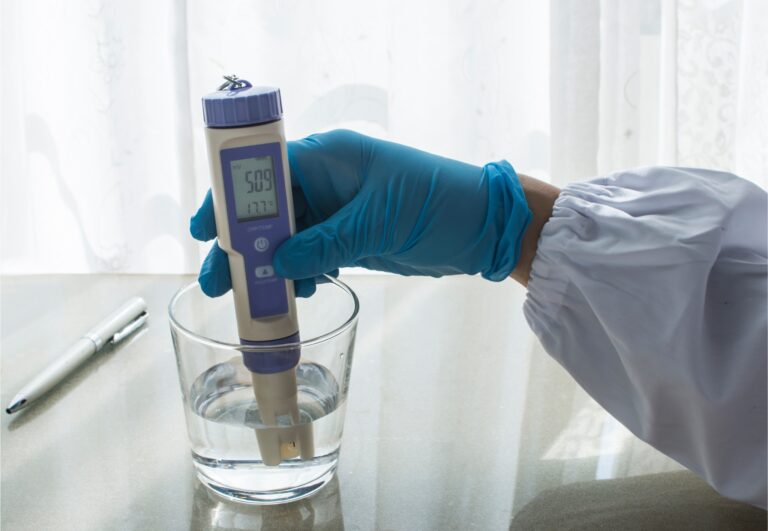
TDS means total dissolved solids. Consumer meters usually estimate TDS from electrical conductivity. They are useful for observing broad changes, such as membrane performance or a difference between two water sources.
A TDS meter does not identify:
- Which minerals or salts are present
- Whether lead, arsenic, nitrate, or another contaminant is present
- Whether bacteria or parasites are present
- Whether the dissolved substances are beneficial or harmful
- Whether a filter is certified for a specific contaminant
Two samples with the same TDS can have very different chemistry. For a detailed explanation, see What a TDS Meter Measures and Misses.
Hardness Is Not the Same as Water Safety
Hardness mainly reflects calcium and magnesium. Hard water can create scale in heaters, fixtures, and appliances. Soft water can reduce scale but may have other characteristics, including low alkalinity or corrosivity.
Neither hard nor soft automatically means safe. A private well can be hard and microbiologically contaminated, or soft and affected by acidity, metals, or another issue. Testing should address both operational concerns and health-related contaminants.
How Filtration Changes Mineral Content
Activated Carbon
Standard carbon filtration commonly reduces chlorine taste and odor and selected organic compounds. It usually does not remove most dissolved calcium and magnesium.
Water Softening
Ion-exchange softeners replace hardness ions with sodium or potassium, depending on the system. They change mineral composition but are not broad contaminant filters.
Reverse Osmosis
RO can reduce many dissolved ions, including calcium and magnesium. Some systems add a post-treatment remineralization stage. See how minerals can be added after RO.
Ultrafiltration and Fine-Particle Filtration
These technologies mainly address suspended material according to their design. A small pore rating does not necessarily remove dissolved minerals.
Where TipaTech Fits
TipaTech presents the Lotus DY as a point-of-use system designed to retain selected dissolved minerals while filtering drinking water. Retention of minerals should be evaluated separately from contaminant reduction. Both depend on the exact water, membrane or media, flow, and test method.
The T-18 is positioned for whole-house treatment and scale management without conventional salt-based softening. Scale conditioning is not the same as removing calcium and magnesium from the water.
The Bottom Line
Minerals in drinking water affect taste, hardness, alkalinity, and the water’s contribution to dietary intake. The useful questions are which minerals are present and at what levels. TDS, hardness, pH, and contaminant testing each answer different questions, and none should be used as a universal health score.
Frequently Asked Questions
What minerals are commonly found in drinking water?
Common dissolved minerals and ions include calcium, magnesium, sodium, potassium, bicarbonate, chloride, and sulfate. The amount varies with geology, treatment, and the water source.
Are minerals in drinking water good for you?
Calcium and magnesium are essential nutrients, but food is the main source for most people. Water can contribute varying amounts. The presence of minerals does not automatically make water safe or healthy.
Does TDS show whether minerals are beneficial?
No. TDS estimates the total amount of dissolved ions but does not identify them. The same reading can represent useful minerals, harmless salts, or substances that require further testing.
Does reverse osmosis remove minerals?
RO can reduce many dissolved ions, including calcium and magnesium. The extent depends on the membrane, source water, pressure, temperature, and system condition.
Is hard water the same as mineral-rich water?
Hardness mainly reflects calcium and magnesium. Water can contain other dissolved substances as well, so hardness is not a complete measure of mineral content or water quality.