Is well water hard or soft? It is often hard, but not always. Groundwater can dissolve calcium and magnesium as it moves through soil and rock. The final hardness depends on local geology, well depth, aquifer conditions, recharge, and seasonal changes.
You cannot determine hardness from clarity, taste, or the fact that the source is a well. Test the water and report the result in milligrams per liter or grains per gallon as calcium carbonate.
What Makes Water Hard or Soft?
Hardness mainly reflects dissolved calcium and magnesium. Other metals can contribute, but these two minerals usually dominate household hardness.
The U.S. Geological Survey commonly classifies hardness as:
- 0 to 60 mg/L as CaCO3: soft
- 61 to 120 mg/L: moderately hard
- 121 to 180 mg/L: hard
- More than 180 mg/L: very hard
The USGS hardness guide also explains that hardness varies widely across groundwater sources.
Why Many Wells Produce Hard Water
Groundwater may remain in contact with mineral-bearing formations for long periods. Limestone, dolomite, and other calcium- or magnesium-rich materials can dissolve into the water.
Well water may be especially hard where:
- The aquifer contains carbonate rock
- The water has a long residence time underground
- The well draws from a deeper mineralized formation
- Carbon dioxide in the water helps dissolve rock
- Seasonal recharge changes the mix of water entering the well
Other wells draw from formations that contribute little calcium or magnesium and may produce soft water. Regional averages cannot replace a property-specific test.
Signs of Hard Well Water
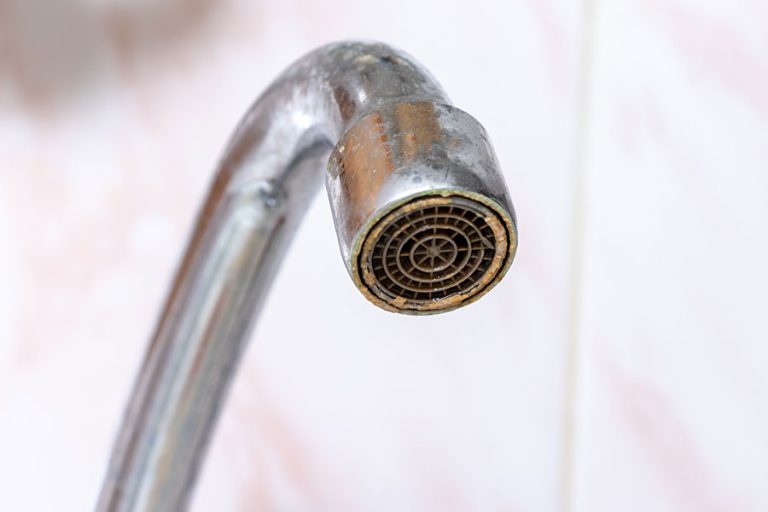
- White scale on faucets and shower glass
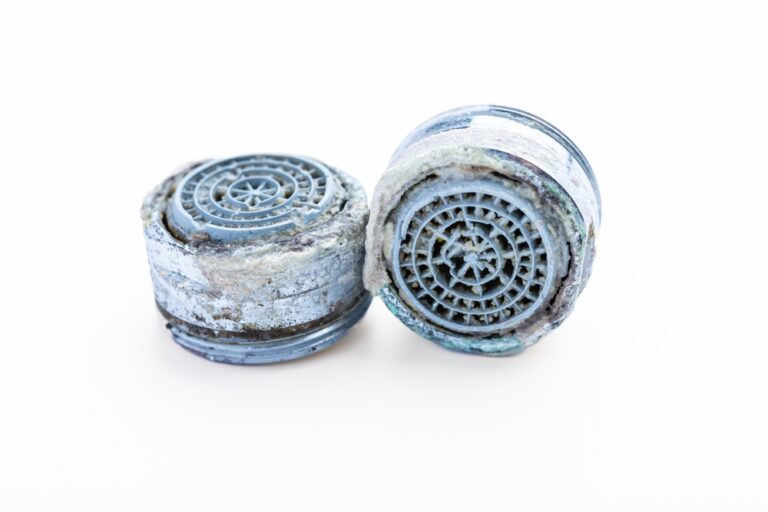
- Deposits in kettles and water heaters
- Reduced soap lather
- Spots on dishes
- Stiff-feeling laundry
- Restricted flow through small valves or fixtures
These signs suggest hardness but do not measure it. Iron, manganese, silica, sediment, or other constituents can create similar staining or deposits.
Hardness Does Not Tell You Whether Well Water Is Safe
Hardness is mainly an operational and aesthetic parameter. It does not reveal bacteria, nitrate, arsenic, pesticides, volatile compounds, radionuclides, or many other possible contaminants.
A private-well assessment should include testing recommended by the local health or environmental authority. Common baseline tests include total coliform, E. coli, nitrate, pH, and total dissolved solids, with additional parameters based on local geology, land use, flooding, and nearby septic systems.
Can Soft Well Water Cause Problems?
Soft water is not automatically better. Some low-mineral well water has low alkalinity or low pH and may be more corrosive under certain plumbing conditions. Corrosion can contribute to metal release from pipes, fittings, and fixtures.
A complete evaluation may include pH, alkalinity, hardness, chloride, sulfate, dissolved oxygen, and metals at the tap. The treatment goal may be corrosion control rather than hardness removal.
How to Test Well-Water Hardness
Laboratory Test
A laboratory result provides a clear concentration and can be combined with a broader well-water panel. This is the strongest option when treatment is being designed.
Drop Titration Kit
A quality titration kit can provide a useful home measurement in grains per gallon or milligrams per liter. Follow the instructions carefully and confirm unusual results with a laboratory.
Test Strips
Strips are convenient for screening but usually provide a broad range rather than a precise number.
TDS Meter
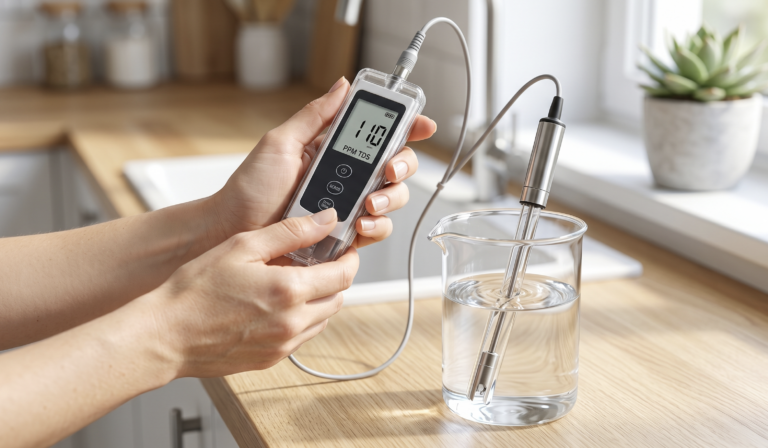
A TDS meter does not measure hardness directly. It estimates all conductive dissolved ions, so a high reading may reflect sodium, chloride, bicarbonate, or other substances in addition to calcium and magnesium.
Ways to Treat Hard Well Water
Ion-Exchange Water Softener
A conventional softener removes calcium and magnesium and replaces them with sodium or potassium, depending on the system. It is effective for reducing measured hardness but requires salt or another regenerant, a drain connection, maintenance, and appropriate sizing.
Salt-Free Scale Conditioner
Salt-free systems generally aim to change the way hardness minerals form deposits. They do not necessarily remove calcium or magnesium, and the water may still test as hard. Performance depends on the technology, source water, flow, and operating limits.
Reverse Osmosis
RO can reduce hardness at a point of use, but untreated hard water may foul or scale the membrane. Whole-house RO is more complex and is not the default solution for ordinary hardness.
Sediment, Iron, and Manganese Pretreatment
Well water may need other treatment before hardness management. Sediment, iron, manganese, or sulfur can interfere with equipment and create separate household problems.
For sediment selection, see Best Sediment Filter for Well Water. For odors and dissolved gases, see Gases in Well Water.
Where TipaTech Fits
TipaTech positions the T-18 as a whole-house system with fine-particle filtration and salt-free scale management. A conditioner should not be described as a softener unless it actually removes hardness ions and the result is measured accordingly.
Homes with heavy sediment, iron, manganese, or very high hardness may need pretreatment or a different treatment train. The design should follow laboratory data, household flow, and the desired result.
The Bottom Line
Well water is frequently hard because of groundwater geology, but it can also be soft. Test before choosing equipment. Hardness, safety, sediment, iron, pH, and microorganisms are separate questions, and the best treatment plan addresses each one with the appropriate technology.
Frequently Asked Questions
Is well water usually hard or soft?
Well water is often hard because groundwater dissolves calcium and magnesium from rock and soil, but it can also be moderately hard or soft. Only testing can determine the actual level.
How do I test well-water hardness?
Use a laboratory test or a reliable hardness kit that reports results as milligrams per liter or grains per gallon as calcium carbonate. A full well test should also cover locally relevant contaminants.
Is hard well water safe to drink?
Hardness alone is usually an aesthetic and operational issue, not proof of unsafe water. A private well can still contain bacteria, nitrate, arsenic, or other contaminants that hardness testing does not detect.
Does a sediment filter soften well water?
No. A sediment filter removes suspended particles. Hardness minerals are dissolved and require ion exchange, membrane treatment, precipitation, or another hardness-management method.
What is the difference between a softener and a salt-free conditioner?
A conventional softener removes calcium and magnesium through ion exchange. A salt-free conditioner generally aims to change scale behavior while leaving hardness minerals in the water.