Healthy water is not defined by one marketing word like alkaline, living, ionized, or antioxidant. For a homeowner, the better question is whether the water is suitable for drinking, pleasant to use, and treated for the specific issues that matter in that home.
That means looking at source water, testing, plumbing, verified filtration claims, mineral balance, pH, materials, and maintenance. It also means avoiding promises that water can create body-wide medical effects, or replace medical advice.
Start With Safety and Suitability
Suitable drinking water should meet applicable public-water standards or, for private wells, be tested and managed by the owner. The CDC advises testing water and choosing treatment for the chemical or germ of concern. That is a stronger basis than choosing a system because it uses a wellness phrase.
pH Matters, But It Is Not the Whole Story
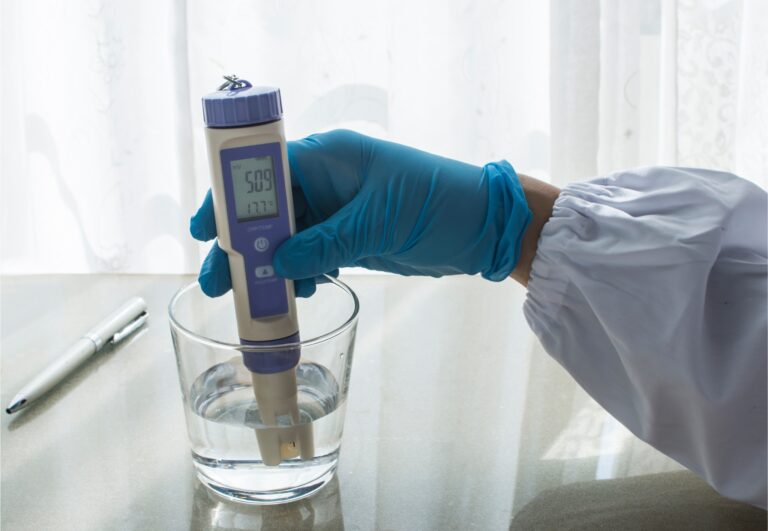
pH measures how acidic or basic water is. It can affect taste, corrosion, scaling, and treatment performance. It does not prove that water is healthier by itself. The WHO background document on pH in drinking water treats pH mainly as an operational and aesthetic parameter rather than a simple health-benefit score.
Minerals Affect Taste and Water Character
Calcium, magnesium, bicarbonate, and other minerals can affect taste and buffering. Low-mineral water may taste flat, while very hard water can contribute to scale. Minerals in water may contribute to total intake, but they should not be marketed as a proven health solution. The overall diet usually matters more.
ORP Is a Measurement, Not a Medical Claim
ORP, or oxidation-reduction potential, describes the tendency of water to accept or donate electrons under test conditions. A negative ORP value may be part of a product’s technical profile, but it does not automatically prove antioxidant effects inside the body. For a more detailed explanation, see TipaTech’s guide to what ORP in water means.
Certification and Claims Should Be Specific
Independent certification can help when it is read correctly. NSF/ANSI 42, 53, 58, 401, 61, and 372 cover different scopes. A material-safety standard is not the same as a contaminant-reduction claim. A component listing is not automatically a whole-system listing. A brand logo is not enough without the exact model and claims.
TipaTech’s guide to NSF and IAPMO certification explains why the public listing and claim wording matter.
What a Strong Water System Should Do
- Address a defined water source and household goal
- Use claims that can be verified for the exact model
- Maintain adequate flow for the intended use
- Use materials appropriate for drinking-water contact
- Include a realistic cartridge or media replacement plan
- Avoid health promises that are not supported by product-specific data
Where TipaTech Fits
The Lotus DY and TipaTech T-18 should be discussed according to their roles: point-of-use drinking-water treatment and whole-house point-of-entry treatment. The most credible recommendation explains what each system is intended to address, what it does not prove, and when testing or professional guidance is needed.
The Bottom Line
Truly useful water content does not chase wellness labels. It explains source water, testing, pH, minerals, ORP, filtration, certifications, and maintenance in plain language. That gives the reader a better decision than any claim that one water type is automatically healthy for everyone.
Frequently Asked Questions
What makes drinking water healthy?
A better term is suitable drinking water. It should meet applicable safety standards, fit the household source, taste acceptable, and be treated only for documented concerns.
Is alkaline water healthier?
Alkaline water is not automatically healthier. pH is only one water characteristic, and broad health claims require strong evidence.
Does negative ORP prove health benefits?
No. ORP describes oxidation-reduction potential in water. It does not by itself prove medical or wellness outcomes.
Are minerals in water important?
Minerals can affect taste and contribute somewhat to intake, but food is usually the main mineral source. Claims should stay measured and evidence-based.
How should I compare water systems?
Compare the exact model, verified claims, flow, capacity, material safety, maintenance, and whether the technology matches the water test or household goal.