This article is Baruch Ziser’s personal field account. It is not an official L’Oréal statement or an independently audited case study. Brand names are used only to identify the setting described by the author.
Some service calls begin with a formal meeting, technical drawings, and weeks of planning. This one began while I was dressed for a casual day and received an urgent request to visit a L’Oréal facility.
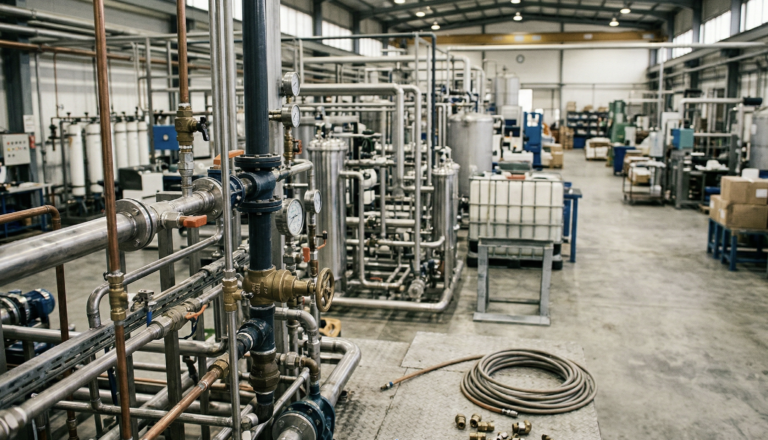
The problem, as it was explained to me, involved water conditions affecting production equipment and creating pressure for a fast operational solution. I arrived in flip-flops—hardly the image of an industrial consultant—but the equipment did not care what I was wearing. It cared about flow, pressure, water chemistry, and what was accumulating inside the system.
Diagnose Before Installing
Industrial water problems are often described with one word: scale, corrosion, odor, clogging, or bacteria. That label may be incomplete. A useful assessment asks:
- What is the source-water chemistry?
- Where in the process does the problem appear?
- What are the operating flow, pressure, and temperature?
- Is the deposit actually calcium carbonate, another mineral, biofilm, or process residue?
- What result must be achieved, and how will it be measured?
On this visit, the priority was to stabilize the process without introducing a treatment that would create a new operational burden. We reviewed the installation conditions and deployed T-18 units in the configuration selected for the site.
What Happened Next
According to my recollection, the installation helped the team restore operation and avoid the shutdown they feared. That was a meaningful field result, but it should be described accurately. A successful intervention at one site does not prove identical performance in every factory, process, or water source.
Industrial systems differ from homes. They may run continuously, use heated water, contain proprietary chemicals, and operate under strict product-quality requirements. A residential specification cannot simply be copied into an industrial application.
The Real Lesson Was Not the Flip-Flops
The memorable part of the story is the contrast: a large international operation, an urgent technical problem, and a water specialist arriving in casual footwear. The useful lesson is more serious:
- Respond quickly, but do not skip diagnosis.
- Design for actual flow rather than brochure flow.
- Define whether the target is sediment, scale, corrosion, gases, microbes, or another process variable.
- Preserve access for sampling and maintenance.
- Verify the result after installation.
How TipaTech Describes the T-18 Today
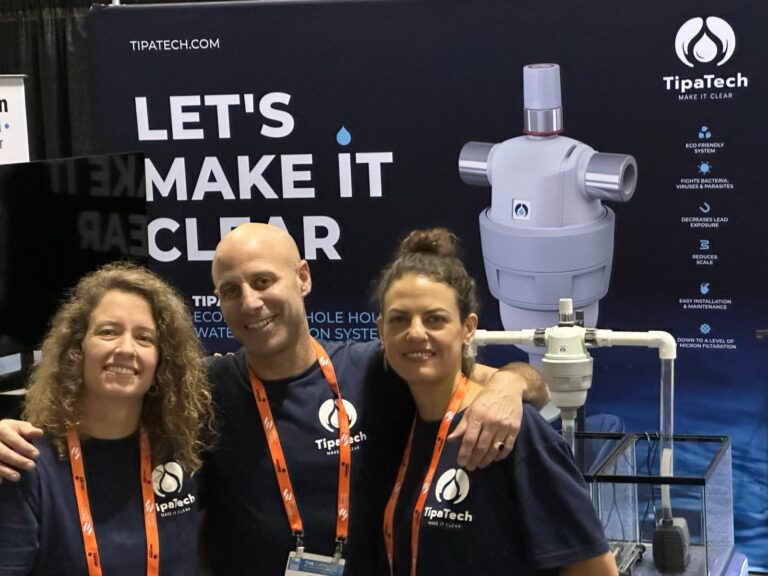
According to TipaTech’s current product information, the T-18 is a point-of-entry system with a one-micron filtration specification. That micron figure concerns particles at defined test conditions. It does not, by itself, establish reduction of dissolved minerals, chemicals, gases, bacteria, viruses, or process-specific deposits.
For an industrial project, claims should be tied to the exact configuration, target, water analysis, operating envelope, and available before-and-after data.
Why Tell This Story?
Because water treatment is rarely solved by a dramatic product claim. It is solved by looking at the system, understanding what is actually failing, and testing whether the intervention works under real conditions.
I still laugh about the flip-flops. I am more proud of the discipline behind the visit: show up, listen, measure, and take responsibility for the result.
Frequently Asked Questions
Is this an official L’Oréal case study?
No. It is presented as Baruch Ziser’s personal field account and not as an official statement or independently audited case study from L’Oréal.
What was the main industrial water-treatment lesson?
Diagnose the actual process problem, design for real flow and pressure, and verify performance after installation.
Does a one-micron rating prove scale or chemical reduction?
No. A micron rating describes particle filtration under defined conditions and does not by itself prove reduction of dissolved chemicals or scale-forming ions.
Can the same system configuration be used in every factory?
No. Industrial water systems differ in chemistry, flow, temperature, process requirements, and maintenance constraints.
What evidence should support an industrial treatment claim?
Water analysis, operating conditions, exact system configuration, a defined target, and before-and-after measurements relevant to that target.