reverse osmosis
Table of Contents

Yes, reverse osmosis removes minerals from water. RO works by pushing water through a semipermeable membrane that reduces many dissolved ions. That can include calcium, magnesium, sodium, potassium, chloride, nitrate, fluoride, and other dissolved substances, depending on the system and water conditions.

The better question is not whether RO removes minerals. It does. The better question is whether RO is the right treatment for the specific water problem, and whether the lower-mineral taste or remineralization needs matter in that home.

How Reverse Osmosis Removes Minerals

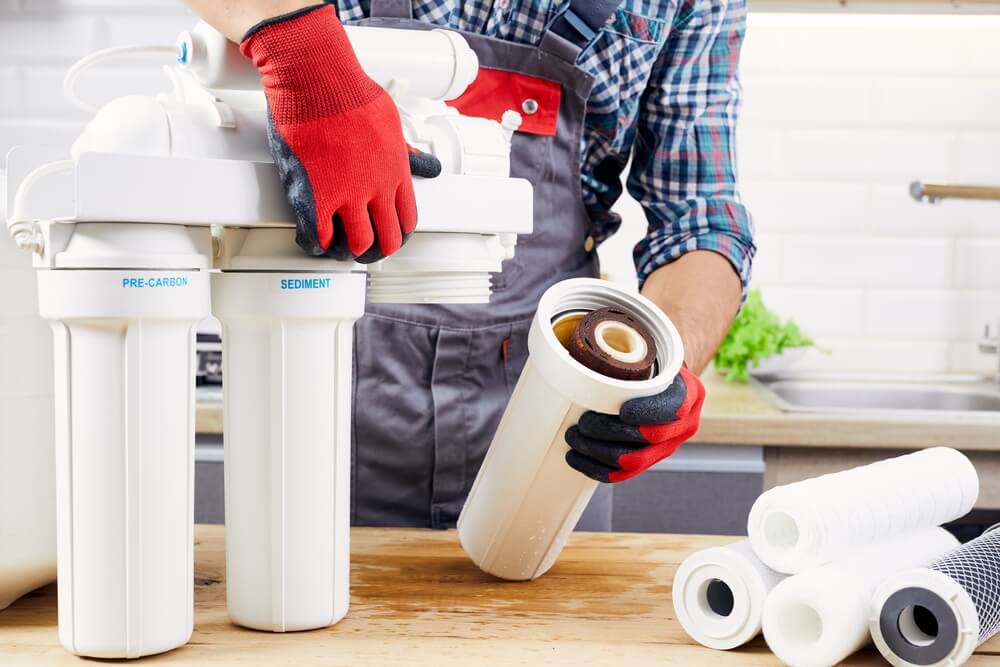
Reverse osmosis uses pressure to move water through a membrane. Many dissolved ions and molecules are rejected by the membrane and leave in the concentrate stream. RO systems usually include sediment and carbon pretreatment, the membrane, a storage tank or direct-flow design, and post-filtration.

Performance depends on the exact membrane, pressure, temperature, feed-water chemistry, recovery rate, cartridge condition, and system maintenance. A general RO label does not prove every contaminant claim.

Which Minerals Are Commonly Reduced?

RO can reduce calcium and magnesium, the main hardness minerals. It can also reduce many other dissolved ions. That is why RO water often has lower TDS and a flatter or different taste than untreated water.

The WHO has reviewed questions around nutrients in drinking water and demineralized water. That does not mean every RO system is harmful, and it does not mean mineral water is a medical treatment. It means mineral balance should be discussed carefully rather than turned into a simple marketing claim.

Is Mineral Removal a Health Problem?

For most people, food is the main source of minerals. Drinking water can contribute some calcium and magnesium, and the contribution varies by region. Removing minerals may affect taste and may matter more in specific dietary contexts, but an article should avoid claims such as RO causes deficiency or mineral retention proves a health outcome.

If someone has a medical condition, dietary restriction, infant-feeding question, or concern about mineral intake, the right advice is to speak with a healthcare professional and review the water analysis.

When RO Makes Sense

RO can be appropriate when the goal is reduction of a documented dissolved substance and the exact system has a relevant claim. It is commonly considered for certain drinking-water concerns, but it comes with tradeoffs: reject water, tank space, pressure requirements, slower production, membrane replacement, sanitation needs, and lower mineral content.

When RO May Be More Than You Need

If the issue is only chlorine taste, odor, or a light aesthetic concern, a certified carbon system may be simpler. If the issue is sediment, a sediment filter may be the right first step. If the issue is scale throughout the home, point-of-entry scale treatment may be more relevant than an under-sink RO system.

Where TipaTech Fits

The Lotus DY is positioned as a point-of-use drinking-water system, while the TipaTech T-18 is positioned for whole-house treatment and scale management. These systems should be compared with RO according to the water goal, installation constraints, current model documentation, and maintenance needs.

For households evaluating RO because of mineral loss, the practical path is to compare both contaminant reduction and water profile. Do not choose by slogans such as removes everything or keeps everything. Choose by the actual concern.

The Bottom Line

Reverse osmosis reduces minerals because minerals are dissolved ions. That can be useful for some water problems and unnecessary for others. Test the water, identify the target, review verified claims, and decide whether the RO tradeoffs are worth it for that household.

Frequently Asked Questions

Does reverse osmosis remove minerals from water?

Yes. RO membranes reduce many dissolved ions, including minerals such as calcium and magnesium, along with many other dissolved substances.

Is RO water bad because it has fewer minerals?

Not automatically. Most minerals in the diet come from food, but mineral content can affect taste and may matter in some dietary or technical contexts.

Does RO remove contaminants too?

RO can reduce many dissolved substances, but performance depends on the exact system, membrane condition, pressure, water chemistry, pretreatment, and verified claims.

Do all RO systems add minerals back?

No. Some include remineralization cartridges and some do not. The cartridge composition, contact time, and replacement schedule determine what it adds.

What is an alternative to RO?

Depending on the goal, alternatives may include carbon, ultrafiltration, nanofiltration, specialty media, or point-of-entry treatment. The right option depends on the tested concern.

whole house water filtration systems

Cleaner. Smarter. Healthier

At TipaTech we specialize in advanced whole house water filtration systems designed to protect your health and improve your water at every tap. Our patented technology reduces lead, bacteria, microplastics and harmful chemicals while preserving essential minerals like magnesium. Tested and Certified by IAPMO Compliance to: NSF/ANSI 42/61/372-2022 standards. Our systems deliver safe, eco-friendly, antioxidant-rich water with no electricity, no waste and no compromises.

Make Your Water Smarter

This article is for informational purposes only and is not medical advice. TipaTech products are designed to support water quality, not to diagnose, treat, cure, or prevent any disease. Product performance varies based on source water, usage, and professional installation. TipaTech disclaims any liability arising from reliance on this content.

About the Author

Baruch Ziser

Founder & Senior Scientific Consultant | Inventor of the TipaTech Filtration Systems

Baruch Ziser is a leading expert in water technology with fifty years of experience. As the inventor of TipaTech filters and a senior scientist at the Technion’s INOVATEC program, he has developed advanced water systems that reduce impurities while retaining and adding the necessary minerals for optimal body function. His innovations are recognized globally for improving drinking water quality in homes and agriculture.

The TipaTech Water Filtration Systems have been Tested and Certified by IAPMO

& Compliance to NSF/ANSI/CAN standards

NSF/ANSI/CAN Standards | IAPMO, R&T, UPC and the Standards Council of Canada

More to Know

DID YOU KNOW?  ·  WATER TREATMENT METHODS

Does Reverse Osmosis Remove Minerals? What It Means

Learn why RO removes minerals, when that matters, what remineralization can do, and how to decide whether reverse osmosis fits your water concern.

By Baruch Ziser Updated July 22, 2026 4 min read
Does Reverse Osmosis Remove Minerals? What It Means
TOPICWater Treatment Methods
READING TIME4 minutes
FIRST PUBLISHEDJune 22, 2025

Yes, reverse osmosis removes minerals from water. RO works by pushing water through a semipermeable membrane that reduces many dissolved ions. That can include calcium, magnesium, sodium, potassium, chloride, nitrate, fluoride, and other dissolved substances, depending on the system and water conditions.

The better question is not whether RO removes minerals. It does. The better question is whether RO is the right treatment for the specific water problem, and whether the lower-mineral taste or remineralization needs matter in that home.

How Reverse Osmosis Removes Minerals

Reverse osmosis uses pressure to move water through a membrane. Many dissolved ions and molecules are rejected by the membrane and leave in the concentrate stream. RO systems usually include sediment and carbon pretreatment, the membrane, a storage tank or direct-flow design, and post-filtration.

Performance depends on the exact membrane, pressure, temperature, feed-water chemistry, recovery rate, cartridge condition, and system maintenance. A general RO label does not prove every contaminant claim.

Which Minerals Are Commonly Reduced?

RO can reduce calcium and magnesium, the main hardness minerals. It can also reduce many other dissolved ions. That is why RO water often has lower TDS and a flatter or different taste than untreated water.

The WHO has reviewed questions around nutrients in drinking water and demineralized water. That does not mean every RO system is harmful, and it does not mean mineral water is a medical treatment. It means mineral balance should be discussed carefully rather than turned into a simple marketing claim.

Is Mineral Removal a Health Problem?

For most people, food is the main source of minerals. Drinking water can contribute some calcium and magnesium, and the contribution varies by region. Removing minerals may affect taste and may matter more in specific dietary contexts, but an article should avoid claims such as RO causes deficiency or mineral retention proves a health outcome.

If someone has a medical condition, dietary restriction, infant-feeding question, or concern about mineral intake, the right advice is to speak with a healthcare professional and review the water analysis.

When RO Makes Sense

RO can be appropriate when the goal is reduction of a documented dissolved substance and the exact system has a relevant claim. It is commonly considered for certain drinking-water concerns, but it comes with tradeoffs: reject water, tank space, pressure requirements, slower production, membrane replacement, sanitation needs, and lower mineral content.

When RO May Be More Than You Need

If the issue is only chlorine taste, odor, or a light aesthetic concern, a certified carbon system may be simpler. If the issue is sediment, a sediment filter may be the right first step. If the issue is scale throughout the home, point-of-entry scale treatment may be more relevant than an under-sink RO system.

Where TipaTech Fits

The Lotus DY is positioned as a point-of-use drinking-water system, while the TipaTech T-18 is positioned for whole-house treatment and scale management. These systems should be compared with RO according to the water goal, installation constraints, current model documentation, and maintenance needs.

For households evaluating RO because of mineral loss, the practical path is to compare both contaminant reduction and water profile. Do not choose by slogans such as removes everything or keeps everything. Choose by the actual concern.

The Bottom Line

Reverse osmosis reduces minerals because minerals are dissolved ions. That can be useful for some water problems and unnecessary for others. Test the water, identify the target, review verified claims, and decide whether the RO tradeoffs are worth it for that household.

Frequently Asked Questions

Does reverse osmosis remove minerals from water?

Yes. RO membranes reduce many dissolved ions, including minerals such as calcium and magnesium, along with many other dissolved substances.

Is RO water bad because it has fewer minerals?

Not automatically. Most minerals in the diet come from food, but mineral content can affect taste and may matter in some dietary or technical contexts.

Does RO remove contaminants too?

RO can reduce many dissolved substances, but performance depends on the exact system, membrane condition, pressure, water chemistry, pretreatment, and verified claims.

Do all RO systems add minerals back?

No. Some include remineralization cartridges and some do not. The cartridge composition, contact time, and replacement schedule determine what it adds.

What is an alternative to RO?

Depending on the goal, alternatives may include carbon, ultrafiltration, nanofiltration, specialty media, or point-of-entry treatment. The right option depends on the tested concern.
FROM INFORMATION TO THE RIGHT NEXT STEP

Not sure what is affecting your water?

Start with the water source, available test results, property conditions and the treatment goal. TipaTech can help review the situation before a system is selected.

Baruch Ziser

ABOUT THE AUTHOR

Baruch Ziser

Founder & Senior Scientific Consultant | Inventor of the TipaTech Filtration Systems

Baruch Ziser is a leading expert in water technology with fifty years of experience. As the inventor of TipaTech filters and a senior scientist at the Technion’s INOVATEC program, he has developed advanced water systems that reduce impurities while retaining and adding the necessary minerals for optimal body function. His innovations are recognized globally for improving drinking water quality in homes and agriculture.

The TipaTech Water Filtration Systems have been Tested and Certified by IAPMO

& Compliance to NSF/ANSI/CAN standards

NSF/ANSI/CAN Standards | IAPMO, R&T, UPC and the Standards Council of Canada

Contact Us