The EPA Just Put Microplastics and Pharmaceuticals on Notice
Table of Contents

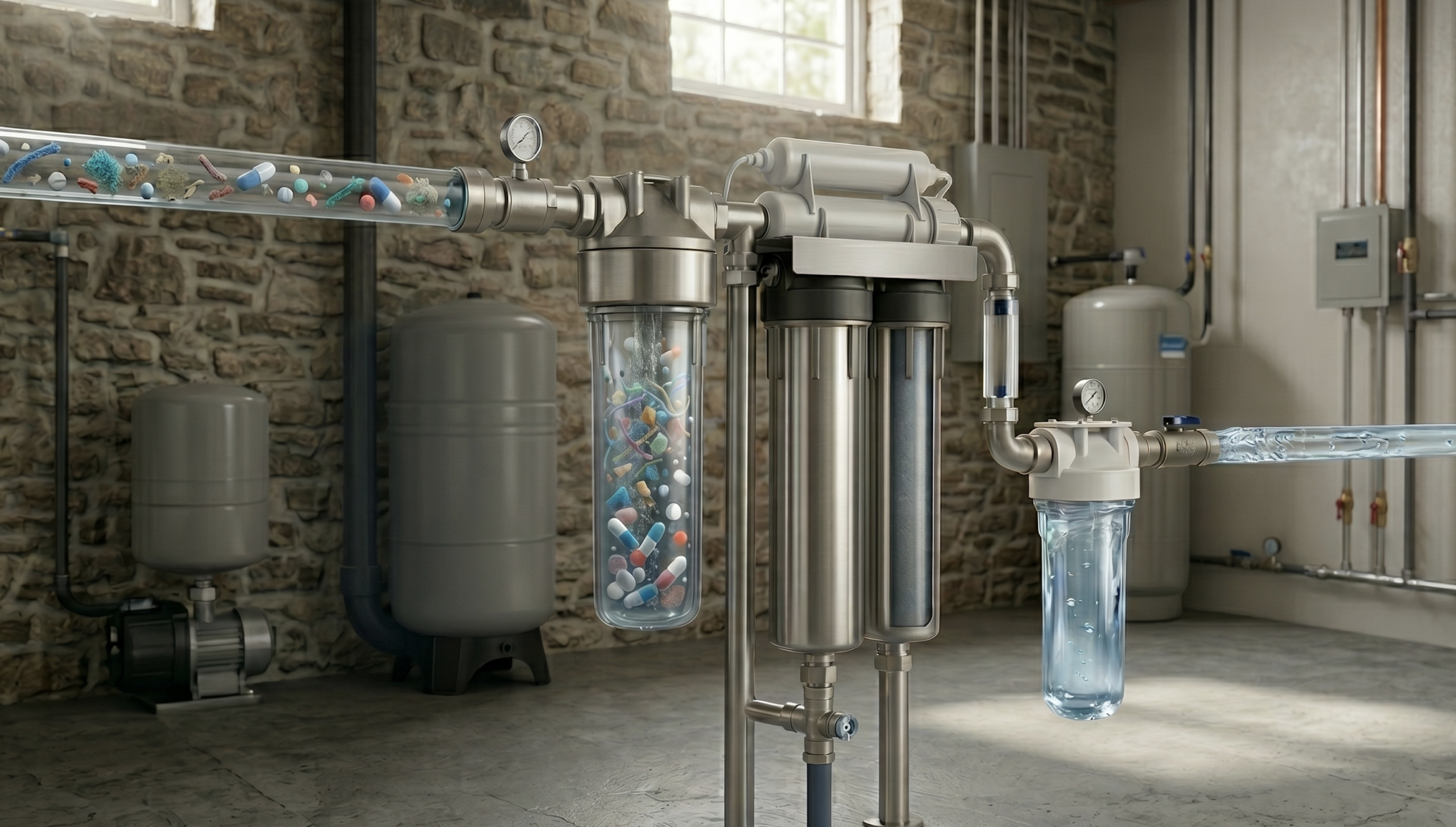
On April 2, 2026, the U.S. Environmental Protection Agency released draft CCL 6 and, for the first time in the candidate-list program, included microplastics and pharmaceuticals as priority contaminant groups. The announcement is important, but it is frequently overstated.

CCL 6 is a research and regulatory-priority step. It is not a nationwide ban, a drinking-water limit, or proof that every tap contains a harmful concentration.

What CCL 6 Actually Includes

EPA’s draft Sixth Contaminant Candidate List includes four contaminant groups: microplastics, pharmaceuticals, PFAS, and disinfection byproducts. It also includes individual chemicals and microbes for further consideration.

The official EPA CCL 6 announcement explains that the list helps prioritize research, information collection, and future regulatory decisions under the Safe Drinking Water Act.

What Inclusion on the CCL Does Not Mean

  • It does not create an enforceable maximum contaminant level.
  • It does not mean every listed contaminant will be regulated.
  • It does not establish that every detection creates the same health risk.
  • It does not prove that one household filter removes the entire group.
  • It does not replace utility, state, or local guidance.

EPA also released human-health benchmarks for hundreds of pharmaceuticals, while emphasizing that those benchmarks are not regulations on their own.

Why Microplastics Are Difficult to Evaluate

“Microplastics” covers particles with different sizes, shapes, polymers, additives, and analytical methods. Results can vary substantially between laboratories. Nanoplastics create additional measurement challenges.

Research has reported plastic particles in human tissues, but detection does not by itself establish which particles cause which outcomes at environmental exposure levels. The HHS $144 million STOMP program was launched to improve measurement, understand mechanisms, and investigate removal from the body. The program’s existence highlights how much remains uncertain.

For background, see TipaTech’s articles on microplastics in tap water and microplastic contamination, while keeping research findings separate from product claims.

Pharmaceuticals Are Also a Broad Group

Pharmaceutical residues differ in chemical behavior, persistence, concentration, and treatment response. A filter tested for one compound cannot be assumed to remove antibiotics, hormones, antidepressants, and every other pharmaceutical.

Source control matters. Medications should be disposed of through approved take-back programs rather than flushed unless official instructions specifically say otherwise.

What Household Treatment Can and Cannot Claim

Particle filtration

Membranes and fine filters may reduce particles within a documented size range, but “microplastic removal” requires clear test methods, particle sizes, challenge water, flow, capacity, and integrity data.

Activated carbon and adsorption media

Carbon can reduce selected organic chemicals, but performance varies widely by compound, media, contact time, competing substances, and exhaustion. A general carbon claim is not proof for all pharmaceuticals.

Reverse osmosis

RO systems can reduce many dissolved substances and particles when properly designed and maintained. They are not automatically certified for every emerging contaminant, and membrane integrity, pre-treatment, recovery, reject water, and post-treatment all matter.

How to Evaluate T-18 and LotusDY Claims

The TipaTech T-18 and LotusDY serve different positions in a household water strategy. Any claim involving microplastics, pharmaceuticals, PFAS, or another emerging contaminant should be tied to current test documentation for the exact configuration and operating conditions.

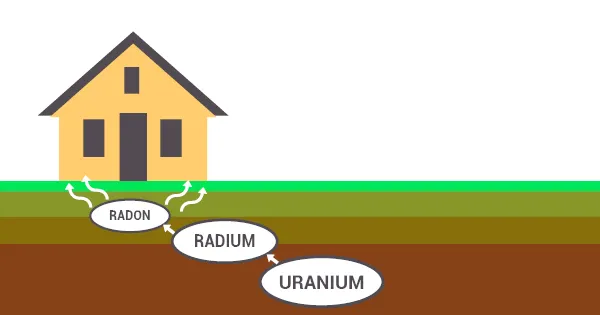
Features designed for particles, taste, gases, minerals, or scale cannot be combined into a universal health-protection statement. For example, radon and other gases require different treatment logic from nonvolatile particles.

Practical Steps for Homeowners

  1. Read the utility’s annual water-quality report and official notices.
  2. Ask whether the utility participates in emerging-contaminant monitoring.
  3. For a private well, prioritize locally relevant regulated and unregulated concerns.
  4. Do not flush medicines unless the label or official disposal guidance instructs it.
  5. Reduce unnecessary single-use plastic and protect water from heat and prolonged storage when practical.
  6. Request exact test standards and model numbers before buying treatment.
  7. Maintain the system and verify measurable performance.

Sources and Regulatory Context

The Bottom Line

Draft CCL 6 is a meaningful signal that EPA is prioritizing microplastics and pharmaceuticals for research and possible future action. It is not yet a drinking-water standard. Homeowners should respond with source awareness, credible testing, responsible disposal, and product-specific evidence rather than fear or universal filtration promises.

Frequently Asked Questions

Did EPA ban microplastics or pharmaceuticals in drinking water?

No. Draft CCL 6 identifies contaminants for research and possible future regulatory decisions. Inclusion on the candidate list is not a national drinking-water limit or a finding that every public supply is unsafe.

What is CCL 6?

The Sixth Contaminant Candidate List is EPA’s process for identifying unregulated contaminants that may occur in public water systems and may require future regulation. The April 2026 document was released as a draft.

Does EPA require utilities to test for every CCL 6 contaminant now?

Not simply because a contaminant appears on the draft list. Monitoring, research, regulatory determinations, and enforceable standards follow separate legal and scientific processes.

Can a home filter remove all microplastics and pharmaceuticals?

No blanket claim is justified. Performance depends on particle size, chemical properties, membrane or media, flow, capacity, maintenance, and product-specific testing for the exact contaminant or surrogate.

What should homeowners do now?

Review the utility report, follow official notices, test private wells for locally relevant concerns, reduce unnecessary plastic and drug disposal into wastewater, and choose treatment only when the exact model has evidence for the identified goal.

whole house water filtration systems

Cleaner. Smarter. Healthier

At TipaTech we specialize in advanced whole house water filtration systems designed to protect your health and improve your water at every tap. Our patented technology reduces lead, bacteria, microplastics and harmful chemicals while preserving essential minerals like magnesium. Tested and Certified by IAPMO Compliance to: NSF/ANSI 42/61/372-2022 standards. Our systems deliver safe, eco-friendly, antioxidant-rich water with no electricity, no waste and no compromises.

Make Your Water Smarter

This article is for informational purposes only and is not medical advice. TipaTech products are designed to support water quality, not to diagnose, treat, cure, or prevent any disease. Product performance varies based on source water, usage, and professional installation. TipaTech disclaims any liability arising from reliance on this content.

About the Author

Baruch Ziser

Founder & Senior Scientific Consultant | Inventor of the TipaTech Filtration Systems

Baruch Ziser is a leading expert in water technology with fifty years of experience. As the inventor of TipaTech filters and a senior scientist at the Technion’s INOVATEC program, he has developed advanced water systems that reduce impurities while retaining and adding the necessary minerals for optimal body function. His innovations are recognized globally for improving drinking water quality in homes and agriculture.

The TipaTech Water Filtration Systems have been Tested and Certified by IAPMO

& Compliance to NSF/ANSI/CAN standards

NSF/ANSI/CAN Standards | IAPMO, R&T, UPC and the Standards Council of Canada

More to Know

DID YOU KNOW?  ·  DRINKING WATER CONTAMINANTS

EPA CCL 6: Microplastics and Pharmaceuticals in Drinking Water

EPA added microplastics and pharmaceuticals as priority groups in draft CCL 6. Learn what that means, what it does not regulate, and practical next steps.

By Baruch Ziser Updated July 14, 2026 10 min read
EPA CCL 6: Microplastics and Pharmaceuticals in Drinking Water
TOPICDrinking Water Contaminants
READING TIME10 minutes
FIRST PUBLISHEDMay 19, 2026

On April 2, 2026, the U.S. Environmental Protection Agency released draft CCL 6 and, for the first time in the candidate-list program, included microplastics and pharmaceuticals as priority contaminant groups. The announcement is important, but it is frequently overstated.

CCL 6 is a research and regulatory-priority step. It is not a nationwide ban, a drinking-water limit, or proof that every tap contains a harmful concentration.

What CCL 6 Actually Includes

EPA’s draft Sixth Contaminant Candidate List includes four contaminant groups: microplastics, pharmaceuticals, PFAS, and disinfection byproducts. It also includes individual chemicals and microbes for further consideration.

The official EPA CCL 6 announcement explains that the list helps prioritize research, information collection, and future regulatory decisions under the Safe Drinking Water Act.

What Inclusion on the CCL Does Not Mean

  • It does not create an enforceable maximum contaminant level.
  • It does not mean every listed contaminant will be regulated.
  • It does not establish that every detection creates the same health risk.
  • It does not prove that one household filter removes the entire group.
  • It does not replace utility, state, or local guidance.

EPA also released human-health benchmarks for hundreds of pharmaceuticals, while emphasizing that those benchmarks are not regulations on their own.

Why Microplastics Are Difficult to Evaluate

“Microplastics” covers particles with different sizes, shapes, polymers, additives, and analytical methods. Results can vary substantially between laboratories. Nanoplastics create additional measurement challenges.

Research has reported plastic particles in human tissues, but detection does not by itself establish which particles cause which outcomes at environmental exposure levels. The HHS $144 million STOMP program was launched to improve measurement, understand mechanisms, and investigate removal from the body. The program’s existence highlights how much remains uncertain.

For background, see TipaTech’s articles on microplastics in tap water and microplastic contamination, while keeping research findings separate from product claims.

Pharmaceuticals Are Also a Broad Group

Pharmaceutical residues differ in chemical behavior, persistence, concentration, and treatment response. A filter tested for one compound cannot be assumed to remove antibiotics, hormones, antidepressants, and every other pharmaceutical.

Source control matters. Medications should be disposed of through approved take-back programs rather than flushed unless official instructions specifically say otherwise.

What Household Treatment Can and Cannot Claim

Particle filtration

Membranes and fine filters may reduce particles within a documented size range, but “microplastic removal” requires clear test methods, particle sizes, challenge water, flow, capacity, and integrity data.

Activated carbon and adsorption media

Carbon can reduce selected organic chemicals, but performance varies widely by compound, media, contact time, competing substances, and exhaustion. A general carbon claim is not proof for all pharmaceuticals.

Reverse osmosis

RO systems can reduce many dissolved substances and particles when properly designed and maintained. They are not automatically certified for every emerging contaminant, and membrane integrity, pre-treatment, recovery, reject water, and post-treatment all matter.

How to Evaluate T-18 and LotusDY Claims

The TipaTech T-18 and LotusDY serve different positions in a household water strategy. Any claim involving microplastics, pharmaceuticals, PFAS, or another emerging contaminant should be tied to current test documentation for the exact configuration and operating conditions.

Features designed for particles, taste, gases, minerals, or scale cannot be combined into a universal health-protection statement. For example, radon and other gases require different treatment logic from nonvolatile particles.

Practical Steps for Homeowners

  1. Read the utility’s annual water-quality report and official notices.
  2. Ask whether the utility participates in emerging-contaminant monitoring.
  3. For a private well, prioritize locally relevant regulated and unregulated concerns.
  4. Do not flush medicines unless the label or official disposal guidance instructs it.
  5. Reduce unnecessary single-use plastic and protect water from heat and prolonged storage when practical.
  6. Request exact test standards and model numbers before buying treatment.
  7. Maintain the system and verify measurable performance.

Sources and Regulatory Context

The Bottom Line

Draft CCL 6 is a meaningful signal that EPA is prioritizing microplastics and pharmaceuticals for research and possible future action. It is not yet a drinking-water standard. Homeowners should respond with source awareness, credible testing, responsible disposal, and product-specific evidence rather than fear or universal filtration promises.

Frequently Asked Questions

Did EPA ban microplastics or pharmaceuticals in drinking water?

No. Draft CCL 6 identifies contaminants for research and possible future regulatory decisions. Inclusion on the candidate list is not a national drinking-water limit or a finding that every public supply is unsafe.

What is CCL 6?

The Sixth Contaminant Candidate List is EPA’s process for identifying unregulated contaminants that may occur in public water systems and may require future regulation. The April 2026 document was released as a draft.

Does EPA require utilities to test for every CCL 6 contaminant now?

Not simply because a contaminant appears on the draft list. Monitoring, research, regulatory determinations, and enforceable standards follow separate legal and scientific processes.

Can a home filter remove all microplastics and pharmaceuticals?

No blanket claim is justified. Performance depends on particle size, chemical properties, membrane or media, flow, capacity, maintenance, and product-specific testing for the exact contaminant or surrogate.

What should homeowners do now?

Review the utility report, follow official notices, test private wells for locally relevant concerns, reduce unnecessary plastic and drug disposal into wastewater, and choose treatment only when the exact model has evidence for the identified goal.
FROM INFORMATION TO THE RIGHT NEXT STEP

Not sure what is affecting your water?

Start with the water source, available test results, property conditions and the treatment goal. TipaTech can help review the situation before a system is selected.

Baruch Ziser

ABOUT THE AUTHOR

Baruch Ziser

Founder & Senior Scientific Consultant | Inventor of the TipaTech Filtration Systems

Baruch Ziser is a leading expert in water technology with fifty years of experience. As the inventor of TipaTech filters and a senior scientist at the Technion’s INOVATEC program, he has developed advanced water systems that reduce impurities while retaining and adding the necessary minerals for optimal body function. His innovations are recognized globally for improving drinking water quality in homes and agriculture.

The TipaTech Water Filtration Systems have been Tested and Certified by IAPMO

& Compliance to NSF/ANSI/CAN standards

NSF/ANSI/CAN Standards | IAPMO, R&T, UPC and the Standards Council of Canada

Contact Us