The Secret Behind the Global Glow: A Tale of Oil, Water, and a Tiny Valve
Table of Contents

This article is a personal field account by Baruch Ziser. It describes events as he remembers them. It is not an independently audited case study, and the technical lesson should not be treated as proof that the same intervention will work at another facility.

In 2007, I received an urgent call from a factory in Ma’alot in northern Israel. The company was Moroccanoil, then a growing brand preparing for international expansion. According to the team, a large water-treatment installation was not delivering the expected result, and production pressure was rising.

The High-Stakes Problem

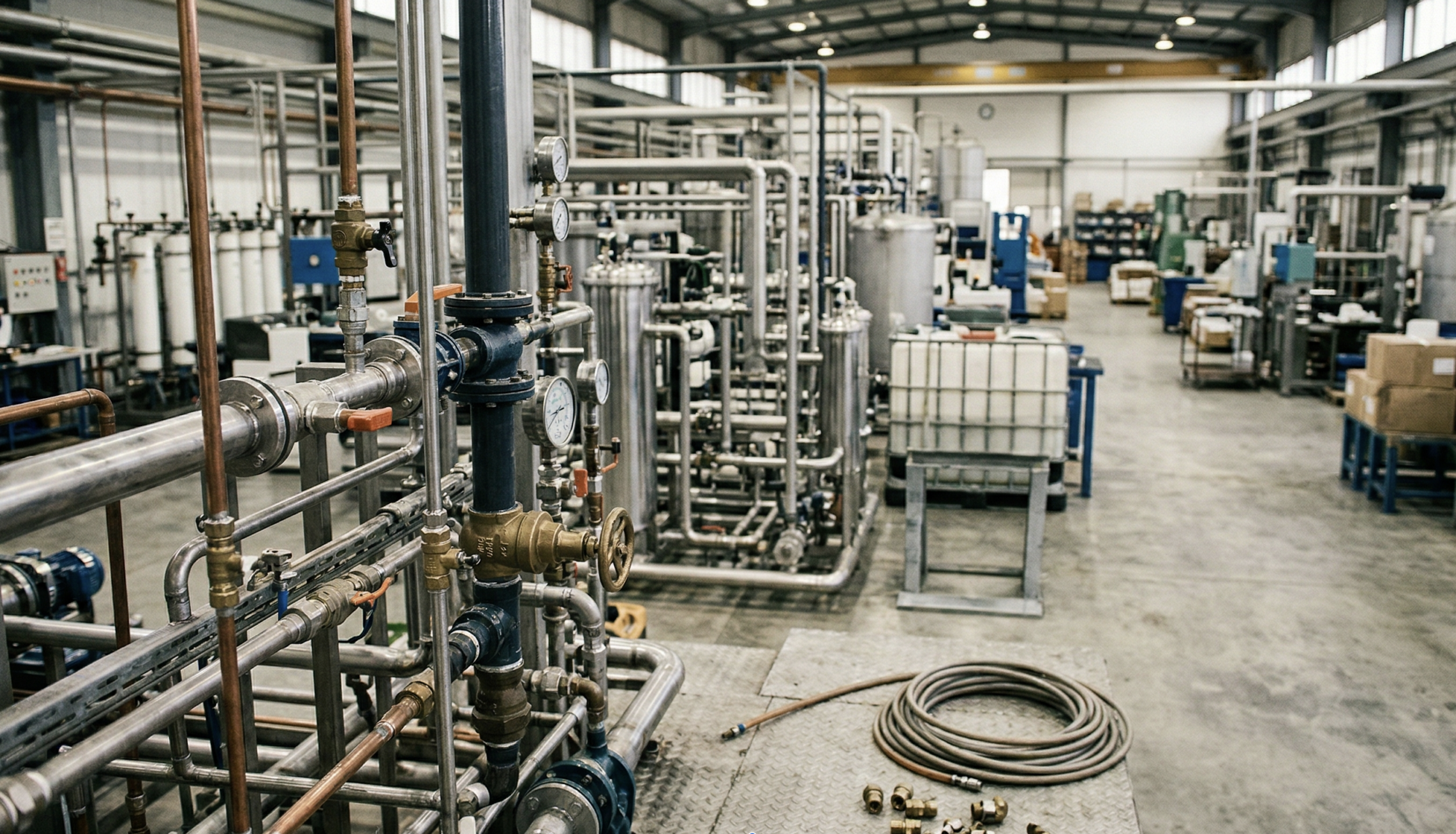
The site had already invested in an extensive treatment system. The visible scale of the equipment created an understandable expectation: a large installation should solve a large problem. But industrial water systems do not succeed because of footprint alone. They succeed when source-water chemistry, hydraulics, process demand, controls, and commissioning work together.

I reviewed the system as a process rather than as a collection of expensive components. The question was not “Which machine is missing?” It was “Where is the system failing to deliver the required condition?”

Looking Beyond the Main Equipment

In industrial treatment, a small restriction, incorrect flow path, control setting, valve position, pressure imbalance, sampling error, or commissioning omission can affect the entire process. The root cause may sit outside the most impressive piece of equipment.

According to my recollection, the critical issue was connected to a small valve and the way water moved through the system. The component was physically minor compared with the installation around it, but its effect on operation was significant.

The Quarter-Inch Solution

I proposed a small valve-related adjustment. The story is memorable because the physical change was tiny compared with the size and cost of the existing plant. After the adjustment, the team reported that the system began performing as required.

That outcome should be understood as a site-specific diagnosis. Without original drawings, laboratory data, process specifications, flow measurements, and independently reviewed commissioning records, it would be irresponsible to claim that a quarter-inch valve is a universal industrial solution.

The Engineering Lesson

The real lesson is not that small parts are magical. It is that water treatment is a system:

  • Feed-water composition defines the challenge.
  • Flow and pressure determine contact and separation conditions.
  • Valves and controls determine where the water actually goes.
  • Sampling determines whether performance is measured correctly.
  • Maintenance determines whether the result lasts.

A design can use excellent components and still fail when integration is wrong. Conversely, a precise correction can restore performance when the main equipment is appropriate but poorly controlled.

Integrity Above All

A consultant earns trust by diagnosing the problem rather than selling the largest possible replacement. Sometimes the correct recommendation is a new process. Sometimes it is a repair, a control change, a cleaning procedure, or a better test plan.

The financial value of a solution does not determine its engineering value. The best answer is the one supported by the process data and the customer’s actual requirement.

What Industrial Buyers Should Ask

  1. What is the exact process-water specification?
  2. Which feed-water results were used in the design?
  3. What are the minimum, normal, and peak flow rates?
  4. Where are pressure and flow measured?
  5. What is the acceptance test?
  6. Who owns commissioning and operator training?
  7. How will performance be verified over time?

What This Story Means for TipaTech

For TipaTech, the story represents a diagnostic mindset: understand the water, understand the system, and avoid assuming that more equipment is always the answer. Current residential or industrial product claims must still be supported by documentation for the exact model and application.

The Bottom Line

The Moroccanoil story is a field account about troubleshooting, not a laboratory proof or brand endorsement. Its useful message is that water-treatment performance depends on details, integration, and verification. A small component can matter greatly, but only when the diagnosis is correct.

Frequently Asked Questions

Is this Moroccanoil story an independently verified case study?

No. It is a personal field account by Baruch Ziser based on his recollection. It is not presented as an independently audited or peer-reviewed case study.

What was the reported factory problem?

According to the account, a large water-treatment installation was not producing the expected result during a critical production period.

What reportedly solved the problem?

Baruch recalls identifying a hydraulic or flow-control issue and making a small valve-related adjustment. The exact engineering solution should not be generalized without drawings, measurements, and site data.

Does a small component always solve a large water-treatment problem?

No. The lesson is that system performance depends on integration, flow, pressure, controls, commissioning, and diagnosis. Another site may require a completely different solution.

What should be documented in an industrial water project?

Document the process goal, feed-water analysis, flow and pressure, equipment specifications, control logic, commissioning data, maintenance, sampling, and acceptance criteria.

whole house water filtration systems

Cleaner. Smarter. Healthier

At TipaTech we specialize in advanced whole house water filtration systems designed to protect your health and improve your water at every tap. Our patented technology reduces lead, bacteria, microplastics and harmful chemicals while preserving essential minerals like magnesium. Tested and Certified by IAPMO Compliance to: NSF/ANSI 42/61/372-2022 standards. Our systems deliver safe, eco-friendly, antioxidant-rich water with no electricity, no waste and no compromises.

Make Your Water Smarter

This article is for informational purposes only and is not medical advice. TipaTech products are designed to support water quality, not to diagnose, treat, cure, or prevent any disease. Product performance varies based on source water, usage, and professional installation. TipaTech disclaims any liability arising from reliance on this content.

About the Author

Baruch Ziser

Founder & Senior Scientific Consultant | Inventor of the TipaTech Filtration Systems

Baruch Ziser is a leading expert in water technology with fifty years of experience. As the inventor of TipaTech filters and a senior scientist at the Technion’s INOVATEC program, he has developed advanced water systems that reduce impurities while retaining and adding the necessary minerals for optimal body function. His innovations are recognized globally for improving drinking water quality in homes and agriculture.

The TipaTech Water Filtration Systems have been Tested and Certified by IAPMO

& Compliance to NSF/ANSI/CAN standards

NSF/ANSI/CAN Standards | IAPMO, R&T, UPC and the Standards Council of Canada

More to Know

DID YOU KNOW?  ·  TIPATECH STORIES & INNOVATION

The Moroccanoil Factory Story: A Water-Treatment Field Account

Baruch Ziser recounts a factory water-treatment problem, the small valve change he says solved it, and the engineering lessons behind the story.

By Baruch Ziser Updated July 14, 2026 3 min read
The Moroccanoil Factory Story: A Water-Treatment Field Account
TOPICTipaTech Stories & Innovation
READING TIME3 minutes
FIRST PUBLISHEDApril 6, 2026

This article is a personal field account by Baruch Ziser. It describes events as he remembers them. It is not an independently audited case study, and the technical lesson should not be treated as proof that the same intervention will work at another facility.

In 2007, I received an urgent call from a factory in Ma’alot in northern Israel. The company was Moroccanoil, then a growing brand preparing for international expansion. According to the team, a large water-treatment installation was not delivering the expected result, and production pressure was rising.

The High-Stakes Problem

The site had already invested in an extensive treatment system. The visible scale of the equipment created an understandable expectation: a large installation should solve a large problem. But industrial water systems do not succeed because of footprint alone. They succeed when source-water chemistry, hydraulics, process demand, controls, and commissioning work together.

I reviewed the system as a process rather than as a collection of expensive components. The question was not “Which machine is missing?” It was “Where is the system failing to deliver the required condition?”

Looking Beyond the Main Equipment

In industrial treatment, a small restriction, incorrect flow path, control setting, valve position, pressure imbalance, sampling error, or commissioning omission can affect the entire process. The root cause may sit outside the most impressive piece of equipment.

According to my recollection, the critical issue was connected to a small valve and the way water moved through the system. The component was physically minor compared with the installation around it, but its effect on operation was significant.

The Quarter-Inch Solution

I proposed a small valve-related adjustment. The story is memorable because the physical change was tiny compared with the size and cost of the existing plant. After the adjustment, the team reported that the system began performing as required.

That outcome should be understood as a site-specific diagnosis. Without original drawings, laboratory data, process specifications, flow measurements, and independently reviewed commissioning records, it would be irresponsible to claim that a quarter-inch valve is a universal industrial solution.

The Engineering Lesson

The real lesson is not that small parts are magical. It is that water treatment is a system:

  • Feed-water composition defines the challenge.
  • Flow and pressure determine contact and separation conditions.
  • Valves and controls determine where the water actually goes.
  • Sampling determines whether performance is measured correctly.
  • Maintenance determines whether the result lasts.

A design can use excellent components and still fail when integration is wrong. Conversely, a precise correction can restore performance when the main equipment is appropriate but poorly controlled.

Integrity Above All

A consultant earns trust by diagnosing the problem rather than selling the largest possible replacement. Sometimes the correct recommendation is a new process. Sometimes it is a repair, a control change, a cleaning procedure, or a better test plan.

The financial value of a solution does not determine its engineering value. The best answer is the one supported by the process data and the customer’s actual requirement.

What Industrial Buyers Should Ask

  1. What is the exact process-water specification?
  2. Which feed-water results were used in the design?
  3. What are the minimum, normal, and peak flow rates?
  4. Where are pressure and flow measured?
  5. What is the acceptance test?
  6. Who owns commissioning and operator training?
  7. How will performance be verified over time?

What This Story Means for TipaTech

For TipaTech, the story represents a diagnostic mindset: understand the water, understand the system, and avoid assuming that more equipment is always the answer. Current residential or industrial product claims must still be supported by documentation for the exact model and application.

The Bottom Line

The Moroccanoil story is a field account about troubleshooting, not a laboratory proof or brand endorsement. Its useful message is that water-treatment performance depends on details, integration, and verification. A small component can matter greatly, but only when the diagnosis is correct.

Frequently Asked Questions

Is this Moroccanoil story an independently verified case study?

No. It is a personal field account by Baruch Ziser based on his recollection. It is not presented as an independently audited or peer-reviewed case study.

What was the reported factory problem?

According to the account, a large water-treatment installation was not producing the expected result during a critical production period.

What reportedly solved the problem?

Baruch recalls identifying a hydraulic or flow-control issue and making a small valve-related adjustment. The exact engineering solution should not be generalized without drawings, measurements, and site data.

Does a small component always solve a large water-treatment problem?

No. The lesson is that system performance depends on integration, flow, pressure, controls, commissioning, and diagnosis. Another site may require a completely different solution.

What should be documented in an industrial water project?

Document the process goal, feed-water analysis, flow and pressure, equipment specifications, control logic, commissioning data, maintenance, sampling, and acceptance criteria.
FROM INFORMATION TO THE RIGHT NEXT STEP

Not sure what is affecting your water?

Start with the water source, available test results, property conditions and the treatment goal. TipaTech can help review the situation before a system is selected.

Baruch Ziser

ABOUT THE AUTHOR

Baruch Ziser

Founder & Senior Scientific Consultant | Inventor of the TipaTech Filtration Systems

Baruch Ziser is a leading expert in water technology with fifty years of experience. As the inventor of TipaTech filters and a senior scientist at the Technion’s INOVATEC program, he has developed advanced water systems that reduce impurities while retaining and adding the necessary minerals for optimal body function. His innovations are recognized globally for improving drinking water quality in homes and agriculture.

The TipaTech Water Filtration Systems have been Tested and Certified by IAPMO

& Compliance to NSF/ANSI/CAN standards

NSF/ANSI/CAN Standards | IAPMO, R&T, UPC and the Standards Council of Canada

Contact Us