There is no single “best” pH that makes drinking water healthier. For public-water systems in the United States, the EPA lists pH 6.5 to 8.5 as a secondary guideline related mainly to taste, corrosion, staining, and treatment performance—not as a guarantee of safety or a medical target.
Water at pH 8.2 can be acceptable when it meets all applicable microbiological and chemical standards. The pH number alone cannot show whether the water contains lead, arsenic, nitrate, bacteria, PFAS, or other contaminants.
Understanding the pH Level of Water
pH measures how acidic or basic a solution is on a logarithmic scale. A change of one pH unit represents a tenfold change in hydrogen-ion activity. Pure water is close to pH 7 under defined laboratory conditions, but natural drinking water contains minerals and gases that shift the reading.
pH is not the same as alkalinity. pH describes the current acid-base condition; alkalinity describes the water’s capacity to resist a drop in pH. Two samples can have the same pH but very different buffering capacity.
What Is the Best pH for Drinking Water?
A practical answer is: water should fall within the range required by the relevant authority and should be stable, non-corrosive, acceptable in taste, and compliant with all health-based standards. The EPA’s secondary guideline of 6.5–8.5 is commonly used as an operational reference in the United States.
The World Health Organization does not set one universal health-based “ideal pH” for all drinking water. pH is important because it affects treatment, disinfection, corrosion, taste, and the behavior of other substances in water.
Is 8.2 pH Water Good?
In many water systems, pH 8.2 is within a normal operating range. It is mildly alkaline, not proof of a health benefit. Whether it is appropriate depends on alkalinity, hardness, disinfectant, metals, plumbing, and the full laboratory profile.
A search for “8.2 pH water benefits” often leads to claims about changing blood pH, detoxifying the body, or hydrating better. Healthy kidneys and lungs regulate blood pH tightly. Drinking mildly alkaline water does not meaningfully reset the body’s systemic pH in a healthy person.
When pH Is Too Low or Too High
Low pH
Low-pH water can be corrosive. It may increase the release of copper, lead, iron, or other metals from plumbing, depending on the pipe materials and water chemistry. A low reading does not automatically mean the source contains toxic metals; it means corrosion control deserves attention.
High pH
High-pH water may taste bitter, feel slippery, contribute to scaling, or reduce the effectiveness of some disinfection processes. Extremely high pH requires investigation. Mild alkalinity within an accepted range is not inherently unsafe.
pH, Hardness, TDS, and Minerals Are Different
- pH: acid-base condition.
- Alkalinity: buffering capacity.
- Hardness: mainly calcium and magnesium concentration.
- TDS: an estimate of total dissolved ions, not their identity or safety.
- Mineral content: the measured amount of specific minerals.
A water sample can have high pH and low mineral content, or a neutral pH and high hardness. A TDS meter cannot tell whether the dissolved material is calcium, sodium, nitrate, arsenic, or another ion.
How Filtration Can Change pH
Activated carbon may have little lasting effect on pH. Reverse osmosis often reduces alkalinity and can produce lower-pH water after contact with air. Calcite or other remineralization media may raise pH and alkalinity. The result depends on the incoming water, media, flow, and contact time.
According to TipaTech’s current product information, the Lotus DY is designed as a point-of-use system. Any statement about its finished-water pH, mineral profile, or contaminant reduction should be supported by measurements from the exact installation and configuration.
How to Test Drinking-Water pH
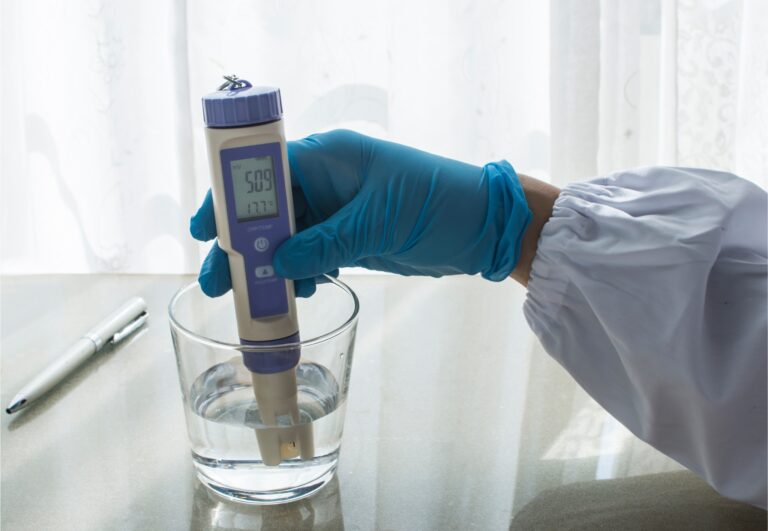
Calibrated digital meters provide a better measurement than inexpensive strips when precision matters. Test a fresh sample and follow the meter manufacturer’s calibration and storage instructions. For treatment decisions, use a laboratory panel that also measures alkalinity, hardness, metals, and any contaminants relevant to the source.
The Bottom Line
The best drinking water is not defined by one pH number. A pH near 7 to mildly alkaline may taste pleasant and work well with plumbing, but safety depends on the complete microbiological and chemical profile. Treat pH as one useful measurement—not a health score.
Frequently Asked Questions
What is the best pH for drinking water?
There is no single medically superior pH. In the U.S., 6.5–8.5 is a common secondary operational guideline, while overall safety depends on the full water-quality profile.
Is pH 8.2 water good to drink?
It can be acceptable when the water meets applicable chemical and microbiological standards. A pH of 8.2 alone does not prove a health benefit.
Does alkaline water change blood pH?
In healthy people, the lungs and kidneys regulate blood pH tightly. Mildly alkaline drinking water does not meaningfully reset systemic blood pH.
Is pH the same as alkalinity?
No. pH is the current acid-base condition, while alkalinity is the water’s ability to resist a pH change.
Can a TDS meter measure pH or safety?
No. A TDS meter estimates conductivity-based dissolved solids. It does not measure pH or identify specific contaminants.