Why Does My Water Taste Metallic
Table of Contents

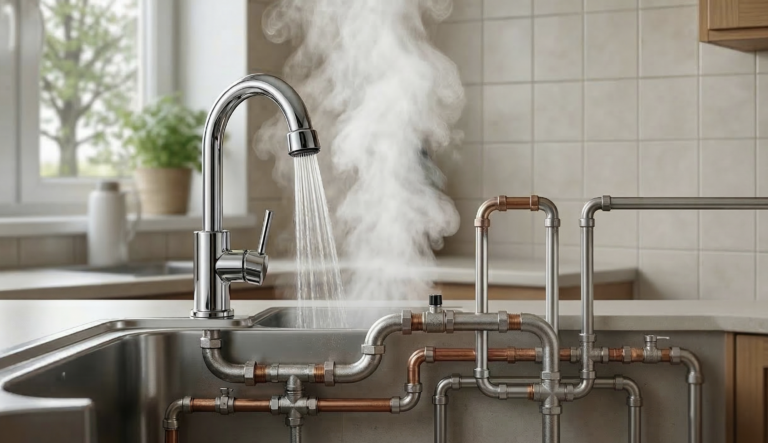
A metallic taste in water is a useful clue, but it is not a diagnosis. Iron, copper, zinc, plumbing corrosion, low pH, a new faucet, or a water heater can all change taste. At the same time, some important contaminants, including lead, may be present without a noticeable taste, smell, or color.

The safest response is to isolate where the taste appears, review the water source, and use laboratory testing rather than guessing from flavor alone.

Why Water Can Taste Like Metal

Iron and manganese

Iron can create a metallic taste, reddish staining, and sediment. Manganese can contribute dark staining or an unusual taste. In public-water systems, these are often managed as secondary or aesthetic concerns, but high or changing results still deserve investigation.

Copper from plumbing

Copper can enter water when it sits in copper pipes or when water chemistry promotes corrosion. A bitter or metallic taste, blue-green staining, or higher results after stagnation can point toward plumbing as the source.

Zinc and galvanized components

Galvanized pipes, brass fittings, and new fixtures can affect taste. Galvanized plumbing can also accumulate scale and corrosion products over time.

Low pH or corrosive water

Water with low pH or low alkalinity can be more aggressive toward some metals. Corrosion depends on several factors, including pH, alkalinity, disinfectant, temperature, stagnation, pipe material, and protective scale. It cannot be predicted from TDS or hardness alone.

The water heater

If cold water tastes normal but hot water tastes metallic, inspect the water heater and hot-water plumbing. Sediment, corrosion, anode components, and long storage can change taste. Do not assume a whole-house filter is the first or only solution.

Why the Old Light-Metal Versus Heavy-Metal Shortcut Can Mislead

Articles sometimes divide metals into “light” and “heavy” groups and then treat one group as harmless and the other as toxic. That is not a dependable household risk framework. Toxicity depends on the specific element, chemical form, concentration, exposure route, and duration.

Iron can create a strong taste without indicating the same health concern as lead. Lead can be important at very low concentrations and may have no taste. Copper is an essential nutrient but can cause problems at elevated levels. The exact test result matters more than a broad family label.

Does Metallic Taste Mean Heavy Metals Are Present?

No. Taste cannot identify lead, arsenic, chromium, nickel, or another metal. It may reflect iron or copper, but it can also come from the faucet, a kettle, a water bottle, dental work, medication, or a change in taste perception.

If the same metallic taste occurs with several unrelated drinks or only one person notices it, consider a medical or dental cause as well as the water. Persistent taste changes should be discussed with a qualified clinician.

A Simple Source-Isolation Test

  1. Compare cold and hot water.
  2. Compare the first draw with water after two to five minutes of flushing.
  3. Compare several faucets, including one near the water entry point.
  4. Try the water in a clean glass rather than directly from the faucet.
  5. Check whether the taste appears after water passes through a refrigerator filter, kettle, or bottle.

These observations help distinguish a source-water issue from a localized fixture, pipe, appliance, or storage problem. They do not replace testing.

What to Test

A practical starting panel may include pH, alkalinity, iron, manganese, copper, and lead. Private-well users may need additional tests based on geology and local guidance. Public-water users should review the utility report, but remember that lead and copper often enter water inside the building after it leaves the treatment plant.

The U.S. EPA lists iron, manganese, copper, and zinc among substances that can affect taste, color, staining, or other aesthetic qualities in its secondary drinking-water guidance. The World Health Organization overview of lead exposure explains why lead should not be evaluated by taste.

Match Treatment to the Cause

Plumbing repair and corrosion control

When the source is a fixture, pipe, connector, or water heater, replacing or repairing that component may be more effective than adding a filter. Corrosion-control changes for a public system belong to the utility, while building-level issues require qualified plumbing advice.

Iron and manganese treatment

Treatment can involve oxidation, filtration, media specifically designed for the water chemistry, or other processes. Performance depends on whether the metal is dissolved or particulate, the pH, flow, and competing substances.

Point-of-use drinking-water treatment

A system such as LotusDY may be considered for drinking water when its current model documentation matches the measured issue. Do not infer lead, copper, or other metal reduction from taste improvement alone.

Whole-house treatment

The TipaTech T-18 is positioned as a point-of-entry system. Homeowners should compare the exact configuration and test documentation with their laboratory results, flow demand, plumbing condition, and maintenance plan.

When to Stop Using the Water

Use an alternative source and contact the appropriate authority when there is a sudden major change in taste or color, a confirmed lead or chemical result, a utility notice, contamination after flooding, or symptoms that may be related to exposure. Boiling does not remove metals and can concentrate nonvolatile contaminants as water evaporates.

The Bottom Line

Metallic taste is often caused by iron, copper, zinc, corrosion, or the water heater, but taste cannot determine safety. Isolate the source, test the water, and choose plumbing repair or treatment for the measured cause rather than purchasing a generic “heavy metal” filter based on flavor alone.

Frequently Asked Questions

Why does my water taste metallic?

Common causes include iron, copper, zinc, low-pH water, corrosion in household plumbing, a new fixture, or the water heater. Taste alone cannot identify the metal or determine whether the water is unsafe.

Is metallic-tasting water dangerous?

Not always. Iron and zinc often create aesthetic problems at concentrations that are not the same as a health violation, while lead and other contaminants can be important without producing a noticeable taste. Testing is the only reliable way to know.

Why does only the hot water taste metallic?

When the issue is limited to hot water, the water heater, anode rod, sediment, or hot-water plumbing becomes more likely. A licensed plumber or qualified water professional can help isolate the source.

Can a filter remove a metallic taste?

Sometimes. The correct treatment depends on the cause. Carbon may improve selected taste and odor issues, while dissolved iron, copper, lead, low pH, or corrosion can require different treatment or plumbing repairs.

What should I test when water tastes like metal?

Start with pH, iron, manganese, copper, and lead, then add source-specific tests based on the utility report, well conditions, plumbing materials, and whether the problem occurs at one faucet or throughout the property.

whole house water filtration systems

Cleaner. Smarter. Healthier

At TipaTech we specialize in advanced whole house water filtration systems designed to protect your health and improve your water at every tap. Our patented technology reduces lead, bacteria, microplastics and harmful chemicals while preserving essential minerals like magnesium. Tested and Certified by IAPMO Compliance to: NSF/ANSI 42/61/372-2022 standards. Our systems deliver safe, eco-friendly, antioxidant-rich water with no electricity, no waste and no compromises.

Make Your Water Smarter

This article is for informational purposes only and is not medical advice. TipaTech products are designed to support water quality, not to diagnose, treat, cure, or prevent any disease. Product performance varies based on source water, usage, and professional installation. TipaTech disclaims any liability arising from reliance on this content.

About the Author

Baruch Ziser

Founder & Senior Scientific Consultant | Inventor of the TipaTech Filtration Systems

Baruch Ziser is a leading expert in water technology with fifty years of experience. As the inventor of TipaTech filters and a senior scientist at the Technion’s INOVATEC program, he has developed advanced water systems that reduce impurities while retaining and adding the necessary minerals for optimal body function. His innovations are recognized globally for improving drinking water quality in homes and agriculture.

The TipaTech Water Filtration Systems have been Tested and Certified by IAPMO

& Compliance to NSF/ANSI/CAN standards

NSF/ANSI/CAN Standards | IAPMO, R&T, UPC and the Standards Council of Canada

More to Know

DID YOU KNOW?  ·  WATER QUALITY & TESTING

Why Does My Water Taste Metallic? Causes, Testing, and Treatment

A metallic taste can come from iron, copper, zinc, plumbing corrosion, or the water heater. Learn how to isolate the source, test it, and choose treatment.

By Baruch Ziser Updated July 14, 2026 5 min read
Why Does My Water Taste Metallic? Causes, Testing, and Treatment
TOPICWater Quality & Testing
READING TIME5 minutes
FIRST PUBLISHEDMarch 2, 2026

A metallic taste in water is a useful clue, but it is not a diagnosis. Iron, copper, zinc, plumbing corrosion, low pH, a new faucet, or a water heater can all change taste. At the same time, some important contaminants, including lead, may be present without a noticeable taste, smell, or color.

The safest response is to isolate where the taste appears, review the water source, and use laboratory testing rather than guessing from flavor alone.

Why Water Can Taste Like Metal

Iron and manganese

Iron can create a metallic taste, reddish staining, and sediment. Manganese can contribute dark staining or an unusual taste. In public-water systems, these are often managed as secondary or aesthetic concerns, but high or changing results still deserve investigation.

Copper from plumbing

Copper can enter water when it sits in copper pipes or when water chemistry promotes corrosion. A bitter or metallic taste, blue-green staining, or higher results after stagnation can point toward plumbing as the source.

Zinc and galvanized components

Galvanized pipes, brass fittings, and new fixtures can affect taste. Galvanized plumbing can also accumulate scale and corrosion products over time.

Low pH or corrosive water

Water with low pH or low alkalinity can be more aggressive toward some metals. Corrosion depends on several factors, including pH, alkalinity, disinfectant, temperature, stagnation, pipe material, and protective scale. It cannot be predicted from TDS or hardness alone.

The water heater

If cold water tastes normal but hot water tastes metallic, inspect the water heater and hot-water plumbing. Sediment, corrosion, anode components, and long storage can change taste. Do not assume a whole-house filter is the first or only solution.

Why the Old Light-Metal Versus Heavy-Metal Shortcut Can Mislead

Articles sometimes divide metals into “light” and “heavy” groups and then treat one group as harmless and the other as toxic. That is not a dependable household risk framework. Toxicity depends on the specific element, chemical form, concentration, exposure route, and duration.

Iron can create a strong taste without indicating the same health concern as lead. Lead can be important at very low concentrations and may have no taste. Copper is an essential nutrient but can cause problems at elevated levels. The exact test result matters more than a broad family label.

Does Metallic Taste Mean Heavy Metals Are Present?

No. Taste cannot identify lead, arsenic, chromium, nickel, or another metal. It may reflect iron or copper, but it can also come from the faucet, a kettle, a water bottle, dental work, medication, or a change in taste perception.

If the same metallic taste occurs with several unrelated drinks or only one person notices it, consider a medical or dental cause as well as the water. Persistent taste changes should be discussed with a qualified clinician.

A Simple Source-Isolation Test

  1. Compare cold and hot water.
  2. Compare the first draw with water after two to five minutes of flushing.
  3. Compare several faucets, including one near the water entry point.
  4. Try the water in a clean glass rather than directly from the faucet.
  5. Check whether the taste appears after water passes through a refrigerator filter, kettle, or bottle.

These observations help distinguish a source-water issue from a localized fixture, pipe, appliance, or storage problem. They do not replace testing.

What to Test

A practical starting panel may include pH, alkalinity, iron, manganese, copper, and lead. Private-well users may need additional tests based on geology and local guidance. Public-water users should review the utility report, but remember that lead and copper often enter water inside the building after it leaves the treatment plant.

The U.S. EPA lists iron, manganese, copper, and zinc among substances that can affect taste, color, staining, or other aesthetic qualities in its secondary drinking-water guidance. The World Health Organization overview of lead exposure explains why lead should not be evaluated by taste.

Match Treatment to the Cause

Plumbing repair and corrosion control

When the source is a fixture, pipe, connector, or water heater, replacing or repairing that component may be more effective than adding a filter. Corrosion-control changes for a public system belong to the utility, while building-level issues require qualified plumbing advice.

Iron and manganese treatment

Treatment can involve oxidation, filtration, media specifically designed for the water chemistry, or other processes. Performance depends on whether the metal is dissolved or particulate, the pH, flow, and competing substances.

Point-of-use drinking-water treatment

A system such as LotusDY may be considered for drinking water when its current model documentation matches the measured issue. Do not infer lead, copper, or other metal reduction from taste improvement alone.

Whole-house treatment

The TipaTech T-18 is positioned as a point-of-entry system. Homeowners should compare the exact configuration and test documentation with their laboratory results, flow demand, plumbing condition, and maintenance plan.

When to Stop Using the Water

Use an alternative source and contact the appropriate authority when there is a sudden major change in taste or color, a confirmed lead or chemical result, a utility notice, contamination after flooding, or symptoms that may be related to exposure. Boiling does not remove metals and can concentrate nonvolatile contaminants as water evaporates.

The Bottom Line

Metallic taste is often caused by iron, copper, zinc, corrosion, or the water heater, but taste cannot determine safety. Isolate the source, test the water, and choose plumbing repair or treatment for the measured cause rather than purchasing a generic “heavy metal” filter based on flavor alone.

Frequently Asked Questions

Why does my water taste metallic?

Common causes include iron, copper, zinc, low-pH water, corrosion in household plumbing, a new fixture, or the water heater. Taste alone cannot identify the metal or determine whether the water is unsafe.

Is metallic-tasting water dangerous?

Not always. Iron and zinc often create aesthetic problems at concentrations that are not the same as a health violation, while lead and other contaminants can be important without producing a noticeable taste. Testing is the only reliable way to know.

Why does only the hot water taste metallic?

When the issue is limited to hot water, the water heater, anode rod, sediment, or hot-water plumbing becomes more likely. A licensed plumber or qualified water professional can help isolate the source.

Can a filter remove a metallic taste?

Sometimes. The correct treatment depends on the cause. Carbon may improve selected taste and odor issues, while dissolved iron, copper, lead, low pH, or corrosion can require different treatment or plumbing repairs.

What should I test when water tastes like metal?

Start with pH, iron, manganese, copper, and lead, then add source-specific tests based on the utility report, well conditions, plumbing materials, and whether the problem occurs at one faucet or throughout the property.
FROM INFORMATION TO THE RIGHT NEXT STEP

Not sure what is affecting your water?

Start with the water source, available test results, property conditions and the treatment goal. TipaTech can help review the situation before a system is selected.

Baruch Ziser

ABOUT THE AUTHOR

Baruch Ziser

Founder & Senior Scientific Consultant | Inventor of the TipaTech Filtration Systems

Baruch Ziser is a leading expert in water technology with fifty years of experience. As the inventor of TipaTech filters and a senior scientist at the Technion’s INOVATEC program, he has developed advanced water systems that reduce impurities while retaining and adding the necessary minerals for optimal body function. His innovations are recognized globally for improving drinking water quality in homes and agriculture.

The TipaTech Water Filtration Systems have been Tested and Certified by IAPMO

& Compliance to NSF/ANSI/CAN standards

NSF/ANSI/CAN Standards | IAPMO, R&T, UPC and the Standards Council of Canada

Contact Us