Table of Contents

1. Why Was the “Mineral Reclaimer” Invented?

In the early 2000s, reverse osmosis (RO) systems became very popular. They were praised for drastically reducing TDS (total dissolved solids) – but in doing so, they also filtered out essential minerals like magnesium, calcium and even small amounts of sodium.
The result? Water that tasted flat or bitter, and people around them didn’t feel like they were making the right investment.
Customers began complaining – rightly so – not only about the taste, but also about the very low pH level – sometimes below 6.5, which is the minimum level allowed by health standards.
To save the reputation of RO, the mineral reclaimer was invented – a small cartridge that is installed after the RO membrane, supposedly to “return the goodness” to the water.
To us, this seems mostly like a marketing ploy.

2. Who Invented the Mineral Reclaimer?

The first to introduce it to the market were manufacturers from China, who saw sales potential. Western companies – mainly from the United States – joined immediately afterwards, not because there was a scientific breakthrough, but because they did not want to be left behind in the marketing race.

3. Does the Mineral Reclaimer Really Work?

Now we have come to the real problem.
In most RO systems, the water flow passes too quickly – there is not enough contact time for the water to absorb a significant amount of minerals from the capsule.
You can easily check this: measure the TDS before and after the mineral reclaimer, and also check ORP and mineral levels to verify whether any meaningful enrichment has actually occurred. In most cases – there is almost no change at the beginning of use.
And if you do see a difference later on? This is not necessarily good news – it is likely bacterial growth.
The return line is installed after the membrane – that is, on the filtration side – and is therefore an ideal environment for the growth of contaminants from the tap, especially resistant bacteria such as Pseudomonas aeruginosa. Over time, mold and fungus can also develop, leading to bad odors and tastes – and in our opinion, a health risk.
Studies in PubMed confirm that Pseudomonas and other bacteria can colonize RO systems and form biofilms – even after filtration.
And the worst part? The contamination can spread to the storage tank and from there to the family’s drinking glasses.
In addition, RO systems require a sewer connection to dispose of the waste water – typically wasting between 1 and 5 gallons of water for every gallon of water treated. The sewer connection can also allow bacteria to enter the storage tank.
So is this a guaranteed mineral enrichment? In our opinion — it may turn out to be a boiling broth of bacteria.

4. What Is the Real Solution?

The good news: there is a true mineral enrichment technology — and in our opinion it is completely different from the usual mineral remineralizers.
For example, TipaTech-Lotus DY technology uses a patented process that allows for precise control of mineral levels and magnesium enrichment, while maintaining a healthy TDS range (100–1000), without the need for a storage tank, without electricity, and without the risk of contamination.
The system operates on water pressure alone — and also releases toxic gases (radon, chlorine, ammonia) that are not treated at all by regular RO systems.

5. Summary

Adding “minerals” to an RO system is like putting makeup on a cracked wall — it may seem so in the short term, but it does not really solve the underlying problem, and may even create new health problems.
If you want healthy, tasty, mineral-rich, and free of contaminants water — you need a technology that is designed for this from the ground up, not a temporary marketing fix.
Considering parting ways with your RO system? It could be the healthiest decision you make this year.

Scientific Websites and Support

traditional reverse osmosis systems. The American Chemical Society (ACS) highlights in its Environmental Science & Technology review the unintended consequences of RO filtration — including the removal of essential minerals and the potential for microbial growth inside storage tanks. Complementing this, the World Health Organization (WHO), in its publication “Nutrients in Drinking-Water”, discusses the health implications of consuming demineralized water and emphasizes the importance of maintaining adequate mineral levels such as magnesium and calcium. Together, these reputable sources provide a strong scientific foundation for understanding why remineralization capsules are not a reliable long-term solution.

whole house water filtration systems

Cleaner. Smarter. Healthier

At TipaTech we specialize in advanced whole house water filtration systems designed to protect your health and improve your water at every tap. Our patented technology reduces lead, bacteria, microplastics and harmful chemicals while preserving essential minerals like magnesium. Tested and Certified by IAPMO Compliance to: NSF/ANSI 42/61/372-2022 standards. Our systems deliver safe, eco-friendly, antioxidant-rich water with no electricity, no waste and no compromises.

Make Your Water Smarter

This article is for informational purposes only and is not medical advice. TipaTech products are designed to support water quality, not to diagnose, treat, cure, or prevent any disease. Product performance varies based on source water, usage, and professional installation. TipaTech disclaims any liability arising from reliance on this content.

About the Author

Baruch Ziser

Founder & Senior Scientific Consultant | Inventor of the TipaTech Filtration Systems

Baruch Ziser is a leading expert in water technology with fifty years of experience. As the inventor of TipaTech filters and a senior scientist at the Technion’s INOVATEC program, he has developed advanced water systems that reduce impurities while retaining and adding the necessary minerals for optimal body function. His innovations are recognized globally for improving drinking water quality in homes and agriculture.

The TipaTech Water Filtration Systems have been Tested and Certified by IAPMO

& Compliance to NSF/ANSI/CAN standards

NSF/ANSI/CAN Standards | IAPMO, R&T, UPC and the Standards Council of Canada

More to Know

DID YOU KNOW?  ·  WATER TREATMENT METHODS

Can Reverse Osmosis Add Minerals Back? What Remineralization Does

Learn how RO remineralization cartridges, blending, and mineral dosing work, when they are useful, and what their results do not prove.

By Baruch Ziser Updated July 13, 2026 4 min read
Can Reverse Osmosis Add Minerals Back? What Remineralization Does
TOPICWater Treatment Methods
READING TIME4 minutes
FIRST PUBLISHEDJuly 15, 2025

Reverse osmosis can be paired with a stage that adds minerals back to the treated water, but the RO membrane itself does not perform that step. Remineralization happens after filtration through a cartridge, blending valve, dosing system, or another controlled post-treatment method.

The practical question is not whether minerals sound healthy. It is what the finished water needs. A remineralization stage may improve taste, raise alkalinity, adjust pH, or make low-mineral water less aggressive toward certain plumbing materials. It should not be presented as proof that the water prevents disease or supplies a meaningful share of every mineral the body needs.

What Reverse Osmosis Does to Minerals

Reverse osmosis uses pressure to move water through a semi-permeable membrane. Depending on the membrane, pressure, temperature, source water, and system condition, it can reduce many dissolved ions, including calcium, magnesium, sodium, chloride, nitrate, and selected metals.

That broad reduction is one reason RO can be useful when testing identifies a dissolved contaminant. It also means the product water commonly has lower mineral content, alkalinity, and conductivity than the feed water. For a fuller explanation, see Does Reverse Osmosis Remove Minerals?

How Minerals Are Added Back After RO

Calcite Remineralization Cartridges

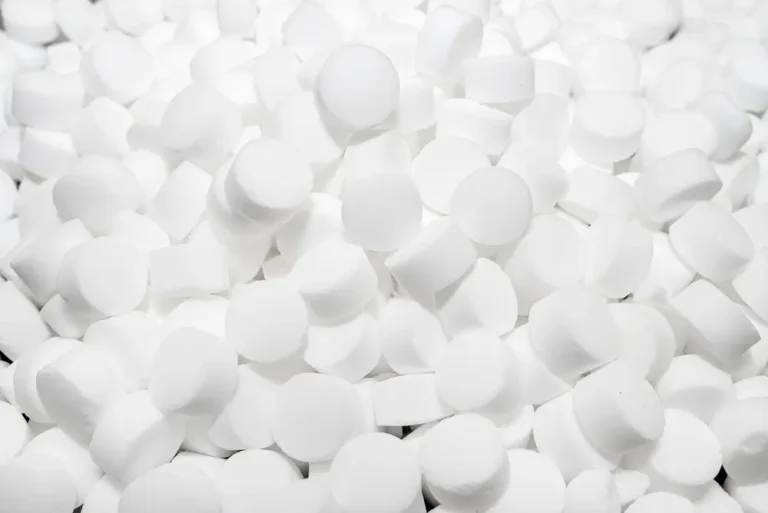
Calcite is a form of calcium carbonate. As low-mineral water passes through the media, a portion can dissolve into the water. This may add calcium, increase alkalinity, and raise pH. The effect is not fixed. It depends on contact time, flow, incoming pH, carbon dioxide, media condition, and system design.

Calcium and Magnesium Media

Some cartridges combine calcite with magnesium-containing media. These products may add both calcium and magnesium, but the ratio and final concentration vary. Marketing language such as "mineral-rich" should be checked against measured output from the exact cartridge under defined conditions.

Blending Treated and Untreated Water

A blending valve mixes a controlled amount of feed water with RO water. This can restore alkalinity and minerals efficiently, but it can also reintroduce contaminants that the membrane was installed to reduce. Blending is appropriate only when the source water is understood and the blended result meets the treatment goal.

Liquid Mineral Dosing

Food-grade mineral concentrates or drops can add a known dose to a known volume of water. This provides more direct control than a passive cartridge, but it requires accurate dosing, hygienic handling, and a product intended for drinking water. More is not automatically better.

Do You Need to Remineralize RO Water?

There is no universal requirement that every RO system must include remineralization. Safe hydration does not depend on one specific TDS value, and food is the main source of essential minerals for most people. The choice is usually driven by taste, water chemistry, plumbing conditions, and user preference.

Remineralization may be useful when:

  • The water tastes unusually flat to the household
  • The finished water has very low alkalinity
  • A qualified assessment identifies corrosion concerns
  • A specific beverage or food process benefits from a defined mineral profile
  • The owner wants a measured calcium or magnesium contribution from the water

It may be unnecessary when the existing taste is acceptable, the plumbing is compatible, and the system already produces water that meets the intended use.

What a Mineral Cartridge Does Not Prove

A mineral cartridge does not automatically prove that the water is healthier, more hydrating, antioxidant, or medically beneficial. It also does not guarantee a stable mineral concentration for the full life of the cartridge.

TDS is useful as a broad conductivity-based indicator, but it cannot show whether the dissolved material is calcium, magnesium, sodium, chloride, or something else. A higher TDS reading after a cartridge confirms that more dissolved ions may be present. It does not identify them or establish a health benefit.

How to Evaluate a Remineralization Stage

  1. Define the goal: taste, pH, alkalinity, calcium, magnesium, or corrosion control.
  2. Review the source-water test and the RO product-water chemistry.
  3. Check the exact media and the manufacturer's performance information.
  4. Measure the finished water under normal household flow.
  5. Replace or service the cartridge on schedule.
  6. Retest when taste, pH, flow, or system performance changes.

The EPA home filtration fact sheet recommends selecting treatment around the contaminant or water-quality issue that actually needs to be addressed. Remineralization should be approached with the same discipline.

Where TipaTech Fits

According to TipaTech's current product information, the Lotus DY under-sink system is designed to manage drinking-water characteristics without relying on a conventional RO membrane. That makes it a different approach from RO followed by a mineral cartridge.

The relevant comparison is not "minerals versus no minerals." It is the complete treatment result: which contaminants are reduced, what mineral profile remains or is added, how the system performs at normal flow, and what maintenance is required. Product-specific statements should be tied to testing for the exact configuration.

For practical methods and limitations, see How to Remineralize RO Water.

The Bottom Line

Reverse osmosis can be combined with a post-treatment stage that adds selected minerals back to the water. The most common reasons are taste, alkalinity, pH adjustment, and corrosion management. A good system defines the target, measures the result, and avoids turning a mineral reading into a broad health promise.

Frequently Asked Questions

Can reverse osmosis add minerals back by itself?

No. The RO membrane removes many dissolved substances. Minerals are added afterward through a remineralization cartridge, blending valve, dosing system, or another post-treatment stage.

Do you need to add minerals to reverse osmosis water?

Not always. Remineralization is mainly used to adjust taste, pH, alkalinity, or corrosion characteristics. The decision depends on the source water, the finished-water chemistry, and the household's preferences.

What minerals do RO remineralization cartridges add?

Many cartridges use calcite to add calcium and raise alkalinity. Some also use magnesium-containing media. The actual output depends on the media, contact time, flow rate, and incoming water.

Do mineral drops and mineral cartridges work the same way?

No. Drops dose a measured product into a known volume of water. A cartridge dissolves media as water flows through it, so the result can vary with flow, pH, temperature, and cartridge condition.

How can I tell whether remineralization is working?

Compare the water before and after the stage using appropriate measurements such as pH, alkalinity, calcium, magnesium, conductivity, and taste. TDS alone cannot identify which minerals were added.

FROM INFORMATION TO THE RIGHT NEXT STEP

Not sure what is affecting your water?

Start with the water source, available test results, property conditions and the treatment goal. TipaTech can help review the situation before a system is selected.

Baruch Ziser

ABOUT THE AUTHOR

Baruch Ziser

Founder & Senior Scientific Consultant | Inventor of the TipaTech Filtration Systems

Baruch Ziser is a leading expert in water technology with fifty years of experience. As the inventor of TipaTech filters and a senior scientist at the Technion’s INOVATEC program, he has developed advanced water systems that reduce impurities while retaining and adding the necessary minerals for optimal body function. His innovations are recognized globally for improving drinking water quality in homes and agriculture.

The TipaTech Water Filtration Systems have been Tested and Certified by IAPMO

& Compliance to NSF/ANSI/CAN standards

NSF/ANSI/CAN Standards | IAPMO, R&T, UPC and the Standards Council of Canada

Contact Us