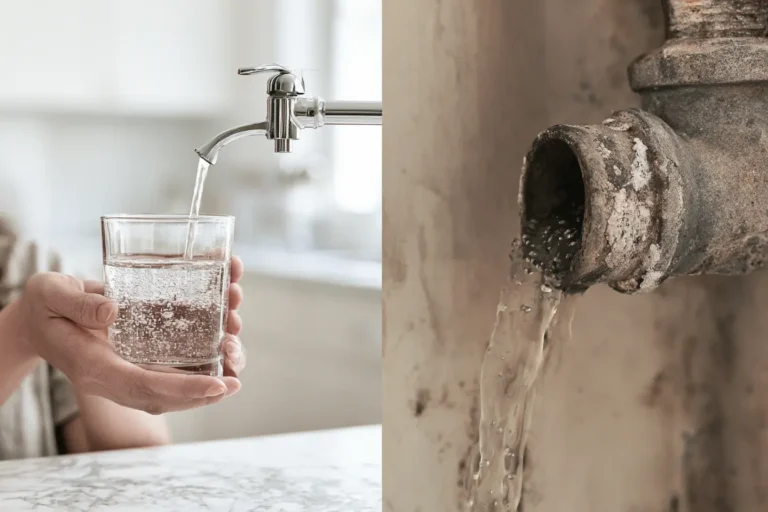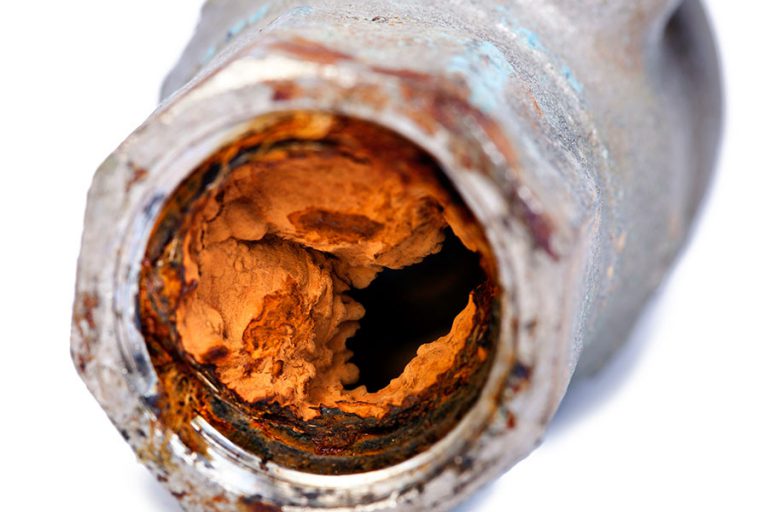
Lead in water is a serious concern because it can come from the plumbing that delivers water to the tap, not only from the water source itself. Older service lines, solder, pipes, brass fixtures, valves, and fittings can contribute lead when water is corrosive or sits in contact with those materials.
The EPA explains that lead can enter drinking water through corrosion of plumbing materials. Children are a sensitive group, but a responsible article should guide parents toward testing and verified reduction, not panic or medical promises.
Where Lead in Water Comes From
Lead is rarely a source-water problem. It is usually a distribution and plumbing problem. The leading sources include lead service lines, galvanized pipes that have captured lead, lead solder used in older plumbing, and brass or chrome-plated fixtures that contain leaded components.
The risk can vary from one building to the next and even from one faucet to another. Water chemistry, stagnation time, pipe age, temperature, recent plumbing work, and corrosion control all matter. Clear water does not prove lead is absent.
Why Parents Should Take Lead Seriously
Lead exposure is associated with harmful effects, and children are especially vulnerable because their bodies and nervous systems are still developing. Drinking water can be one source of total lead exposure alongside paint, dust, soil, food, and other sources. That is why a water result should be considered together with the broader home environment and, when relevant, medical guidance.
This article does not diagnose exposure or replace advice from a healthcare professional. If there is a concern about a child, share water results and any blood lead results with a qualified professional or local health department.
How to Test for Lead in Water
Lead cannot be detected by taste, smell, or color. A certified laboratory or an approved local testing program is the most reliable path. Ask whether the sample should be first-draw, flushed, or collected from specific taps, because sampling method affects the result.
Public-water customers can review utility information, but a household tap can still differ because the building plumbing may be the source. Private-well owners should also investigate plumbing materials because well testing alone does not identify every household lead source.
What Lead Results Mean
EPA’s Lead and Copper Rule uses an action level framework for public water systems, not a personal health guarantee for an individual glass of water. EPA describes the lead action level as 15 ppb for certain public-system tap samples. Families should follow local guidance when a test detects lead, especially where infants, children, or pregnant people are involved.
What Reduces Lead at the Tap?
For drinking and cooking water, point-of-use treatment is often the practical first step while permanent plumbing solutions are considered. Options may include filters certified for lead reduction, some RO systems, and other technologies with exact model claims. NSF maintains listings for lead-reduction products under relevant standards, but the exact model and replacement cartridge must match the listing.
Boiling does not remove lead. Standard sediment filters, ordinary taste-and-odor carbon filters, and scale devices should not be assumed to reduce lead unless the product has a specific lead-reduction claim.
Where TipaTech Fits
A lead-focused recommendation should be tied to current model-specific documentation. The Lotus DY may be considered as a point-of-use drinking-water option when its documented claims fit the lead concern. A whole-house option such as the TipaTech T-18 may serve other household treatment goals, but lead at the drinking tap should be addressed with a verified lead-reduction claim.
For broader microbiological concerns, see TipaTech’s guide to filters for bacteria and viruses. Lead and microorganisms are different problems and should not be merged into one generic claim.
The Bottom Line
If you are worried about lead in water, test the tap, identify plumbing sources, use only a system with a specific lead-reduction claim, and maintain it exactly as required. Strong protection comes from verification, not from a broad promise that a filter solves every child-related exposure concern.
Frequently Asked Questions
Where does lead in drinking water come from?
Lead usually enters drinking water when plumbing materials that contain lead corrode, including lead service lines, older pipes, solder, brass fixtures, and some fittings.
Is there a safe level of lead in water for children?
Health agencies generally treat lead exposure as something to reduce as much as possible, especially for children. A water test and official guidance are the right starting points.
Can boiling water remove lead?
No. Boiling does not remove lead and can concentrate it slightly as water evaporates.
What filter should I use for lead?
Use a point-of-use filter or RO system with a specific lead-reduction claim for the exact model and cartridge. Verify certification and replace cartridges on schedule.
Does lead in water affect showers?
The main concern for lead in drinking water is ingestion from drinking and cooking. Shower exposure should not be used to exaggerate risk unless supported by a specific source and situation.