Antioxidant Water: Benefits, Science, and What Actually Makes Water Protective
Table of Contents

Antioxidant water is one of the most misunderstood phrases in the water industry. Search results often mix three different ideas: alkaline pH, negative oxidation-reduction potential, and dissolved molecular hydrogen. These properties can be related, but they are not interchangeable, and none of them automatically proves that the water will produce a medical benefit.

The useful way to evaluate antioxidant water is to separate the measurement from the marketing. What is being measured? Under which conditions? How stable is the result? Has the exact water or device been studied? Most importantly, has basic water safety and contaminant treatment been addressed first?

What Is Antioxidant Water?

The term generally describes water that has a relatively low or negative oxidation-reduction potential, often written as ORP, or water that contains dissolved molecular hydrogen. ORP is an electrochemical measurement expressed in millivolts. It indicates whether a solution tends to accept or donate electrons under the test conditions.

For a deeper explanation, read what ORP in water measures and what it does not. A negative number can confirm a reducing environment in the glass at that moment. It cannot, on its own, show that the water will neutralize free radicals in the human body or improve a clinical outcome.

ORP, pH, and Molecular Hydrogen Are Different

ORP is a system measurement

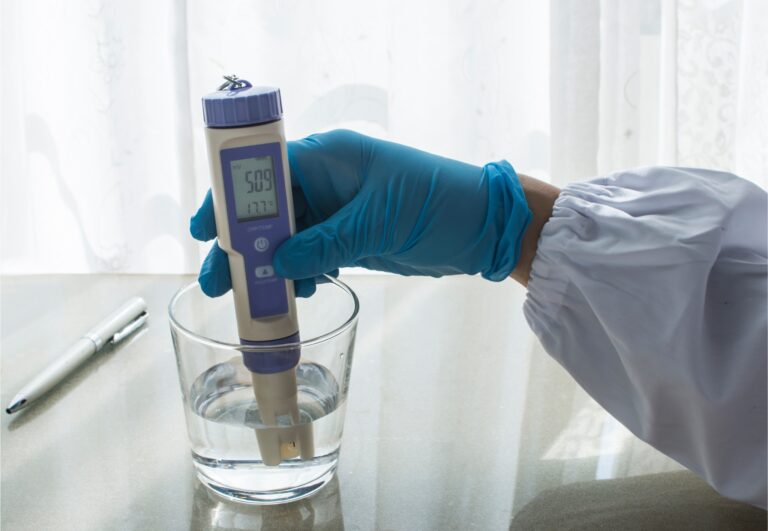
ORP changes with pH, temperature, oxygen exposure, minerals, disinfectants, and other dissolved substances. Two waters with the same ORP can have different chemistry. A meter reading also depends on calibration, electrode condition, sample handling, and the time between production and measurement.

pH describes acidity or alkalinity

High-pH or pH-balanced water is not automatically antioxidant water. Raising pH can shift ORP even when molecular hydrogen is absent. This is why a dramatic ORP number should not be interpreted without pH and composition data.

Molecular hydrogen is a specific dissolved gas

Some antioxidant-water research focuses on dissolved hydrogen gas rather than pH or ORP. Early clinical and laboratory studies are scientifically interesting, but results vary by hydrogen concentration, condition studied, dose, duration, and study quality. The evidence does not justify universal claims that hydrogen-rich water prevents disease, reverses aging, or replaces established treatment.

What Antioxidant Water Is Not

  • It is not a vitamin or a substitute for antioxidant-rich foods.
  • It is not proven to detoxify every contaminant from the body.
  • It is not a treatment for cancer, diabetes, inflammation, or cardiovascular disease.
  • It is not automatically safe because the ORP is negative.
  • It is not necessarily alkaline, mineral-rich, filtered, or microbiologically controlled.

Water can have an attractive ORP reading and still contain an unwanted contaminant. It can also have a positive ORP and still meet drinking-water requirements. Safety and treatment performance need separate evidence.

Filtration First: The Non-Negotiable Step

Before discussing antioxidant properties, verify the source water. Public-water users can review the utility report. Private-well users should test for locally relevant contaminants. Treatment should be selected for the measured issue, whether it is sediment, arsenic, nitrate, lead, microorganisms, disinfectant taste, or another concern.

The goal is not to chase the lowest possible ORP. It is to produce water that is suitable for the intended use, supported by product-specific documentation, and maintained correctly.

How TipaTech Positions LotusDY

TipaTech presents LotusDY as a drinking-water system intended to combine filtration with selected water-conditioning features. Any antioxidant, hydrogen, ORP, mineral, or contaminant-reduction claim should be evaluated against the current documentation for the exact model, including test method, influent water, flow, cartridge age, and measurement timing.

A product should not be described as medically protective merely because a meter shows negative ORP. The more credible approach is to publish repeatable measurements, explain their limits, and keep technical performance separate from health promises.

Why Stability Matters More Than an Extreme Number

Dissolved hydrogen can escape from water after production, especially with agitation, heat, open storage, or time. ORP can change as the sample equilibrates with air. A number measured immediately at the device may not represent the water after transport or storage.

Useful documentation should state when the sample was tested, the temperature and pH, the meter and calibration method, and, when hydrogen is claimed, the measured dissolved-hydrogen concentration. Without that context, comparing ORP figures between products can be misleading.

Antioxidants in Water Versus Antioxidants in Food

Fruits, vegetables, legumes, nuts, and other foods provide a wide range of nutrients and bioactive compounds. Drinking water does not replace that nutritional role. Even when a water property is biologically interesting, it should be considered within a broader lifestyle that includes diet, activity, sleep, and medical care.

A Practical Evaluation Checklist

  1. Test or document the source water before treatment.
  2. Confirm which contaminants the exact system is designed and tested to reduce.
  3. Ask whether the antioxidant claim refers to ORP, molecular hydrogen, or both.
  4. Request measurement conditions and stability data.
  5. Review maintenance, replacement, and sanitation requirements.
  6. Avoid disease-prevention, detoxification, or anti-aging guarantees.

Related water measurements also need context. A TDS reading does not identify individual contaminants, and a chlorine result does not establish performance for chloramine.

The Bottom Line

Antioxidant water is a real technical category only when the property is clearly defined and measured. Negative ORP and dissolved molecular hydrogen are not the same as a proven health outcome. Start with safe water, verify the exact treatment claims, and treat antioxidant features as an additional characteristic rather than a medical promise.

Frequently Asked Questions

What is antioxidant water?

Antioxidant water is a marketing and technical term usually used for water with a negative oxidation-reduction potential, dissolved molecular hydrogen, or both. The term does not by itself prove a health benefit.

What does negative ORP mean in water?

Negative ORP means the water can donate electrons under the conditions of the measurement. ORP is affected by pH, temperature, dissolved substances, and the measuring method, so it is not a direct measure of clinical antioxidant benefit.

Is antioxidant water the same as alkaline water?

No. Alkaline water refers to pH, while antioxidant water usually refers to ORP or molecular hydrogen. Water can be alkaline without containing a clinically meaningful amount of dissolved hydrogen.

Can antioxidant water prevent or treat disease?

Current evidence does not support presenting antioxidant water as a treatment or prevention method for cancer, cardiovascular disease, diabetes, or other medical conditions. It should not replace medical care or a balanced diet.

What should be checked before choosing antioxidant water?

Check the source-water quality, contaminant treatment, measured hydrogen concentration if claimed, ORP measurement conditions, product documentation, maintenance requirements, and whether the claim is supported for the exact system.

whole house water filtration systems

Cleaner. Smarter. Healthier

At TipaTech we specialize in advanced whole house water filtration systems designed to protect your health and improve your water at every tap. Our patented technology reduces lead, bacteria, microplastics and harmful chemicals while preserving essential minerals like magnesium. Tested and Certified by IAPMO Compliance to: NSF/ANSI 42/61/372-2022 standards. Our systems deliver safe, eco-friendly, antioxidant-rich water with no electricity, no waste and no compromises.

Make Your Water Smarter

This article is for informational purposes only and is not medical advice. TipaTech products are designed to support water quality, not to diagnose, treat, cure, or prevent any disease. Product performance varies based on source water, usage, and professional installation. TipaTech disclaims any liability arising from reliance on this content.

About the Author

Baruch Ziser

Founder & Senior Scientific Consultant | Inventor of the TipaTech Filtration Systems

Baruch Ziser is a leading expert in water technology with fifty years of experience. As the inventor of TipaTech filters and a senior scientist at the Technion’s INOVATEC program, he has developed advanced water systems that reduce impurities while retaining and adding the necessary minerals for optimal body function. His innovations are recognized globally for improving drinking water quality in homes and agriculture.

The TipaTech Water Filtration Systems have been Tested and Certified by IAPMO

& Compliance to NSF/ANSI/CAN standards

NSF/ANSI/CAN Standards | IAPMO, R&T, UPC and the Standards Council of Canada

More to Know

DID YOU KNOW?  ·  WATER & HEALTH

Antioxidant Water: Meaning, Evidence, ORP, and Realistic Benefits

What is antioxidant water? Learn what ORP and molecular hydrogen measure, what research suggests, and which health claims go beyond the evidence.

By Baruch Ziser Updated July 14, 2026 4 min read
Antioxidant Water: Meaning, Evidence, ORP, and Realistic Benefits
TOPICWater & Health
READING TIME4 minutes
FIRST PUBLISHEDFebruary 17, 2026

Antioxidant water is one of the most misunderstood phrases in the water industry. Search results often mix three different ideas: alkaline pH, negative oxidation-reduction potential, and dissolved molecular hydrogen. These properties can be related, but they are not interchangeable, and none of them automatically proves that the water will produce a medical benefit.

The useful way to evaluate antioxidant water is to separate the measurement from the marketing. What is being measured? Under which conditions? How stable is the result? Has the exact water or device been studied? Most importantly, has basic water safety and contaminant treatment been addressed first?

What Is Antioxidant Water?

The term generally describes water that has a relatively low or negative oxidation-reduction potential, often written as ORP, or water that contains dissolved molecular hydrogen. ORP is an electrochemical measurement expressed in millivolts. It indicates whether a solution tends to accept or donate electrons under the test conditions.

For a deeper explanation, read what ORP in water measures and what it does not. A negative number can confirm a reducing environment in the glass at that moment. It cannot, on its own, show that the water will neutralize free radicals in the human body or improve a clinical outcome.

ORP, pH, and Molecular Hydrogen Are Different

ORP is a system measurement

ORP changes with pH, temperature, oxygen exposure, minerals, disinfectants, and other dissolved substances. Two waters with the same ORP can have different chemistry. A meter reading also depends on calibration, electrode condition, sample handling, and the time between production and measurement.

pH describes acidity or alkalinity

High-pH or pH-balanced water is not automatically antioxidant water. Raising pH can shift ORP even when molecular hydrogen is absent. This is why a dramatic ORP number should not be interpreted without pH and composition data.

Molecular hydrogen is a specific dissolved gas

Some antioxidant-water research focuses on dissolved hydrogen gas rather than pH or ORP. Early clinical and laboratory studies are scientifically interesting, but results vary by hydrogen concentration, condition studied, dose, duration, and study quality. The evidence does not justify universal claims that hydrogen-rich water prevents disease, reverses aging, or replaces established treatment.

What Antioxidant Water Is Not

  • It is not a vitamin or a substitute for antioxidant-rich foods.
  • It is not proven to detoxify every contaminant from the body.
  • It is not a treatment for cancer, diabetes, inflammation, or cardiovascular disease.
  • It is not automatically safe because the ORP is negative.
  • It is not necessarily alkaline, mineral-rich, filtered, or microbiologically controlled.

Water can have an attractive ORP reading and still contain an unwanted contaminant. It can also have a positive ORP and still meet drinking-water requirements. Safety and treatment performance need separate evidence.

Filtration First: The Non-Negotiable Step

Before discussing antioxidant properties, verify the source water. Public-water users can review the utility report. Private-well users should test for locally relevant contaminants. Treatment should be selected for the measured issue, whether it is sediment, arsenic, nitrate, lead, microorganisms, disinfectant taste, or another concern.

The goal is not to chase the lowest possible ORP. It is to produce water that is suitable for the intended use, supported by product-specific documentation, and maintained correctly.

How TipaTech Positions LotusDY

TipaTech presents LotusDY as a drinking-water system intended to combine filtration with selected water-conditioning features. Any antioxidant, hydrogen, ORP, mineral, or contaminant-reduction claim should be evaluated against the current documentation for the exact model, including test method, influent water, flow, cartridge age, and measurement timing.

A product should not be described as medically protective merely because a meter shows negative ORP. The more credible approach is to publish repeatable measurements, explain their limits, and keep technical performance separate from health promises.

Why Stability Matters More Than an Extreme Number

Dissolved hydrogen can escape from water after production, especially with agitation, heat, open storage, or time. ORP can change as the sample equilibrates with air. A number measured immediately at the device may not represent the water after transport or storage.

Useful documentation should state when the sample was tested, the temperature and pH, the meter and calibration method, and, when hydrogen is claimed, the measured dissolved-hydrogen concentration. Without that context, comparing ORP figures between products can be misleading.

Antioxidants in Water Versus Antioxidants in Food

Fruits, vegetables, legumes, nuts, and other foods provide a wide range of nutrients and bioactive compounds. Drinking water does not replace that nutritional role. Even when a water property is biologically interesting, it should be considered within a broader lifestyle that includes diet, activity, sleep, and medical care.

A Practical Evaluation Checklist

  1. Test or document the source water before treatment.
  2. Confirm which contaminants the exact system is designed and tested to reduce.
  3. Ask whether the antioxidant claim refers to ORP, molecular hydrogen, or both.
  4. Request measurement conditions and stability data.
  5. Review maintenance, replacement, and sanitation requirements.
  6. Avoid disease-prevention, detoxification, or anti-aging guarantees.

Related water measurements also need context. A TDS reading does not identify individual contaminants, and a chlorine result does not establish performance for chloramine.

The Bottom Line

Antioxidant water is a real technical category only when the property is clearly defined and measured. Negative ORP and dissolved molecular hydrogen are not the same as a proven health outcome. Start with safe water, verify the exact treatment claims, and treat antioxidant features as an additional characteristic rather than a medical promise.

Frequently Asked Questions

What is antioxidant water?

Antioxidant water is a marketing and technical term usually used for water with a negative oxidation-reduction potential, dissolved molecular hydrogen, or both. The term does not by itself prove a health benefit.

What does negative ORP mean in water?

Negative ORP means the water can donate electrons under the conditions of the measurement. ORP is affected by pH, temperature, dissolved substances, and the measuring method, so it is not a direct measure of clinical antioxidant benefit.

Is antioxidant water the same as alkaline water?

No. Alkaline water refers to pH, while antioxidant water usually refers to ORP or molecular hydrogen. Water can be alkaline without containing a clinically meaningful amount of dissolved hydrogen.

Can antioxidant water prevent or treat disease?

Current evidence does not support presenting antioxidant water as a treatment or prevention method for cancer, cardiovascular disease, diabetes, or other medical conditions. It should not replace medical care or a balanced diet.

What should be checked before choosing antioxidant water?

Check the source-water quality, contaminant treatment, measured hydrogen concentration if claimed, ORP measurement conditions, product documentation, maintenance requirements, and whether the claim is supported for the exact system.

FROM INFORMATION TO THE RIGHT NEXT STEP

Not sure what is affecting your water?

Start with the water source, available test results, property conditions and the treatment goal. TipaTech can help review the situation before a system is selected.

Baruch Ziser

ABOUT THE AUTHOR

Baruch Ziser

Founder & Senior Scientific Consultant | Inventor of the TipaTech Filtration Systems

Baruch Ziser is a leading expert in water technology with fifty years of experience. As the inventor of TipaTech filters and a senior scientist at the Technion’s INOVATEC program, he has developed advanced water systems that reduce impurities while retaining and adding the necessary minerals for optimal body function. His innovations are recognized globally for improving drinking water quality in homes and agriculture.

The TipaTech Water Filtration Systems have been Tested and Certified by IAPMO

& Compliance to NSF/ANSI/CAN standards

NSF/ANSI/CAN Standards | IAPMO, R&T, UPC and the Standards Council of Canada

Contact Us