arsenic toxicity in water
Table of Contents

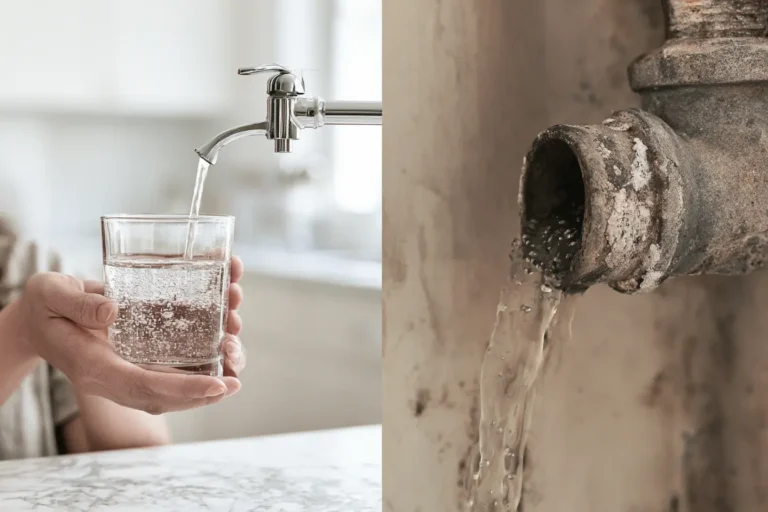
Arsenic in water cannot be identified by taste, smell, or appearance. It is a naturally occurring element that can enter groundwater from rock and soil, and it may also be associated with certain industrial or agricultural sources. Because exposure can continue unnoticed, testing is the first and most important step.

The EPA regulates arsenic in public drinking-water systems at 10 micrograms per liter, or 10 parts per billion. Private wells are not regulated under the federal Safe Drinking Water Act, so well owners are responsible for arranging appropriate testing and responding to the result.

What Is Arsenic and How Does It Enter Water?

Arsenic occurs naturally in parts of the earth’s crust. Groundwater can dissolve arsenic from arsenic-bearing minerals as it moves through soil and rock. Levels vary widely by geology, well depth, oxidation conditions, and local land use. A neighboring well can have a different result, so regional maps cannot replace a sample from the property itself.

Arsenic can exist in different chemical forms. In groundwater, arsenite, often called arsenic III, and arsenate, called arsenic V, are especially important because treatment performance can depend on which form is present. Some systems require an oxidation step to convert arsenic III into a form that is easier to capture.

Why Arsenic in Drinking Water Matters

Long-term exposure to inorganic arsenic is associated with serious health effects, including increased cancer risk and effects on the skin, cardiovascular system, and other organs. Risk depends on the concentration, duration of exposure, water consumption, and other individual factors. The goal of a home article should not be to diagnose symptoms. It should help the reader test the water and reduce a documented exposure.

Children, pregnant people, and households that use the same water for drinking, cooking, ice, and infant formula may have particular reasons to act promptly after an elevated test result. Anyone with a medical concern should speak with a healthcare professional and share the laboratory result.

How to Test for Arsenic in Water

Public Water Customers

Public systems provide a Consumer Confidence Report that lists regulated contaminants and compliance results. The report is a useful starting point, but plumbing conditions inside a building can create other water-quality issues that are not reflected in the utility sample.

Private Well Owners

The EPA explains that private well owners are responsible for their own water safety. Use a laboratory approved by the state or local authority and follow its sampling instructions. Do not rely on taste, a TDS meter, or a general mineral test. Ask whether the analysis reports total arsenic and whether additional speciation is useful for treatment design.

After a High Result

Confirm the result when advised by the laboratory or health department, avoid using the water for drinking and cooking according to local guidance, and consult a qualified treatment professional. Treatment should be based on the measured concentration and the full water chemistry, including pH, iron, manganese, silica, sulfate, phosphate, and competing ions that may affect media performance.

What Does the 10 ppb Arsenic Limit Mean?

The EPA maximum contaminant level of 10 ppb applies to regulated public systems. It is a compliance standard, not a guarantee that every exposure below 10 ppb carries zero risk. States may issue additional guidance for private wells, and some jurisdictions use more protective action levels.

For a home system, the practical objective is to produce water that consistently meets the applicable target throughout the cartridge or media service life. A single favorable sample immediately after installation does not prove long-term performance.

How Is Arsenic Removed From Water?

Reverse Osmosis

Point-of-use reverse osmosis can reduce certain forms of arsenic when the system has a specific arsenic reduction claim. Performance may be weaker for arsenic III unless the water is pretreated or oxidized. RO also creates reject water and requires membrane, prefilter, pressure, and storage-tank maintenance.

Adsorptive Media

Iron-based, activated-alumina, and other specialized media can bind arsenic. Media selection and replacement frequency depend on water chemistry and the amount of arsenic treated. Exhausted media may stop reducing arsenic without changing the water’s taste or appearance, so monitoring is essential.

Ion Exchange and Oxidation-Filtration

Some anion-exchange systems can reduce arsenate, while oxidation followed by filtration may be used when arsenic is associated with iron or when arsenic III needs conversion. These approaches require careful design because competing ions, pH, regeneration, and waste handling affect performance.

Point-of-Use or Whole-House Treatment?

Point-of-use treatment at the kitchen tap may be appropriate when the concern is ingestion. Whole-house treatment may be considered when concentrations are high, several drinking taps are used, or the treatment process requires centralized pretreatment. The correct choice depends on the test result, household use, maintenance capacity, and local advice.

Filters That Should Not Be Assumed to Remove Arsenic

  • Standard sediment cartridges
  • Ordinary activated-carbon taste and odor filters
  • Scale conditioners and salt-free anti-scale devices
  • UV systems, which address microorganisms rather than dissolved arsenic
  • Filters promoted only by pore size without an arsenic performance claim

A micron rating alone does not show that a system removes dissolved arsenic. Look for an exact model, exact contaminant claim, rated capacity, operating conditions, and independent certification or laboratory data.

How TipaTech Systems Fit Into the Decision

TipaTech offers point-of-use and whole-house options, including LotusDY and the T-18 whole-house system. These products should be considered only against their current, model-specific documentation. Do not assume that a general filtration rating proves arsenic reduction.

For a broader comparison of treatment levels, see the guide to comprehensive water filtration. The best arsenic solution is the one designed around a laboratory result and verified after installation.

The Bottom Line

Arsenic is an invisible groundwater concern that requires testing, not guesswork. Confirm the concentration, identify water-chemistry factors that affect treatment, select equipment with a specific arsenic claim, maintain it on schedule, and use follow-up testing to verify that the system continues to perform.

whole house water filtration systems

Cleaner. Smarter. Healthier

At TipaTech we specialize in advanced whole house water filtration systems designed to protect your health and improve your water at every tap. Our patented technology reduces lead, bacteria, microplastics and harmful chemicals while preserving essential minerals like magnesium. Tested and Certified by IAPMO Compliance to: NSF/ANSI 42/61/372-2022 standards. Our systems deliver safe, eco-friendly, antioxidant-rich water with no electricity, no waste and no compromises.

Make Your Water Smarter

This article is for informational purposes only and is not medical advice. TipaTech products are designed to support water quality, not to diagnose, treat, cure, or prevent any disease. Product performance varies based on source water, usage, and professional installation. TipaTech disclaims any liability arising from reliance on this content.

About the Author

Baruch Ziser

Founder & Senior Scientific Consultant | Inventor of the TipaTech Filtration Systems

Baruch Ziser is a leading expert in water technology with fifty years of experience. As the inventor of TipaTech filters and a senior scientist at the Technion’s INOVATEC program, he has developed advanced water systems that reduce impurities while retaining and adding the necessary minerals for optimal body function. His innovations are recognized globally for improving drinking water quality in homes and agriculture.

The TipaTech Water Filtration Systems have been Tested and Certified by IAPMO

& Compliance to NSF/ANSI/CAN standards

NSF/ANSI/CAN Standards | IAPMO, R&T, UPC and the Standards Council of Canada

More to Know

DID YOU KNOW?  ·  DRINKING WATER CONTAMINANTS

Arsenic in Water: Testing, Safe Levels and Treatment Options

Learn how to test for arsenic in water, what the 10 ppb limit means, which treatment methods may work, and what common filters cannot do.

By Baruch Ziser Updated July 13, 2026 6 min read
Arsenic in Water: Testing, Safe Levels and Treatment Options
TOPICDrinking Water Contaminants
READING TIME6 minutes
FIRST PUBLISHEDApril 7, 2025

Arsenic in water cannot be identified by taste, smell, or appearance. It is a naturally occurring element that can enter groundwater from rock and soil, and it may also be associated with certain industrial or agricultural sources. Because exposure can continue unnoticed, testing is the first and most important step.

The EPA regulates arsenic in public drinking-water systems at 10 micrograms per liter, or 10 parts per billion. Private wells are not regulated under the federal Safe Drinking Water Act, so well owners are responsible for arranging appropriate testing and responding to the result.

What Is Arsenic and How Does It Enter Water?

Arsenic occurs naturally in parts of the earth's crust. Groundwater can dissolve arsenic from arsenic-bearing minerals as it moves through soil and rock. Levels vary widely by geology, well depth, oxidation conditions, and local land use. A neighboring well can have a different result, so regional maps cannot replace a sample from the property itself.

Arsenic can exist in different chemical forms. In groundwater, arsenite, often called arsenic III, and arsenate, called arsenic V, are especially important because treatment performance can depend on which form is present. Some systems require an oxidation step to convert arsenic III into a form that is easier to capture.

Why Arsenic in Drinking Water Matters

Long-term exposure to inorganic arsenic is associated with serious health effects, including increased cancer risk and effects on the skin, cardiovascular system, and other organs. Risk depends on the concentration, duration of exposure, water consumption, and other individual factors. The goal of a home article should not be to diagnose symptoms. It should help the reader test the water and reduce a documented exposure.

Children, pregnant people, and households that use the same water for drinking, cooking, ice, and infant formula may have particular reasons to act promptly after an elevated test result. Anyone with a medical concern should speak with a healthcare professional and share the laboratory result.

How to Test for Arsenic in Water

Public Water Customers

Public systems provide a Consumer Confidence Report that lists regulated contaminants and compliance results. The report is a useful starting point, but plumbing conditions inside a building can create other water-quality issues that are not reflected in the utility sample.

Private Well Owners

The EPA explains that private well owners are responsible for their own water safety. Use a laboratory approved by the state or local authority and follow its sampling instructions. Do not rely on taste, a TDS meter, or a general mineral test. Ask whether the analysis reports total arsenic and whether additional speciation is useful for treatment design.

After a High Result

Confirm the result when advised by the laboratory or health department, avoid using the water for drinking and cooking according to local guidance, and consult a qualified treatment professional. Treatment should be based on the measured concentration and the full water chemistry, including pH, iron, manganese, silica, sulfate, phosphate, and competing ions that may affect media performance.

What Does the 10 ppb Arsenic Limit Mean?

The EPA maximum contaminant level of 10 ppb applies to regulated public systems. It is a compliance standard, not a guarantee that every exposure below 10 ppb carries zero risk. States may issue additional guidance for private wells, and some jurisdictions use more protective action levels.

For a home system, the practical objective is to produce water that consistently meets the applicable target throughout the cartridge or media service life. A single favorable sample immediately after installation does not prove long-term performance.

How Is Arsenic Removed From Water?

Reverse Osmosis

Point-of-use reverse osmosis can reduce certain forms of arsenic when the system has a specific arsenic reduction claim. Performance may be weaker for arsenic III unless the water is pretreated or oxidized. RO also creates reject water and requires membrane, prefilter, pressure, and storage-tank maintenance.

Adsorptive Media

Iron-based, activated-alumina, and other specialized media can bind arsenic. Media selection and replacement frequency depend on water chemistry and the amount of arsenic treated. Exhausted media may stop reducing arsenic without changing the water's taste or appearance, so monitoring is essential.

Ion Exchange and Oxidation-Filtration

Some anion-exchange systems can reduce arsenate, while oxidation followed by filtration may be used when arsenic is associated with iron or when arsenic III needs conversion. These approaches require careful design because competing ions, pH, regeneration, and waste handling affect performance.

Point-of-Use or Whole-House Treatment?

Point-of-use treatment at the kitchen tap may be appropriate when the concern is ingestion. Whole-house treatment may be considered when concentrations are high, several drinking taps are used, or the treatment process requires centralized pretreatment. The correct choice depends on the test result, household use, maintenance capacity, and local advice.

Filters That Should Not Be Assumed to Remove Arsenic

  • Standard sediment cartridges
  • Ordinary activated-carbon taste and odor filters
  • Scale conditioners and salt-free anti-scale devices
  • UV systems, which address microorganisms rather than dissolved arsenic
  • Filters promoted only by pore size without an arsenic performance claim

A micron rating alone does not show that a system removes dissolved arsenic. Look for an exact model, exact contaminant claim, rated capacity, operating conditions, and independent certification or laboratory data.

How TipaTech Systems Fit Into the Decision

TipaTech offers point-of-use and whole-house options, including LotusDY and the T-18 whole-house system. These products should be considered only against their current, model-specific documentation. Do not assume that a general filtration rating proves arsenic reduction.

For a broader comparison of treatment levels, see the guide to comprehensive water filtration. The best arsenic solution is the one designed around a laboratory result and verified after installation.

The Bottom Line

Arsenic is an invisible groundwater concern that requires testing, not guesswork. Confirm the concentration, identify water-chemistry factors that affect treatment, select equipment with a specific arsenic claim, maintain it on schedule, and use follow-up testing to verify that the system continues to perform.

Frequently Asked Questions

How do I know if arsenic is in my water?

Arsenic usually has no taste, color, or odor. The reliable way to know is laboratory testing. Public-water customers can review their utility report, while private-well owners should use a certified laboratory and follow local testing guidance.

What is the federal limit for arsenic in drinking water?

The EPA maximum contaminant level for arsenic in public drinking-water systems is 10 micrograms per liter, also written as 10 parts per billion. Private wells are not federally regulated, so owners are responsible for testing and treatment decisions.

Does boiling water remove arsenic?

No. Boiling does not remove dissolved arsenic and can concentrate it slightly as water evaporates. Use a treatment method documented for the arsenic form and concentration found in the water.

What type of filter removes arsenic?

Depending on water chemistry, options may include reverse osmosis, adsorptive media, ion exchange, or oxidation followed by filtration. The exact system should have a model-specific arsenic reduction claim and be sized for the test result and water conditions.

Do carbon or sediment filters remove arsenic?

Standard sediment and activated-carbon filters should not be assumed to reduce arsenic. Some specialized media can target arsenic, but the product label or certification must name arsenic specifically.

FROM INFORMATION TO THE RIGHT NEXT STEP

Not sure what is affecting your water?

Start with the water source, available test results, property conditions and the treatment goal. TipaTech can help review the situation before a system is selected.

Baruch Ziser

ABOUT THE AUTHOR

Baruch Ziser

Founder & Senior Scientific Consultant | Inventor of the TipaTech Filtration Systems

Baruch Ziser is a leading expert in water technology with fifty years of experience. As the inventor of TipaTech filters and a senior scientist at the Technion’s INOVATEC program, he has developed advanced water systems that reduce impurities while retaining and adding the necessary minerals for optimal body function. His innovations are recognized globally for improving drinking water quality in homes and agriculture.

The TipaTech Water Filtration Systems have been Tested and Certified by IAPMO

& Compliance to NSF/ANSI/CAN standards

NSF/ANSI/CAN Standards | IAPMO, R&T, UPC and the Standards Council of Canada

Contact Us