Best Water Filter for Bacteria and Viruses
Table of Contents

The best water filter for bacteria and viruses is not one universal product. Bacteria, viruses, and protozoan parasites differ in size and resistance, and the correct technology depends on the water source, the organism, the concentration, and whether the goal is removal or inactivation.

For public tap water, start with the utility report and any current advisory. For a private well, use laboratory testing. If contamination is confirmed, choose a system with a verified microbiological claim for the organism or class of organism involved.

Why Bacteria, Viruses, and Parasites Need Different Treatment

Protozoan cysts such as Giardia and Cryptosporidium are larger than most bacteria and viruses. Bacteria are smaller, while viruses can be smaller still. A filter that reduces cyst-sized particles may not remove bacteria, and a bacterial filter may not reliably remove viruses.

This is why a micron number without context can be misleading. The rating may be nominal or absolute, and organism reduction depends on the full system, flow rate, integrity, and test method.

Start With the Water Source

Municipal Water

Public water systems disinfect water and monitor regulated microorganisms. Problems can still occur during a main break, treatment failure, or plumbing contamination. Follow official boil-water or do-not-use instructions rather than assuming a household filter is sufficient.

Private Wells

Private wells are not managed like public systems. Testing commonly includes total coliform and E. coli, with additional testing based on local geology, flooding, septic conditions, and health department guidance.

Surface Water and Emergency Sources

Untreated lakes, streams, and floodwater can contain microorganisms and chemicals. A portable hiking filter may not be appropriate for household drinking water, and a microbial purifier may not address chemical contamination.

The CDC overview of home water treatment systems shows why the technology must match the target. Microfiltration, ultrafiltration, reverse osmosis, ultraviolet treatment, and distillation do not have identical capabilities.

Which Technologies Can Treat Bacteria and Viruses?

Microfiltration

Microfilters can reduce larger organisms and particles. Depending on the absolute pore size and validated claim, some can reduce protozoa and bacteria. Most conventional microfilters should not be assumed to remove viruses.

Ultrafiltration

Ultrafiltration membranes have smaller pores and can reduce bacteria and some viruses when the system is designed and tested for that purpose. The exact claim matters more than the technology name.

Reverse Osmosis

Reverse osmosis membranes can reduce bacteria, viruses, and many dissolved contaminants when the system is intact and properly maintained. RO systems also require pretreatment, pressure, membrane service, and management of reject water.

Ultraviolet Disinfection

UV systems inactivate microorganisms rather than physically removing them. Performance depends on UV dose, lamp condition, flow, and water clarity. Sediment or turbidity can shield organisms, so pretreatment is often necessary. UV does not remove chemical contaminants.

Boiling and Distillation

Boiling is an effective emergency method for killing many disease-causing bacteria, viruses, and parasites when public-health instructions are followed. It does not remove lead, nitrate, salts, or many other chemicals. Distillation can separate many contaminants but is slow and energy-intensive.

Activated Carbon

Activated carbon can improve taste and reduce chlorine and selected chemicals. Standard carbon filtration should not be treated as a microbiological purifier unless the exact system has a validated organism-reduction claim.

What Certifications and Claims Should You Look For?

Do not rely only on words such as “purifies,” “sterilizes,” or “one micron.” Review the exact model and contaminant claim. Useful questions include:

  • Is the pore rating nominal or absolute?
  • Was the system tested for bacteria, viruses, protozoa, or all three?
  • Does it remove organisms or inactivate them?
  • At what flow rate and water quality was it tested?
  • What pretreatment is required?
  • How is performance monitored?
  • What happens when a cartridge, lamp, or membrane reaches end of life?

NSF/ANSI 55 applies to ultraviolet microbiological water treatment systems. NSF P231 is a protocol used for microbiological water purifiers. A certification to NSF/ANSI 42, 61, or 372 does not by itself prove removal of bacteria or viruses.
t-18

Can a One-Micron Filter Remove Bacteria and Viruses?

A nominal one-micron filter may help reduce larger particles and some cyst-sized material. It should not be presented as a universal bacteria or virus filter. Many bacteria are near or below that size range, and viruses are much smaller.

If bacteria or viruses are confirmed, the treatment plan may require a validated membrane, UV disinfection, reverse osmosis, chlorination, or a combination selected by a qualified professional.

Where the TipaTech T-18 Fits

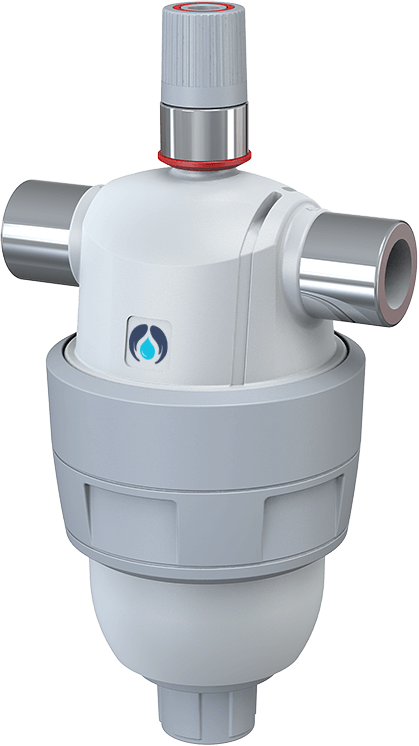
The TipaTech T-18 is designed for whole-house fine-particle filtration, chlorine reduction, and scale management. Current product information describes nominal filtration down to approximately one micron and reduction of certain larger particulates.

Those features may support a broader water-quality plan, but they do not establish universal virus removal or complete bacterial purification. For a confirmed microbiological problem, TipaTech should evaluate whether the property needs an additional validated disinfection or membrane stage.

How to Choose the Best System for Your Home

  1. Review the utility report or test the private well.
  2. Identify whether the concern is bacteria, viruses, protozoa, or a general advisory.
  3. Follow public-health instructions during an active contamination event.
  4. Choose a filtration system with a verified claim for the target organism.
  5. Confirm flow rate, pretreatment, power, drainage, and maintenance.
  6. Install the system correctly and protect it from bypass.
  7. Retest when required to confirm that the treatment is working.

Avoid Common Buying Mistakes

  • Assuming that clearer water is microbiologically safe
  • Using a TDS meter to detect bacteria or viruses
  • Believing that all carbon filters kill germs
  • Assuming that one micron means virus removal
  • Ignoring lamp, cartridge, or membrane replacement
  • Using a general filter to override a boil-water notice
  • Choosing a system before testing the water

The Bottom Line

The best water filter for bacteria and viruses is the one with verified performance for the actual organism and water conditions. Microfiltration, ultrafiltration, reverse osmosis, UV, boiling, and chemical disinfection each have different strengths. Testing, certification, installation, and maintenance matter more than a broad marketing label.

Water Filtration FAQs

How do I know if my tap water is safe?

Review your utility’s annual water-quality report and current advisories. For a private well, use a qualified laboratory and follow local health department guidance. Appearance, taste, and a TDS meter cannot confirm microbiological safety.

Not necessarily. Safety depends on the source, treatment, packaging, storage, and the contaminant. A correctly selected and maintained filter can be useful, but bottled water is not automatically free of microorganisms or other contaminants.

Boiling is effective against many disease-causing bacteria, viruses, and parasites when official instructions are followed. It does not remove lead, nitrate, salts, or many chemical contaminants.

whole house water filtration systems

Cleaner. Smarter. Healthier

At TipaTech we specialize in advanced whole house water filtration systems designed to protect your health and improve your water at every tap. Our patented technology reduces lead, bacteria, microplastics and harmful chemicals while preserving essential minerals like magnesium. Tested and Certified by IAPMO Compliance to: NSF/ANSI 42/61/372-2022 standards. Our systems deliver safe, eco-friendly, antioxidant-rich water with no electricity, no waste and no compromises.

Make Your Water Smarter

This article is for informational purposes only and is not medical advice. TipaTech products are designed to support water quality, not to diagnose, treat, cure, or prevent any disease. Product performance varies based on source water, usage, and professional installation. TipaTech disclaims any liability arising from reliance on this content.

About the Author

Baruch Ziser

Founder & Senior Scientific Consultant | Inventor of the TipaTech Filtration Systems

Baruch Ziser is a leading expert in water technology with fifty years of experience. As the inventor of TipaTech filters and a senior scientist at the Technion’s INOVATEC program, he has developed advanced water systems that reduce impurities while retaining and adding the necessary minerals for optimal body function. His innovations are recognized globally for improving drinking water quality in homes and agriculture.

The TipaTech Water Filtration Systems have been Tested and Certified by IAPMO

& Compliance to NSF/ANSI/CAN standards

NSF/ANSI/CAN Standards | IAPMO, R&T, UPC and the Standards Council of Canada

More to Know

DID YOU KNOW?  ·  WATER FILTRATION SYSTEMS

Best Water Filter for Bacteria and Viruses: How to Choose

Compare filters for bacteria, viruses, and parasites. Learn how pore size, UV, RO, testing, and certification determine the right treatment system.

By Baruch Ziser Updated July 22, 2026 5 min read
Best Water Filter for Bacteria and Viruses: How to Choose
TOPICWater Filtration Systems
READING TIME5 minutes
FIRST PUBLISHEDJanuary 13, 2025

The best water filter for bacteria and viruses is not one universal product. Bacteria, viruses, and protozoan parasites differ in size and resistance, and the correct technology depends on the water source, the organism, the concentration, and whether the goal is removal or inactivation.

For public tap water, start with the utility report and any current advisory. For a private well, use laboratory testing. If contamination is confirmed, choose a system with a verified microbiological claim for the organism or class of organism involved.

Why Bacteria, Viruses, and Parasites Need Different Treatment

Protozoan cysts such as Giardia and Cryptosporidium are larger than most bacteria and viruses. Bacteria are smaller, while viruses can be smaller still. A filter that reduces cyst-sized particles may not remove bacteria, and a bacterial filter may not reliably remove viruses.

This is why a micron number without context can be misleading. The rating may be nominal or absolute, and organism reduction depends on the full system, flow rate, integrity, and test method.

Start With the Water Source

Municipal Water

Public water systems disinfect water and monitor regulated microorganisms. Problems can still occur during a main break, treatment failure, or plumbing contamination. Follow official boil-water or do-not-use instructions rather than assuming a household filter is sufficient.

Private Wells

Private wells are not managed like public systems. Testing commonly includes total coliform and E. coli, with additional testing based on local geology, flooding, septic conditions, and health department guidance.

Surface Water and Emergency Sources

Untreated lakes, streams, and floodwater can contain microorganisms and chemicals. A portable hiking filter may not be appropriate for household drinking water, and a microbial purifier may not address chemical contamination.

The CDC overview of home water treatment systems shows why the technology must match the target. Microfiltration, ultrafiltration, reverse osmosis, ultraviolet treatment, and distillation do not have identical capabilities.

Which Technologies Can Treat Bacteria and Viruses?

Microfiltration

Microfilters can reduce larger organisms and particles. Depending on the absolute pore size and validated claim, some can reduce protozoa and bacteria. Most conventional microfilters should not be assumed to remove viruses.

Ultrafiltration

Ultrafiltration membranes have smaller pores and can reduce bacteria and some viruses when the system is designed and tested for that purpose. The exact claim matters more than the technology name.

Reverse Osmosis

Reverse osmosis membranes can reduce bacteria, viruses, and many dissolved contaminants when the system is intact and properly maintained. RO systems also require pretreatment, pressure, membrane service, and management of reject water.

Ultraviolet Disinfection

UV systems inactivate microorganisms rather than physically removing them. Performance depends on UV dose, lamp condition, flow, and water clarity. Sediment or turbidity can shield organisms, so pretreatment is often necessary. UV does not remove chemical contaminants.

Boiling and Distillation

Boiling is an effective emergency method for killing many disease-causing bacteria, viruses, and parasites when public-health instructions are followed. It does not remove lead, nitrate, salts, or many other chemicals. Distillation can separate many contaminants but is slow and energy-intensive.

Activated Carbon

Activated carbon can improve taste and reduce chlorine and selected chemicals. Standard carbon filtration should not be treated as a microbiological purifier unless the exact system has a validated organism-reduction claim.

What Certifications and Claims Should You Look For?

Do not rely only on words such as "purifies," "sterilizes," or "one micron." Review the exact model and contaminant claim. Useful questions include:

  • Is the pore rating nominal or absolute?
  • Was the system tested for bacteria, viruses, protozoa, or all three?
  • Does it remove organisms or inactivate them?
  • At what flow rate and water quality was it tested?
  • What pretreatment is required?
  • How is performance monitored?
  • What happens when a cartridge, lamp, or membrane reaches end of life?

NSF/ANSI 55 applies to ultraviolet microbiological water treatment systems. NSF P231 is a protocol used for microbiological water purifiers. A certification to NSF/ANSI 42, 61, or 372 does not by itself prove removal of bacteria or viruses.

Can a One-Micron Filter Remove Bacteria and Viruses?

A nominal one-micron filter may help reduce larger particles and some cyst-sized material. It should not be presented as a universal bacteria or virus filter. Many bacteria are near or below that size range, and viruses are much smaller.

If bacteria or viruses are confirmed, the treatment plan may require a validated membrane, UV disinfection, reverse osmosis, chlorination, or a combination selected by a qualified professional.

Where the TipaTech T-18 Fits

The TipaTech T-18 is designed for whole-house fine-particle filtration, chlorine reduction, and scale management. Current product information describes nominal filtration down to approximately one micron and reduction of certain larger particulates.

Those features may support a broader water-quality plan, but they do not establish universal virus removal or complete bacterial purification. For a confirmed microbiological problem, TipaTech should evaluate whether the property needs an additional validated disinfection or membrane stage.

How to Choose the Best System for Your Home

  1. Review the utility report or test the private well.
  2. Identify whether the concern is bacteria, viruses, protozoa, or a general advisory.
  3. Follow public-health instructions during an active contamination event.
  4. Choose a filtration system with a verified claim for the target organism.
  5. Confirm flow rate, pretreatment, power, drainage, and maintenance.
  6. Install the system correctly and protect it from bypass.
  7. Retest when required to confirm that the treatment is working.

Avoid Common Buying Mistakes

  • Assuming that clearer water is microbiologically safe
  • Using a TDS meter to detect bacteria or viruses
  • Believing that all carbon filters kill germs
  • Assuming that one micron means virus removal
  • Ignoring lamp, cartridge, or membrane replacement
  • Using a general filter to override a boil-water notice
  • Choosing a system before testing the water

The Bottom Line

The best water filter for bacteria and viruses is the one with verified performance for the actual organism and water conditions. Microfiltration, ultrafiltration, reverse osmosis, UV, boiling, and chemical disinfection each have different strengths. Testing, certification, installation, and maintenance matter more than a broad marketing label.

Frequently Asked Questions

How do I know if my tap water is safe?

Review your utility's annual water-quality report and current advisories. For a private well, use a qualified laboratory and follow local health department guidance. Appearance, taste, and a TDS meter cannot confirm microbiological safety.

Is bottled water safer than filtered tap water?

Not necessarily. Safety depends on the source, treatment, packaging, storage, and the contaminant. A correctly selected and maintained filter can be useful, but bottled water is not automatically free of microorganisms or other contaminants.

How effective is boiling water?

Boiling is effective against many disease-causing bacteria, viruses, and parasites when official instructions are followed. It does not remove lead, nitrate, salts, or many chemical contaminants.
FROM INFORMATION TO THE RIGHT NEXT STEP

Not sure what is affecting your water?

Start with the water source, available test results, property conditions and the treatment goal. TipaTech can help review the situation before a system is selected.

Baruch Ziser

ABOUT THE AUTHOR

Baruch Ziser

Founder & Senior Scientific Consultant | Inventor of the TipaTech Filtration Systems

Baruch Ziser is a leading expert in water technology with fifty years of experience. As the inventor of TipaTech filters and a senior scientist at the Technion’s INOVATEC program, he has developed advanced water systems that reduce impurities while retaining and adding the necessary minerals for optimal body function. His innovations are recognized globally for improving drinking water quality in homes and agriculture.

The TipaTech Water Filtration Systems have been Tested and Certified by IAPMO

& Compliance to NSF/ANSI/CAN standards

NSF/ANSI/CAN Standards | IAPMO, R&T, UPC and the Standards Council of Canada

Contact Us