radon
Table of Contents

Radon in water is most relevant to homes that use groundwater, especially private wells in areas where uranium occurs naturally in rock and soil. Radon is colorless, odorless, and tasteless, so neither the water nor the indoor air gives a reliable warning.

The main health concern is usually not swallowing the water. Radon can leave the water when it is heated, sprayed, or agitated and then add to the radon in indoor air. That is why testing and treatment decisions should consider both the home’s air and its water source.

What Is Radon?

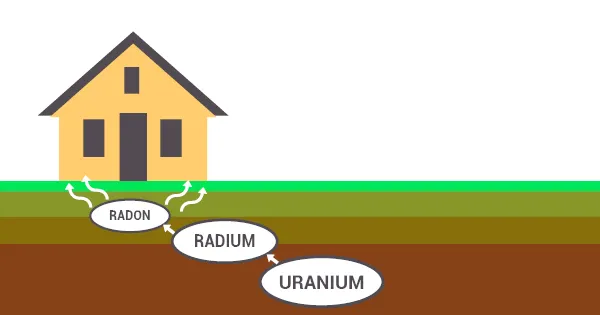
Radon is a naturally occurring radioactive gas created by the decay of uranium. It can move through soil into a building and can also dissolve in groundwater. The World Health Organization identifies long-term inhalation of radon as an important cause of lung cancer.

Most indoor radon enters from the ground beneath a building. Water can be an additional source, particularly when a home uses a private well. Surface water usually loses more radon to the atmosphere before it reaches a home, while groundwater can retain higher concentrations.

Is Radon Gas Heavy or Light?

Radon is denser than ordinary air, but it does not simply settle into one harmless layer. Heating, ventilation, pressure changes, and normal movement mix gases throughout a building. The only dependable way to know the concentration is to test.

How Does Radon Get From Water Into Indoor Air?

Radon is a gas. Showering, running faucets, washing dishes, and other household uses can release part of the radon dissolved in water. The contribution varies with the water concentration, the amount of water used, ventilation, room size, and the home’s overall air exchange.

The U.S. Environmental Protection Agency’s archived guidance on radon in drinking water explains that inhalation of radon released from water is generally the more important pathway compared with ingestion.

Is Radon in Water Really Dangerous?

Radon is a proven lung cancer risk when it accumulates in indoor air. Water can contribute to that air concentration, but the size of the contribution differs greatly from one home to another. A high result should be evaluated, while a low or untested result should not be turned into a universal health claim.

The practical sequence is to test indoor air first. If the air result is elevated, the home uses a private well, or state guidance recommends water testing, test the water through a qualified laboratory. Public water and private well requirements differ, so local health or environmental authorities are useful sources of direction.

How to Test Radon in Water

Water sampling for radon must minimize contact with air because the gas can escape before the sample reaches the laboratory. Use a laboratory or sampling kit accepted by the relevant state program and follow the instructions exactly. Do not rely on a general water-quality strip or a standard home TDS meter.

A useful assessment may include:

  • An indoor air radon test
  • A radon water test when the home uses groundwater or local guidance recommends it
  • Confirmation of the well type and water source
  • A review of ventilation and household water use
  • Follow-up testing after mitigation

Does Boiling Water Remove Radon?

Heating or boiling water can drive radon out of the water and into the surrounding air. That makes boiling an inappropriate household mitigation strategy. It does not provide controlled whole-house treatment and may increase indoor inhalation exposure in the room where the water is heated.

How Is Radon Removed From Water?

Two common point-of-entry approaches are aeration and granular activated carbon. The correct choice depends on the measured concentration, water chemistry, flow rate, installation conditions, maintenance, and local requirements.

Aeration

Aeration systems mix water with air and vent the released radon safely outdoors. They are often preferred for higher radon concentrations because they remove the gas before water moves through the household plumbing. The venting design is part of the treatment, not an optional detail.

Granular Activated Carbon

Activated carbon can adsorb radon from water. It may suit some lower or moderate concentrations, but the media can accumulate radioactive decay products. System sizing, placement, service, shielding, and eventual media handling should be addressed by a qualified professional.

What About Reverse Osmosis or a Standard Sediment Filter?

A fine-particle filter is not a radon treatment simply because it has a small micron rating. Radon is a dissolved gas. A standard sediment filter or point-of-use reverse osmosis unit should not be relied on for radon unless the exact system has a verified radon-reduction claim. Point-of-use treatment also does not address gas released from showers and other fixtures. When inhalation is the main concern, point-of-entry treatment is generally the more relevant strategy.

Where TipaTech Fits

TipaTech develops water filtration systems for whole-house water quality. A radon concern should be evaluated as a specific gas-treatment project, not folded into a general claim about sediment, scale, chlorine, or microorganisms.

TipaTech product materials describe air-release features in its systems. Any radon-reduction statement should still be tied to the exact configuration, measured inlet level, installation design, and verified performance data. A homeowner with a confirmed result should ask whether dedicated aeration, activated carbon, or another treatment stage is required.

A Practical Radon Action Plan

  1. Test indoor air using an accepted radon test.
  2. If appropriate, test private well water through a qualified laboratory.
  3. Discuss both results with the state radon program or a qualified mitigator.
  4. Select treatment for the measured concentration and household flow.
  5. Install any venting or carbon system according to professional requirements.
  6. Retest after installation and follow the maintenance schedule.

Radon testing should remain separate from testing for bacteria, metals, and other contaminants. A home may need more than one treatment process. This guide to choosing a system that can reduce harmful contaminants explains why verified performance must match the specific water problem.

The Bottom Line

Radon in water is mainly a concern for private well users and for homes where water contributes to elevated indoor air levels. The strongest response is not guessing from geography or taste. It is testing the air, testing the water when indicated, and using a properly designed point-of-entry mitigation system when the results justify one.

Frequently Asked Questions

Is radon in water really dangerous?

Radon is a proven lung cancer risk when inhaled. Water can release radon into indoor air during showering and other uses, but the contribution varies by home and water source. Testing is needed to determine the actual risk.

How do I test for radon in water?

Use a qualified laboratory or a kit accepted by the relevant state program. Follow the sampling instructions carefully because radon can escape from the sample when it contacts air.

Does boiling water remove radon?

Boiling can release radon from water into indoor air, so it is not an appropriate mitigation method. A properly designed point-of-entry system is used when water treatment is necessary.

What treatment removes radon from well water?

Aeration and granular activated carbon are common approaches. The measured radon level, water chemistry, flow rate, maintenance, and local guidance determine which system is appropriate.

Can a normal one-micron filter remove radon?

No. Radon is a dissolved gas, not a suspended particle. A micron rating alone does not establish radon reduction.

whole house water filtration systems

Cleaner. Smarter. Healthier

At TipaTech we specialize in advanced whole house water filtration systems designed to protect your health and improve your water at every tap. Our patented technology reduces lead, bacteria, microplastics and harmful chemicals while preserving essential minerals like magnesium. Tested and Certified by IAPMO Compliance to: NSF/ANSI 42/61/372-2022 standards. Our systems deliver safe, eco-friendly, antioxidant-rich water with no electricity, no waste and no compromises.

Make Your Water Smarter

This article is for informational purposes only and is not medical advice. TipaTech products are designed to support water quality, not to diagnose, treat, cure, or prevent any disease. Product performance varies based on source water, usage, and professional installation. TipaTech disclaims any liability arising from reliance on this content.

About the Author

Baruch Ziser

Founder & Senior Scientific Consultant | Inventor of the TipaTech Filtration Systems

Baruch Ziser is a leading expert in water technology with fifty years of experience. As the inventor of TipaTech filters and a senior scientist at the Technion’s INOVATEC program, he has developed advanced water systems that reduce impurities while retaining and adding the necessary minerals for optimal body function. His innovations are recognized globally for improving drinking water quality in homes and agriculture.

The TipaTech Water Filtration Systems have been Tested and Certified by IAPMO

& Compliance to NSF/ANSI/CAN standards

NSF/ANSI/CAN Standards | IAPMO, R&T, UPC and the Standards Council of Canada

More to Know

DID YOU KNOW?  ·  DRINKING WATER CONTAMINANTS

Radon in Water: Risks, Testing, and Treatment Options

Learn how radon gets into well water, why inhalation is the main concern, how to test, and when aeration or carbon treatment may be needed.

By Baruch Ziser Updated July 22, 2026 5 min read
Radon in Water: Risks, Testing, and Treatment Options
TOPICDrinking Water Contaminants
READING TIME5 minutes
FIRST PUBLISHEDOctober 14, 2024

Radon in water is most relevant to homes that use groundwater, especially private wells in areas where uranium occurs naturally in rock and soil. Radon is colorless, odorless, and tasteless, so neither the water nor the indoor air gives a reliable warning.

The main health concern is usually not swallowing the water. Radon can leave the water when it is heated, sprayed, or agitated and then add to the radon in indoor air. That is why testing and treatment decisions should consider both the home's air and its water source.

What Is Radon?

Radon is a naturally occurring radioactive gas created by the decay of uranium. It can move through soil into a building and can also dissolve in groundwater. The World Health Organization identifies long-term inhalation of radon as an important cause of lung cancer.

Most indoor radon enters from the ground beneath a building. Water can be an additional source, particularly when a home uses a private well. Surface water usually loses more radon to the atmosphere before it reaches a home, while groundwater can retain higher concentrations.

Is Radon Gas Heavy or Light?

Radon is denser than ordinary air, but it does not simply settle into one harmless layer. Heating, ventilation, pressure changes, and normal movement mix gases throughout a building. The only dependable way to know the concentration is to test.

How Does Radon Get From Water Into Indoor Air?

Radon is a gas. Showering, running faucets, washing dishes, and other household uses can release part of the radon dissolved in water. The contribution varies with the water concentration, the amount of water used, ventilation, room size, and the home's overall air exchange.

The U.S. Environmental Protection Agency's archived guidance on radon in drinking water explains that inhalation of radon released from water is generally the more important pathway compared with ingestion.

Is Radon in Water Really Dangerous?

Radon is a proven lung cancer risk when it accumulates in indoor air. Water can contribute to that air concentration, but the size of the contribution differs greatly from one home to another. A high result should be evaluated, while a low or untested result should not be turned into a universal health claim.

The practical sequence is to test indoor air first. If the air result is elevated, the home uses a private well, or state guidance recommends water testing, test the water through a qualified laboratory. Public water and private well requirements differ, so local health or environmental authorities are useful sources of direction.

How to Test Radon in Water

Water sampling for radon must minimize contact with air because the gas can escape before the sample reaches the laboratory. Use a laboratory or sampling kit accepted by the relevant state program and follow the instructions exactly. Do not rely on a general water-quality strip or a standard home TDS meter.

A useful assessment may include:

  • An indoor air radon test
  • A radon water test when the home uses groundwater or local guidance recommends it
  • Confirmation of the well type and water source
  • A review of ventilation and household water use
  • Follow-up testing after mitigation

Does Boiling Water Remove Radon?

Heating or boiling water can drive radon out of the water and into the surrounding air. That makes boiling an inappropriate household mitigation strategy. It does not provide controlled whole-house treatment and may increase indoor inhalation exposure in the room where the water is heated.

How Is Radon Removed From Water?

Two common point-of-entry approaches are aeration and granular activated carbon. The correct choice depends on the measured concentration, water chemistry, flow rate, installation conditions, maintenance, and local requirements.

Aeration

Aeration systems mix water with air and vent the released radon safely outdoors. They are often preferred for higher radon concentrations because they remove the gas before water moves through the household plumbing. The venting design is part of the treatment, not an optional detail.

Granular Activated Carbon

Activated carbon can adsorb radon from water. It may suit some lower or moderate concentrations, but the media can accumulate radioactive decay products. System sizing, placement, service, shielding, and eventual media handling should be addressed by a qualified professional.

What About Reverse Osmosis or a Standard Sediment Filter?

A fine-particle filter is not a radon treatment simply because it has a small micron rating. Radon is a dissolved gas. A standard sediment filter or point-of-use reverse osmosis unit should not be relied on for radon unless the exact system has a verified radon-reduction claim. Point-of-use treatment also does not address gas released from showers and other fixtures. When inhalation is the main concern, point-of-entry treatment is generally the more relevant strategy.

Where TipaTech Fits

TipaTech develops water filtration systems for whole-house water quality. A radon concern should be evaluated as a specific gas-treatment project, not folded into a general claim about sediment, scale, chlorine, or microorganisms.

TipaTech product materials describe air-release features in its systems. Any radon-reduction statement should still be tied to the exact configuration, measured inlet level, installation design, and verified performance data. A homeowner with a confirmed result should ask whether dedicated aeration, activated carbon, or another treatment stage is required.

A Practical Radon Action Plan

  1. Test indoor air using an accepted radon test.
  2. If appropriate, test private well water through a qualified laboratory.
  3. Discuss both results with the state radon program or a qualified mitigator.
  4. Select treatment for the measured concentration and household flow.
  5. Install any venting or carbon system according to professional requirements.
  6. Retest after installation and follow the maintenance schedule.

Radon testing should remain separate from testing for bacteria, metals, and other contaminants. A home may need more than one treatment process. This guide to choosing a system that can reduce harmful contaminants explains why verified performance must match the specific water problem.

The Bottom Line

Radon in water is mainly a concern for private well users and for homes where water contributes to elevated indoor air levels. The strongest response is not guessing from geography or taste. It is testing the air, testing the water when indicated, and using a properly designed point-of-entry mitigation system when the results justify one.

Frequently Asked Questions

Is radon in water really dangerous?

Radon is a proven lung cancer risk when inhaled. Water can release radon into indoor air during showering and other uses, but the contribution varies by home and water source. Testing is needed to determine the actual risk.

How do I test for radon in water?

Use a qualified laboratory or a kit accepted by the relevant state program. Follow the sampling instructions carefully because radon can escape from the sample when it contacts air.

Does boiling water remove radon?

Boiling can release radon from water into indoor air, so it is not an appropriate mitigation method. A properly designed point-of-entry system is used when water treatment is necessary.

What treatment removes radon from well water?

Aeration and granular activated carbon are common approaches. The measured radon level, water chemistry, flow rate, maintenance, and local guidance determine which system is appropriate.

Can a normal one-micron filter remove radon?

No. Radon is a dissolved gas, not a suspended particle. A micron rating alone does not establish radon reduction.
FROM INFORMATION TO THE RIGHT NEXT STEP

Not sure what is affecting your water?

Start with the water source, available test results, property conditions and the treatment goal. TipaTech can help review the situation before a system is selected.

Baruch Ziser

ABOUT THE AUTHOR

Baruch Ziser

Founder & Senior Scientific Consultant | Inventor of the TipaTech Filtration Systems

Baruch Ziser is a leading expert in water technology with fifty years of experience. As the inventor of TipaTech filters and a senior scientist at the Technion’s INOVATEC program, he has developed advanced water systems that reduce impurities while retaining and adding the necessary minerals for optimal body function. His innovations are recognized globally for improving drinking water quality in homes and agriculture.

The TipaTech Water Filtration Systems have been Tested and Certified by IAPMO

& Compliance to NSF/ANSI/CAN standards

NSF/ANSI/CAN Standards | IAPMO, R&T, UPC and the Standards Council of Canada

Contact Us