Why Does My Water Smell Like Rotten Eggs?That unmistakable “rotten egg” smell when you turn on the tap-especially in the shower-is unpleasant and disruptive to everyday comfort. This odor is relatively common in some homes and is usually linked to sulfur-related compounds in water or reactions that occur within household plumbing systems. While the smell itself is a quality-of-life issue, persistent odors typically indicate a water-quality condition that may benefit from practical treatment.
Below is a straightforward, non-alarmist look at why this happens and what homeowners commonly do to improve the situation.
What Causes the “Rotten Egg” Odor?
The odor most people describe as “rotten eggs” is commonly associated with hydrogen sulfide gas in water. Hydrogen sulfide can occur naturally in some groundwater sources and may also form within plumbing systems under certain conditions. In some cases, sulfur-related odors are influenced by bacteria activity or reactions inside water heaters.
Common contributing factors may include:
- Naturally occurring sulfur-related gases in source water
- Conditions inside water heaters that can promote odor formation
- Sections of plumbing where water remains stagnant for extended periods
- Local water chemistry that affects how odors present
In typical residential scenarios, this odor is best understood as an aesthetic and comfort issue rather than a safety emergency.
Why the Smell Is Often Stronger With Hot Water or Showers
Warm water releases dissolved gases more readily than cold water. As a result, sulfur-related odors are often more noticeable when:
- Hot water is used
- Water is sprayed (as in showers)
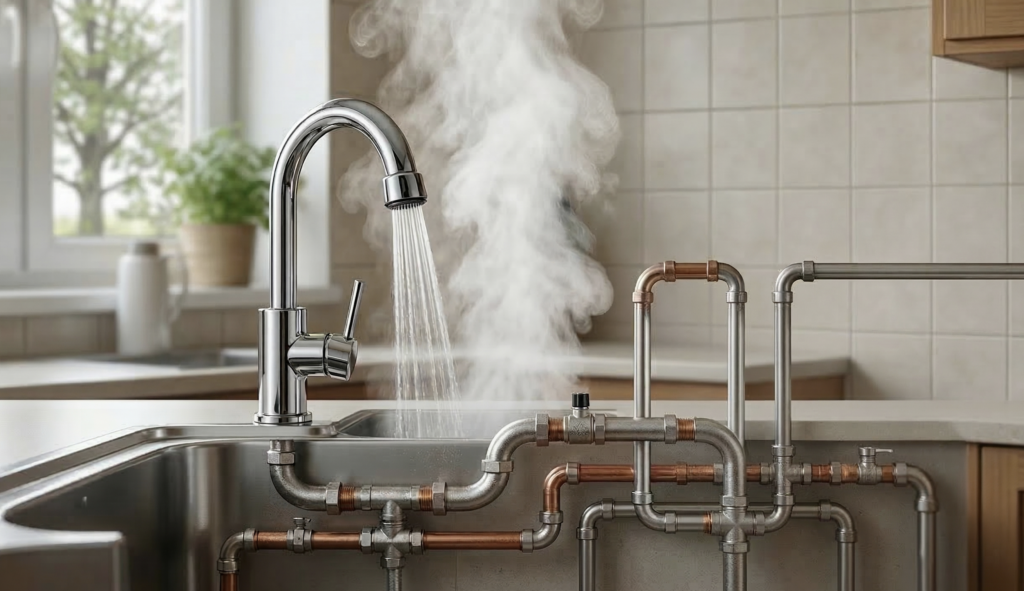
- Steam carries odor into the air
This is why the smell can feel stronger in bathrooms than at kitchen sinks, even when the source water is the same.
Practical Steps Homeowners Commonly Take
Because sulfur odors can originate from different points in the water system, solutions are typically selected based on where the issue appears to originate. Common approaches include:
- Routine Water Heater Maintenance
Periodic flushing and inspection may help in cases where odors appear primarily in hot water. This is a maintenance step, not a permanent solution for source-water conditions. - Point-of-Entry Water Treatment
When sulfur-related odors are present throughout the home, homeowners often explore whole-home water treatment options designed to address odor-causing conditions before water reaches individual taps and showers. - Targeted Approaches for Odor Reduction
Some systems are engineered to help manage undissolved sulfur-related gases as part of broader water-quality improvement strategies. These approaches are selected based on local water composition and professional assessment.
Temporary measures such as ventilation or air fresheners may reduce perceived odor in the moment, but they do not address conditions within the water itself.
Where TipaTech Fits In (Careful, Compliant Framing)
For homeowners experiencing sulfur-related odors throughout the home, some choose to explore whole-home water treatment systems offered by companies such as TipaTech. Certain systems are designed to help release and vent undissolved sulfur-related gases (e.g., hydrogen sulfide) from water as part of an overall water-quality management approach.
This type of point-of-entry setup is intended to improve everyday water comfort by addressing odor-causing conditions before water is distributed to showers and faucets. Actual performance depends on source water characteristics, installation, maintenance, and local plumbing conditions. A qualified professional can help determine whether such an approach is appropriate for a given home.
No system guarantees complete odor elimination, and results vary by water source and household conditions.
What to Avoid
- Avoid assuming all basic filters are designed to address sulfur odors; many are intended primarily for taste and chlorine reduction.
- Avoid masking odors with scents alone; this does not change water conditions.
- Avoid making changes without understanding whether the odor originates from the source water or household plumbing.
When Professional Assessment Makes Sense
If sulfur-related odors are persistent or disruptive, homeowners may consider:
- Having their water evaluated by a qualified professional
- Reviewing water heater maintenance history
- Discussing point-of-entry treatment options suitable for their water chemistry
This helps match solutions to actual conditions rather than trial-and-error.
The Bottom Line
A “rotten egg” smell in water is commonly linked to sulfur-related compounds and is often more noticeable with hot water and showers due to gas release into the air. While the odor is typically a comfort issue, many homeowners prefer to address it at the source for a more consistent everyday water experience.
Whole-home approaches that help manage odor-causing conditions before water reaches taps can be a practical option for some households. Any water treatment decision should be based on local water characteristics, proper installation, and realistic expectations about outcomes.
Sources:
- U.S. Centers for Disease Control and Prevention (CDC) – Information on hydrogen sulfide in drinking water and household odor conditions.
- U.S. Geological Survey (USGS) – Overview of sulfur compounds in groundwater and well-water contexts.
- Minnesota Department of Health – “Hydrogen Sulfide in Drinking Water” consumer guidance on odor causes and household considerations.