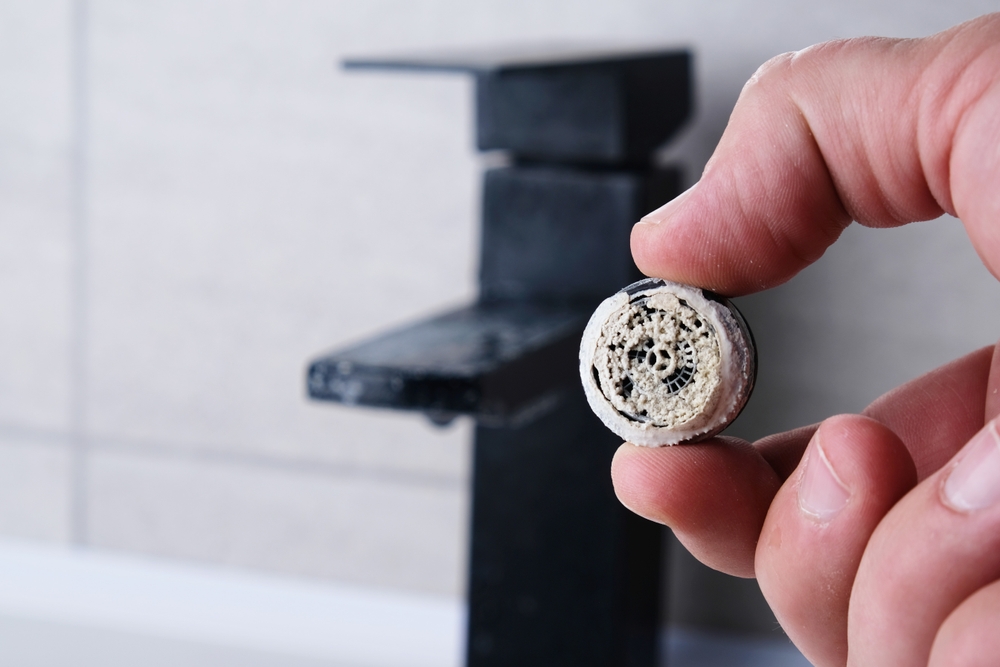
limescale
Table of Contents

Limescale is the hard, chalky deposit that forms when minerals in hard water precipitate on surfaces. It commonly appears on faucets, shower screens, kettles, coffee machines, water-heater elements, and inside plumbing. It is mainly an operational and maintenance problem, not proof that the water is unsafe.

The best solution depends on the goal. Cleaning removes existing deposits. A salt-based softener removes hardness minerals. A scale conditioner may change how deposits form without removing the minerals. A drinking-water membrane can reduce hardness at one tap. These methods are not interchangeable.

What Is Limescale?

Limescale is made primarily of calcium carbonate, with possible contributions from magnesium compounds, silica, iron, and other materials in the water. Hard water contains dissolved calcium and magnesium. When conditions change through heating, evaporation, pressure, or carbon-dioxide loss, some minerals can leave solution and form solid scale.

The U.S. Geological Survey explains that water hardness is mainly caused by dissolved calcium and magnesium. Hardness varies by source and local geology, so a regional map cannot replace a test at a specific property.

Hard Water and Limescale Are Not the Same Thing

Hard water is the condition in the water. Limescale is a deposit that can result from that condition. A sediment filter may catch loose flakes, rust, or sand, but it does not normally remove dissolved calcium and magnesium. This distinction prevents a common buying mistake: choosing a particle filter for a dissolved-mineral problem.

What Causes Limescale to Form?

  • Higher concentrations of calcium and magnesium
  • Heating water in kettles, coffee machines, boilers, and water heaters
  • Evaporation on shower glass, faucets, and fixtures
  • Changes in pH, alkalinity, pressure, or dissolved carbon dioxide
  • Long residence time and repeated heating cycles

There is no single temperature at which all limescale suddenly begins. Scale tendency depends on the full water chemistry and operating conditions. Higher temperatures often accelerate deposition, but a universal threshold would be misleading.

Common Signs of Limescale

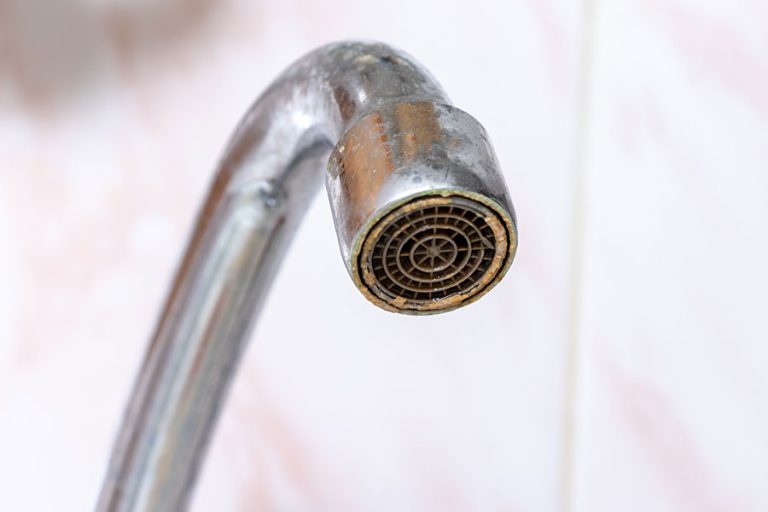
  • White or gray crust on faucets and showerheads
  • Spots on glass, sinks, and dishes
  • Scale inside kettles and coffee machines
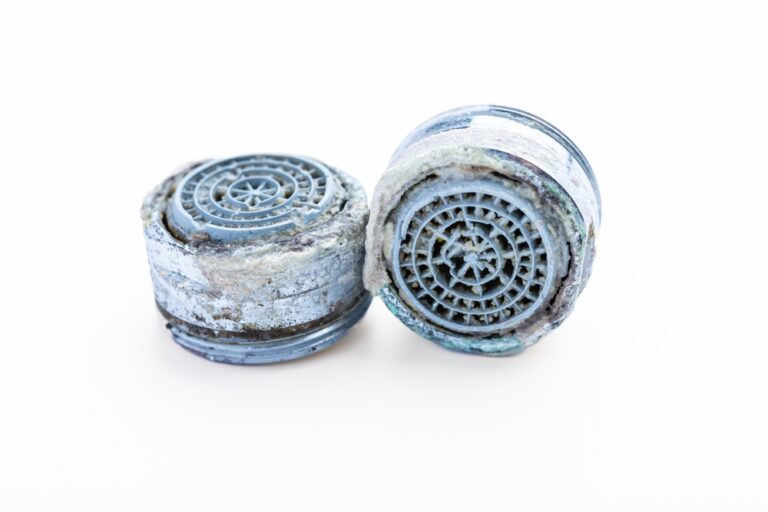
  • Reduced flow through aerators or shower nozzles
  • Longer heating time or unusual noise from a water heater
  • Repeated appliance descaling
  • Soap scum and reduced lather

These signs support a hardness diagnosis, but testing is still useful. Similar discoloration can come from iron, manganese, corrosion products, or sediment.

Is Limescale Harmful to Health?

Calcium and magnesium hardness are generally treated as aesthetic and operational water-quality issues rather than evidence of a health hazard. However, that does not mean every glass of cloudy or discolored water should be ignored. A hardness result does not test for lead, arsenic, microorganisms, nitrate, or other contaminants.

Claims that limescale itself causes kidney stones, serious disease, or widespread bacterial contamination require evidence that is not established by the presence of a white deposit. If health is the concern, use a qualified water test and medical advice rather than appearance alone.

How Limescale Affects a Home

Water Heaters and Heating Elements

Scale can create an insulating layer on heated surfaces. The effect depends on deposit thickness, equipment design, temperature, and maintenance. It may contribute to longer heating cycles, noise, or reduced efficiency, but no responsible system should promise a fixed energy saving without property-specific measurements.

Appliances and Fixtures

Valves, heating elements, spray nozzles, coffee machines, dishwashers, and washing machines may require more frequent cleaning in hard-water areas. Severe buildup can restrict small passages and accelerate wear.

Pipes and Water Pressure

Scale can narrow openings in some systems, especially at aerators, valves, and hot-water components. Low pressure can also result from municipal supply, a pressure regulator, corrosion, leaks, clogged cartridges, or pipe sizing. Treating hardness will not fix every pressure problem.

Ways to Remove Existing Limescale

For surface deposits, use a method approved for the material. Diluted vinegar or citric acid can dissolve many calcium-carbonate deposits on compatible fixtures and appliances. Follow appliance instructions, avoid mixing cleaning chemicals, rinse thoroughly, and protect natural stone or sensitive finishes.

Cleaning does not change incoming water. Deposits will return if the underlying hardness and operating conditions remain the same.

Ways to Reduce New Limescale

Salt-Based Ion Exchange

A conventional softener exchanges calcium and magnesium for sodium or potassium ions. It can be highly effective for measured hardness, but it requires salt, regeneration water, drainage, maintenance, and correct sizing. The EPA recommends demand-initiated regeneration and efficient settings to limit unnecessary water and salt use.

Salt-Free Scale Conditioning

Conditioning technologies aim to reduce adherent scale or alter crystal behavior while leaving most hardness minerals in the water. They should not be described as softeners because they generally do not remove calcium and magnesium. Performance depends on water chemistry, flow, temperature, and the exact technology.

TipaTech presents the T-18 whole-house system as a point-of-entry option that combines fine filtration with scale-management objectives. Product selection should rely on current technical documentation and the conditions at the property rather than a universal promise of complete scale elimination.

Point-of-Use Membrane Treatment

Reverse osmosis and some membrane systems can reduce hardness and dissolved solids at a drinking-water tap. They do not protect the home’s hot-water equipment or every fixture. The LotusDY drinking-water system is a point-of-use option, so it should be evaluated for kitchen drinking water rather than presented as a whole-house scale solution.

Sediment Filtration

Sediment filters can capture suspended particles and loose scale fragments. They do not usually remove dissolved hardness minerals, so they may support a treatment train but are not a stand-alone hardness solution.

How to Choose the Right Approach

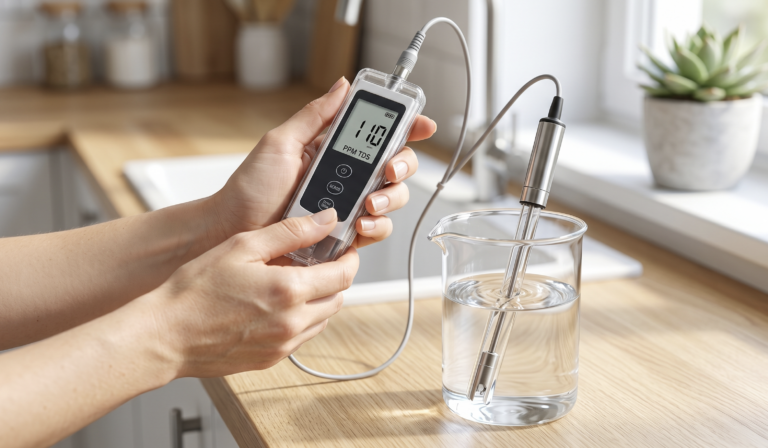
  1. Test hardness and review pH, alkalinity, iron, manganese, and sediment when relevant.
  2. Decide whether the goal is easier cleaning, appliance protection, true softening, or drinking-water treatment.
  3. Measure peak flow and available installation space.
  4. Compare salt, water, electricity, cartridges, servicing, and disposal over the full life of the system.
  5. Review documented performance for the exact model.
  6. Use a qualified installer when modifying the main water line.

For more background, see TipaTech’s guide to scale deposits and hard-water buildup.

The Bottom Line

Limescale can be reduced, but the phrase “stop it for good” oversimplifies the problem. Existing deposits need cleaning, and new formation depends on water chemistry and treatment. Test first, identify the outcome you need, and choose between softening, conditioning, point-of-use membranes, or routine maintenance based on evidence rather than marketing labels.

Limescale Prevention FAQs

How quickly can I expect to see results after installing a water filtration system?

It depends on the technology and the result being measured. New scale formation may change after installation, but an incoming-water system does not automatically dissolve existing deposits. Fixtures and appliances may still need manual descaling, and performance should be checked against the product’s documented claims.

It may help when restricted flow is caused by scale in aerators, valves, showerheads, or hot-water components. Low pressure can also have other causes, including supply pressure, leaks, corrosion, clogged filters, or a faulty regulator.

They do different jobs. Ion-exchange softeners remove calcium and magnesium and are appropriate when true soft water is required. Scale conditioners aim to reduce adherent deposits without removing most hardness minerals. The better choice depends on testing, goals, maintenance, discharge rules, and documented performance.

Severe or neglected scale can restrict passages, insulate heating elements, affect valves, and shorten the service life of some equipment. The extent depends on the appliance, deposit thickness, temperature, and maintenance history.

Calcium and magnesium hardness are generally considered aesthetic and operational issues rather than proof that water is unsafe. Limescale does not test for other contaminants, so use laboratory testing when health or safety is the concern.

Follow the appliance manufacturer’s instructions and adjust the interval to local hardness and use. Visible buildup, slower heating, reduced flow, or a maintenance indicator may signal that descaling is due.

whole house water filtration systems

Cleaner. Smarter. Healthier

At TipaTech we specialize in advanced whole house water filtration systems designed to protect your health and improve your water at every tap. Our patented technology reduces lead, bacteria, microplastics and harmful chemicals while preserving essential minerals like magnesium. Tested and Certified by IAPMO Compliance to: NSF/ANSI 42/61/372-2022 standards. Our systems deliver safe, eco-friendly, antioxidant-rich water with no electricity, no waste and no compromises.

Make Your Water Smarter

This article is for informational purposes only and is not medical advice. TipaTech products are designed to support water quality, not to diagnose, treat, cure, or prevent any disease. Product performance varies based on source water, usage, and professional installation. TipaTech disclaims any liability arising from reliance on this content.

About the Author

Baruch Ziser

Founder & Senior Scientific Consultant | Inventor of the TipaTech Filtration Systems

Baruch Ziser is a leading expert in water technology with fifty years of experience. As the inventor of TipaTech filters and a senior scientist at the Technion’s INOVATEC program, he has developed advanced water systems that reduce impurities while retaining and adding the necessary minerals for optimal body function. His innovations are recognized globally for improving drinking water quality in homes and agriculture.

The TipaTech Water Filtration Systems have been Tested and Certified by IAPMO

& Compliance to NSF/ANSI/CAN standards

NSF/ANSI/CAN Standards | IAPMO, R&T, UPC and the Standards Council of Canada

More to Know

DID YOU KNOW?  ·  HARD WATER & LIMESCALE

Limescale in Water: Causes, Effects and How to Reduce It

Learn what causes limescale in water, how it affects fixtures and appliances, and how softeners, conditioners and membranes differ.

By Baruch Ziser Updated July 13, 2026 8 min read
Limescale in Water: Causes, Effects and How to Reduce It
TOPICHard Water & Limescale
READING TIME8 minutes
FIRST PUBLISHEDMay 14, 2025

Limescale is the hard, chalky deposit that forms when minerals in hard water precipitate on surfaces. It commonly appears on faucets, shower screens, kettles, coffee machines, water-heater elements, and inside plumbing. It is mainly an operational and maintenance problem, not proof that the water is unsafe.

The best solution depends on the goal. Cleaning removes existing deposits. A salt-based softener removes hardness minerals. A scale conditioner may change how deposits form without removing the minerals. A drinking-water membrane can reduce hardness at one tap. These methods are not interchangeable.

What Is Limescale?

Limescale is made primarily of calcium carbonate, with possible contributions from magnesium compounds, silica, iron, and other materials in the water. Hard water contains dissolved calcium and magnesium. When conditions change through heating, evaporation, pressure, or carbon-dioxide loss, some minerals can leave solution and form solid scale.

The U.S. Geological Survey explains that water hardness is mainly caused by dissolved calcium and magnesium. Hardness varies by source and local geology, so a regional map cannot replace a test at a specific property.

Hard Water and Limescale Are Not the Same Thing

Hard water is the condition in the water. Limescale is a deposit that can result from that condition. A sediment filter may catch loose flakes, rust, or sand, but it does not normally remove dissolved calcium and magnesium. This distinction prevents a common buying mistake: choosing a particle filter for a dissolved-mineral problem.

What Causes Limescale to Form?

  • Higher concentrations of calcium and magnesium
  • Heating water in kettles, coffee machines, boilers, and water heaters
  • Evaporation on shower glass, faucets, and fixtures
  • Changes in pH, alkalinity, pressure, or dissolved carbon dioxide
  • Long residence time and repeated heating cycles

There is no single temperature at which all limescale suddenly begins. Scale tendency depends on the full water chemistry and operating conditions. Higher temperatures often accelerate deposition, but a universal threshold would be misleading.

Common Signs of Limescale

  • White or gray crust on faucets and showerheads
  • Spots on glass, sinks, and dishes
  • Scale inside kettles and coffee machines
  • Reduced flow through aerators or shower nozzles
  • Longer heating time or unusual noise from a water heater
  • Repeated appliance descaling
  • Soap scum and reduced lather

These signs support a hardness diagnosis, but testing is still useful. Similar discoloration can come from iron, manganese, corrosion products, or sediment.

Is Limescale Harmful to Health?

Calcium and magnesium hardness are generally treated as aesthetic and operational water-quality issues rather than evidence of a health hazard. However, that does not mean every glass of cloudy or discolored water should be ignored. A hardness result does not test for lead, arsenic, microorganisms, nitrate, or other contaminants.

Claims that limescale itself causes kidney stones, serious disease, or widespread bacterial contamination require evidence that is not established by the presence of a white deposit. If health is the concern, use a qualified water test and medical advice rather than appearance alone.

How Limescale Affects a Home

Water Heaters and Heating Elements

Scale can create an insulating layer on heated surfaces. The effect depends on deposit thickness, equipment design, temperature, and maintenance. It may contribute to longer heating cycles, noise, or reduced efficiency, but no responsible system should promise a fixed energy saving without property-specific measurements.

Appliances and Fixtures

Valves, heating elements, spray nozzles, coffee machines, dishwashers, and washing machines may require more frequent cleaning in hard-water areas. Severe buildup can restrict small passages and accelerate wear.

Pipes and Water Pressure

Scale can narrow openings in some systems, especially at aerators, valves, and hot-water components. Low pressure can also result from municipal supply, a pressure regulator, corrosion, leaks, clogged cartridges, or pipe sizing. Treating hardness will not fix every pressure problem.

Ways to Remove Existing Limescale

For surface deposits, use a method approved for the material. Diluted vinegar or citric acid can dissolve many calcium-carbonate deposits on compatible fixtures and appliances. Follow appliance instructions, avoid mixing cleaning chemicals, rinse thoroughly, and protect natural stone or sensitive finishes.

Cleaning does not change incoming water. Deposits will return if the underlying hardness and operating conditions remain the same.

Ways to Reduce New Limescale

Salt-Based Ion Exchange

A conventional softener exchanges calcium and magnesium for sodium or potassium ions. It can be highly effective for measured hardness, but it requires salt, regeneration water, drainage, maintenance, and correct sizing. The EPA recommends demand-initiated regeneration and efficient settings to limit unnecessary water and salt use.

Salt-Free Scale Conditioning

Conditioning technologies aim to reduce adherent scale or alter crystal behavior while leaving most hardness minerals in the water. They should not be described as softeners because they generally do not remove calcium and magnesium. Performance depends on water chemistry, flow, temperature, and the exact technology.

TipaTech presents the T-18 whole-house system as a point-of-entry option that combines fine filtration with scale-management objectives. Product selection should rely on current technical documentation and the conditions at the property rather than a universal promise of complete scale elimination.

Point-of-Use Membrane Treatment

Reverse osmosis and some membrane systems can reduce hardness and dissolved solids at a drinking-water tap. They do not protect the home's hot-water equipment or every fixture. The LotusDY drinking-water system is a point-of-use option, so it should be evaluated for kitchen drinking water rather than presented as a whole-house scale solution.

Sediment Filtration

Sediment filters can capture suspended particles and loose scale fragments. They do not usually remove dissolved hardness minerals, so they may support a treatment train but are not a stand-alone hardness solution.

How to Choose the Right Approach

  1. Test hardness and review pH, alkalinity, iron, manganese, and sediment when relevant.
  2. Decide whether the goal is easier cleaning, appliance protection, true softening, or drinking-water treatment.
  3. Measure peak flow and available installation space.
  4. Compare salt, water, electricity, cartridges, servicing, and disposal over the full life of the system.
  5. Review documented performance for the exact model.
  6. Use a qualified installer when modifying the main water line.

For more background, see TipaTech's guide to scale deposits and hard-water buildup.

The Bottom Line

Limescale can be reduced, but the phrase "stop it for good" oversimplifies the problem. Existing deposits need cleaning, and new formation depends on water chemistry and treatment. Test first, identify the outcome you need, and choose between softening, conditioning, point-of-use membranes, or routine maintenance based on evidence rather than marketing labels.

Frequently Asked Questions

How quickly can I expect to see results after installing a water filtration system?

It depends on the technology and the result being measured. New scale formation may change after installation, but an incoming-water system does not automatically dissolve existing deposits. Fixtures and appliances may still need manual descaling, and performance should be checked against the product's documented claims.

Will reducing limescale buildup improve my water pressure?

It may help when restricted flow is caused by scale in aerators, valves, showerheads, or hot-water components. Low pressure can also have other causes, including supply pressure, leaks, corrosion, clogged filters, or a faulty regulator.

Are water softeners better than physical water conditioners?

They do different jobs. Ion-exchange softeners remove calcium and magnesium and are appropriate when true soft water is required. Scale conditioners aim to reduce adherent deposits without removing most hardness minerals. The better choice depends on testing, goals, maintenance, discharge rules, and documented performance.

Can limescale cause permanent damage to appliances?

Severe or neglected scale can restrict passages, insulate heating elements, affect valves, and shorten the service life of some equipment. The extent depends on the appliance, deposit thickness, temperature, and maintenance history.

Is limescale harmful to health?

Calcium and magnesium hardness are generally considered aesthetic and operational issues rather than proof that water is unsafe. Limescale does not test for other contaminants, so use laboratory testing when health or safety is the concern.

How often should I descale my coffee machine and kettle?

Follow the appliance manufacturer's instructions and adjust the interval to local hardness and use. Visible buildup, slower heating, reduced flow, or a maintenance indicator may signal that descaling is due.
FROM INFORMATION TO THE RIGHT NEXT STEP

Not sure what is affecting your water?

Start with the water source, available test results, property conditions and the treatment goal. TipaTech can help review the situation before a system is selected.

Baruch Ziser

ABOUT THE AUTHOR

Baruch Ziser

Founder & Senior Scientific Consultant | Inventor of the TipaTech Filtration Systems

Baruch Ziser is a leading expert in water technology with fifty years of experience. As the inventor of TipaTech filters and a senior scientist at the Technion’s INOVATEC program, he has developed advanced water systems that reduce impurities while retaining and adding the necessary minerals for optimal body function. His innovations are recognized globally for improving drinking water quality in homes and agriculture.

The TipaTech Water Filtration Systems have been Tested and Certified by IAPMO

& Compliance to NSF/ANSI/CAN standards

NSF/ANSI/CAN Standards | IAPMO, R&T, UPC and the Standards Council of Canada

Contact Us