Radon in water is mainly a concern for homes that use groundwater or a private well. Radon is a naturally occurring radioactive gas. It has no color, smell, or taste, and testing is the only way to know whether it is present.
The strongest evidence concerns radon in indoor air. The EPA identifies radon as a major lung-cancer risk and recommends testing homes. Radon dissolved in water can be released into indoor air when water is sprayed, heated, or agitated, which means a high well-water level may add to total household exposure.
How Radon Gets Into Water
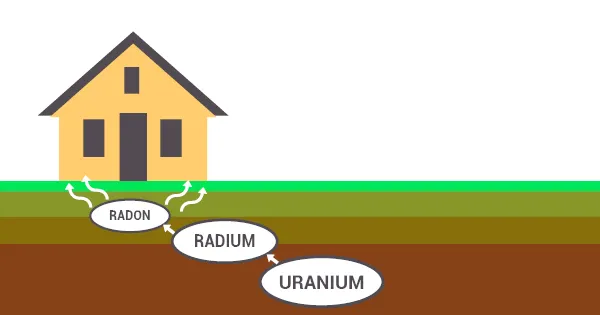
Radon forms as uranium and radium naturally decay in soil and rock. Groundwater can pick up radon as it moves through radon-producing formations. Private wells generally have more potential for elevated waterborne radon than surface-water supplies because rivers and reservoirs allow much of the gas to escape before the water reaches a home.
A map can show broad geologic potential, but it cannot determine the level in a specific home. Two nearby wells may have different results because of depth, geology, construction, and groundwater movement.
Radon in Air vs Radon in Water
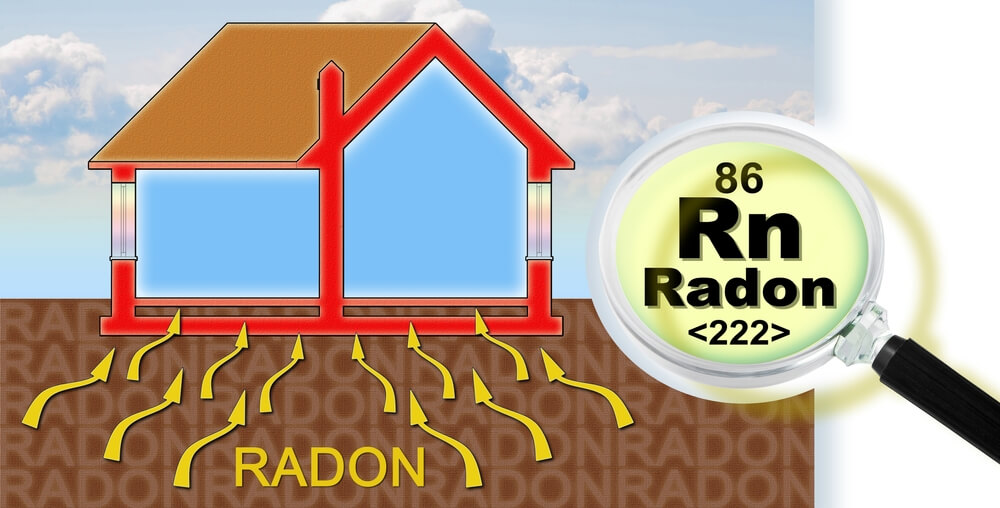
Most indoor radon enters from soil beneath the building through cracks, drains, construction joints, and other openings. Water is usually a smaller source, but it can matter when a private well contains a high concentration. Showering, dishwashing, laundry, and faucet use can transfer part of the dissolved gas into indoor air.
The first priority is therefore an indoor-air test. If the air level is elevated, the source should be investigated. Soil-gas mitigation and water treatment solve different pathways, and one should not be assumed to fix the other.
Health Risks of Radon Exposure
Long-term inhalation of radon and its decay products increases lung-cancer risk. Smoking and radon together create a much higher risk than either exposure alone. The evidence for drinking radon-containing water is less certain than the evidence for inhalation, so the article should not present stomach cancer as a guaranteed outcome.
The practical goal is to reduce total radon exposure. That requires testing, source identification, and a mitigation plan designed by a qualified professional.
How to Test for Radon in Water
- Test indoor air using an approved device or qualified professional.
- If the home uses a private well and air results are high, contact the state radon program or health department.
- Use a laboratory and sampling container designed specifically for radon in water.
- Follow the sampling instructions carefully because agitation and air space can let radon escape before analysis.
- Interpret the result together with the indoor-air level and local guidance.
Do not collect a general water sample in an ordinary open bottle. Radon is volatile, and poor technique can produce an artificially low result.
How Is Radon Removed From Well Water?
Whole-House Aeration
Aeration mixes water with air so radon transfers out of the water, then vents the gas safely outdoors. It is commonly used for higher concentrations and can achieve substantial reduction when correctly designed. The equipment needs ventilation, drainage, cleaning, and protection from freezing and fouling.
Granular Activated Carbon
Granular activated carbon can adsorb radon from water in some applications. The media can accumulate radioactive decay products, which affects service, placement, handling, and disposal. It should not be installed as an ordinary taste-and-odor filter without professional evaluation.
Why Point-of-Entry Treatment Matters
An under-sink device treats only one tap. It does not address radon released from showers, washing machines, toilets, or other fixtures. When water treatment is needed for radon, it is normally installed on the incoming line before the water is distributed through the home.
What Does Not Reliably Solve Radon in Water?
- Boiling water, which can release radon into indoor air
- A standard sediment filter
- A basic water softener
- UV disinfection
- A generic carbon cartridge without radon-specific design
- A point-of-use filter when exposure occurs throughout the house
Can the TipaTech T-18 Be Used for Radon?
The TipaTech T-18 is a whole-house water-treatment platform. Any recommendation for radon must be based on current model-specific performance data for radon, the measured concentration, flow rate, water chemistry, installation design, and local mitigation guidance. A general micron rating or broad filtration claim does not prove radon reduction.
Where radon is confirmed, the treatment professional should explain whether the proposed configuration uses aeration, adsorption, or another verified process, how exhaust or media will be handled, and how performance will be retested.
A Practical Radon Action Plan
- Test the home’s indoor air.
- Contact the state radon office if the result is elevated.
- Test private-well water when recommended.
- Separate soil-gas and water pathways.
- Use a qualified radon professional for system design.
- Retest air and water after mitigation.
- Maintain the equipment according to the verified design.
The Bottom Line
Radon is a serious indoor-air hazard, and well water can add to the problem in some homes. Start with air testing, investigate water only with correct sampling, and use a point-of-entry mitigation system when the water contribution is significant. Avoid boiling, generic filter claims, and one-size-fits-all solutions.