how to install a water filter
Table of Contents

Water filter installation is not only about connecting a housing to a pipe. The system must match the water problem, peak household flow, pipe size, pressure, available space, and maintenance plan. A correctly selected and installed system can treat water consistently without creating avoidable pressure loss, leaks, bypass, or difficult cartridge service.

The first decision is whether the home needs point-of-entry treatment for most household water, point-of-use treatment at one drinking-water tap, or a combination of both. Permanent plumbing changes should follow the manufacturer’s instructions and local code, and they should be completed or reviewed by a qualified installer.

Start With the Water, Not the Equipment

Before choosing a system, identify what you are trying to change. Customers on a public water system can review the utility’s Consumer Confidence Report. Private well owners should use appropriate laboratory testing and follow local guidance. The CDC’s home water treatment overview emphasizes that different technologies address different germs and chemicals.

Useful questions include:

  • Is the concern sediment, taste, chlorine, hardness, scale, microorganisms, lead, nitrate, arsenic, or another measured contaminant?
  • Does the issue affect every fixture or only drinking and cooking water?
  • What is the home’s peak flow rate and incoming water pressure?
  • Is the water supplied by a utility or a private well?
  • Which model-specific performance claims and certifications apply?

Whole-House vs Under-Sink Water Filter Installation

Whole-House or Point-of-Entry Systems

A whole-house system treats water near the point where the main supply enters the building. It may be appropriate when the goal involves sediment, chlorine, scale management, or another issue that affects showers, appliances, plumbing, and multiple taps. Sizing matters because all active fixtures may draw water through the system.

Under-Sink or Point-of-Use Systems

An under-sink system treats water at one faucet, usually for drinking and cooking. Point-of-use treatment can use a more specialized process without requiring the same flow rate as a whole-house unit. It does not treat showers, laundry, water heaters, or other fixtures.

Using Both Treatment Levels

Some homes use point-of-entry treatment for broad household concerns and point-of-use treatment for drinking water. This layered approach is useful only when each stage has a defined job. More stages are not automatically better, and an unnecessary stage can add pressure loss, maintenance, and cost.

Water Filter Installation Planning Checklist

Flow Rate and Pipe Size

The system must support realistic peak demand, not only average daily use. An undersized unit may reduce pressure when several fixtures operate at once. The installer should confirm the service-line size, expected flow, and the pressure drop stated for the actual model and cartridge condition.

Location and Service Clearance

Choose a location protected from freezing, direct heat, flooding, and physical damage. Leave enough room to remove housings, replace media, read gauges, operate valves, and manage any drain or flushing connection. A unit that fits physically but cannot be serviced is not properly planned.

Shutoff, Bypass, and Isolation

A practical installation normally allows the treatment equipment to be isolated for service. A properly designed bypass can keep water available during maintenance, but it must not be left open during normal treatment. Valve arrangement should follow the system instructions and local plumbing requirements.

Drainage, Power, and Backflow Requirements

Some systems need a drain, electrical outlet, air gap, or backflow protection. Others operate without power or wastewater. Confirm these requirements before selecting the location. Do not improvise a drain or electrical connection after the plumbing work is complete.

Typical Whole-House Water Filter Installation Process

  1. Review the water analysis and select a system with relevant, model-specific performance data.
  2. Confirm flow, pressure, pipe diameter, installation orientation, and service clearance.
  3. Shut off and depressurize the water line using safe plumbing procedures.
  4. Install the approved valve, bypass, unions, supports, and treatment unit according to the manufacturer’s diagram.
  5. Open the supply slowly, purge air, flush the system, and follow all startup instructions.
  6. Inspect every joint for leaks and confirm acceptable pressure at multiple fixtures.
  7. Record the installation date, cartridge or media schedule, pressure readings, and any baseline water-test results.

This is an overview, not a substitute for the manual or a licensed professional. Plumbing materials, pressure-control devices, backflow rules, well equipment, and building codes vary by property and location.

Can You Install a Water Filter Yourself?

A simple countertop or faucet-mounted product may be suitable for a careful DIY installation. Permanent under-sink connections and whole-house systems involve leak risk, sanitation, pressure, pipe support, and local code. A plumber or qualified water-treatment installer is usually the safer choice when the main line is cut or when the system requires drainage, electricity, a pressure regulator, or integration with a private well.

Commissioning and Maintenance

Installation is not complete when the last fitting is tightened. New systems may require flushing, cartridge soaking, media preparation, valve programming, or a startup sequence. After commissioning, check for leaks and pressure changes again after normal household use.

Maintenance should be based on the manufacturer’s schedule and actual water conditions. A cartridge can load faster in water with heavy sediment. Warning signs include falling pressure, channeling, unusual taste or odor, leaks, expired UV lamps, and treatment results that no longer match the target. Where a contaminant reduction claim matters, follow-up testing is more useful than judging water only by appearance.
water filter installation

Installing TipaTech Systems

T-18 Whole-House System

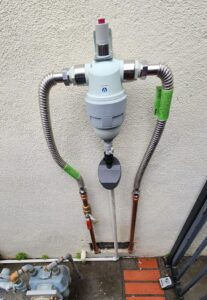
The TipaTech T-18 is designed as a whole-house filtration and water-conditioning system. Its installation should be sized for the property’s flow, pressure, plumbing, source-water quality, and chosen configuration. The exact contaminant and scale-management claims should be checked against current documentation for the model and treatment stages being supplied.

LotusDY Under-Sink System

The LotusDY is designed for point-of-use treatment at a drinking-water tap. Its location, faucet connection, pressure range, flushing procedure, and cartridge service requirements should follow the current installation instructions. An under-sink unit does not replace whole-house treatment when the problem affects the full plumbing system.

TipaTech can help determine whether the property needs a whole-house system, an under-sink system, or both. The recommendation should begin with water data and installation conditions, not a universal package. See the broader guide to purifying water at home for a comparison of treatment methods, or explore TipaTech water filtration systems.

The Bottom Line

Successful water filter installation starts with a defined water problem and ends with commissioning, maintenance, and verification. Match the treatment to the water, size it for peak flow, provide safe access for service, follow the exact installation manual, and use a qualified professional where permanent plumbing work is involved.

Frequently Asked Questions

Where should a whole-house water filter be installed?

It is generally installed near the point where the main water supply enters the building and before the fixtures that need treatment. The exact location must also provide protection, drainage or power when required, and enough room for service.

Does a whole-house filter reduce water pressure?

Every treatment stage creates some pressure drop. A correctly sized system should keep it within an acceptable range. Pressure loss can increase when a unit is undersized or a cartridge becomes loaded with sediment.

Do I need a plumber to install a water filtration system?

A qualified plumber or water-treatment installer is recommended for permanent under-sink and whole-house plumbing changes. Simple countertop products may be suitable for DIY use when the manufacturer’s instructions allow it.

Should the filter be installed before or after the water heater?

Whole-house treatment is commonly installed on the cold-water main before water branches to the heater and other fixtures. The correct arrangement depends on the system, the plumbing design, and the manufacturer’s instructions.

How do I know whether the installation is working?

Check for leaks, stable pressure, correct valve position, completed flushing, and normal flow. When the system targets a measurable contaminant or water characteristic, compare appropriate before-and-after test results.

whole house water filtration systems

Cleaner. Smarter. Healthier

At TipaTech we specialize in advanced whole house water filtration systems designed to protect your health and improve your water at every tap. Our patented technology reduces lead, bacteria, microplastics and harmful chemicals while preserving essential minerals like magnesium. Tested and Certified by IAPMO Compliance to: NSF/ANSI 42/61/372-2022 standards. Our systems deliver safe, eco-friendly, antioxidant-rich water with no electricity, no waste and no compromises.

Make Your Water Smarter

This article is for informational purposes only and is not medical advice. TipaTech products are designed to support water quality, not to diagnose, treat, cure, or prevent any disease. Product performance varies based on source water, usage, and professional installation. TipaTech disclaims any liability arising from reliance on this content.

About the Author

Baruch Ziser

Founder & Senior Scientific Consultant | Inventor of the TipaTech Filtration Systems

Baruch Ziser is a leading expert in water technology with fifty years of experience. As the inventor of TipaTech filters and a senior scientist at the Technion’s INOVATEC program, he has developed advanced water systems that reduce impurities while retaining and adding the necessary minerals for optimal body function. His innovations are recognized globally for improving drinking water quality in homes and agriculture.

The TipaTech Water Filtration Systems have been Tested and Certified by IAPMO

& Compliance to NSF/ANSI/CAN standards

NSF/ANSI/CAN Standards | IAPMO, R&T, UPC and the Standards Council of Canada

More to Know

DID YOU KNOW?  ·  WATER FILTRATION SYSTEMS

Water Filter Installation: Whole-House and Under-Sink Guide

Plan a water filter installation correctly. Compare whole-house and under-sink systems, sizing, location, startup, maintenance, and testing.

By Baruch Ziser Updated July 22, 2026 4 min read
Water Filter Installation: Whole-House and Under-Sink Guide
TOPICWater Filtration Systems
READING TIME4 minutes
FIRST PUBLISHEDJanuary 26, 2025

Water filter installation is not only about connecting a housing to a pipe. The system must match the water problem, peak household flow, pipe size, pressure, available space, and maintenance plan. A correctly selected and installed system can treat water consistently without creating avoidable pressure loss, leaks, bypass, or difficult cartridge service.

The first decision is whether the home needs point-of-entry treatment for most household water, point-of-use treatment at one drinking-water tap, or a combination of both. Permanent plumbing changes should follow the manufacturer's instructions and local code, and they should be completed or reviewed by a qualified installer.

Start With the Water, Not the Equipment

Before choosing a system, identify what you are trying to change. Customers on a public water system can review the utility's Consumer Confidence Report. Private well owners should use appropriate laboratory testing and follow local guidance. The CDC's home water treatment overview emphasizes that different technologies address different germs and chemicals.

Useful questions include:

  • Is the concern sediment, taste, chlorine, hardness, scale, microorganisms, lead, nitrate, arsenic, or another measured contaminant?
  • Does the issue affect every fixture or only drinking and cooking water?
  • What is the home's peak flow rate and incoming water pressure?
  • Is the water supplied by a utility or a private well?
  • Which model-specific performance claims and certifications apply?

Whole-House vs Under-Sink Water Filter Installation

Whole-House or Point-of-Entry Systems

A whole-house system treats water near the point where the main supply enters the building. It may be appropriate when the goal involves sediment, chlorine, scale management, or another issue that affects showers, appliances, plumbing, and multiple taps. Sizing matters because all active fixtures may draw water through the system.

Under-Sink or Point-of-Use Systems

An under-sink system treats water at one faucet, usually for drinking and cooking. Point-of-use treatment can use a more specialized process without requiring the same flow rate as a whole-house unit. It does not treat showers, laundry, water heaters, or other fixtures.

Using Both Treatment Levels

Some homes use point-of-entry treatment for broad household concerns and point-of-use treatment for drinking water. This layered approach is useful only when each stage has a defined job. More stages are not automatically better, and an unnecessary stage can add pressure loss, maintenance, and cost.

Water Filter Installation Planning Checklist

Flow Rate and Pipe Size

The system must support realistic peak demand, not only average daily use. An undersized unit may reduce pressure when several fixtures operate at once. The installer should confirm the service-line size, expected flow, and the pressure drop stated for the actual model and cartridge condition.

Location and Service Clearance

Choose a location protected from freezing, direct heat, flooding, and physical damage. Leave enough room to remove housings, replace media, read gauges, operate valves, and manage any drain or flushing connection. A unit that fits physically but cannot be serviced is not properly planned.

Shutoff, Bypass, and Isolation

A practical installation normally allows the treatment equipment to be isolated for service. A properly designed bypass can keep water available during maintenance, but it must not be left open during normal treatment. Valve arrangement should follow the system instructions and local plumbing requirements.

Drainage, Power, and Backflow Requirements

Some systems need a drain, electrical outlet, air gap, or backflow protection. Others operate without power or wastewater. Confirm these requirements before selecting the location. Do not improvise a drain or electrical connection after the plumbing work is complete.

Typical Whole-House Water Filter Installation Process

  1. Review the water analysis and select a system with relevant, model-specific performance data.
  2. Confirm flow, pressure, pipe diameter, installation orientation, and service clearance.
  3. Shut off and depressurize the water line using safe plumbing procedures.
  4. Install the approved valve, bypass, unions, supports, and treatment unit according to the manufacturer's diagram.
  5. Open the supply slowly, purge air, flush the system, and follow all startup instructions.
  6. Inspect every joint for leaks and confirm acceptable pressure at multiple fixtures.
  7. Record the installation date, cartridge or media schedule, pressure readings, and any baseline water-test results.

This is an overview, not a substitute for the manual or a licensed professional. Plumbing materials, pressure-control devices, backflow rules, well equipment, and building codes vary by property and location.

Can You Install a Water Filter Yourself?

A simple countertop or faucet-mounted product may be suitable for a careful DIY installation. Permanent under-sink connections and whole-house systems involve leak risk, sanitation, pressure, pipe support, and local code. A plumber or qualified water-treatment installer is usually the safer choice when the main line is cut or when the system requires drainage, electricity, a pressure regulator, or integration with a private well.

Commissioning and Maintenance

Installation is not complete when the last fitting is tightened. New systems may require flushing, cartridge soaking, media preparation, valve programming, or a startup sequence. After commissioning, check for leaks and pressure changes again after normal household use.

Maintenance should be based on the manufacturer's schedule and actual water conditions. A cartridge can load faster in water with heavy sediment. Warning signs include falling pressure, channeling, unusual taste or odor, leaks, expired UV lamps, and treatment results that no longer match the target. Where a contaminant reduction claim matters, follow-up testing is more useful than judging water only by appearance.

Installing TipaTech Systems

T-18 Whole-House System

The TipaTech T-18 is designed as a whole-house filtration and water-conditioning system. Its installation should be sized for the property's flow, pressure, plumbing, source-water quality, and chosen configuration. The exact contaminant and scale-management claims should be checked against current documentation for the model and treatment stages being supplied.

LotusDY Under-Sink System

The LotusDY is designed for point-of-use treatment at a drinking-water tap. Its location, faucet connection, pressure range, flushing procedure, and cartridge service requirements should follow the current installation instructions. An under-sink unit does not replace whole-house treatment when the problem affects the full plumbing system.

TipaTech can help determine whether the property needs a whole-house system, an under-sink system, or both. The recommendation should begin with water data and installation conditions, not a universal package. See the broader guide to purifying water at home for a comparison of treatment methods, or explore TipaTech water filtration systems.

The Bottom Line

Successful water filter installation starts with a defined water problem and ends with commissioning, maintenance, and verification. Match the treatment to the water, size it for peak flow, provide safe access for service, follow the exact installation manual, and use a qualified professional where permanent plumbing work is involved.

Frequently Asked Questions

Where should a whole-house water filter be installed?

It is generally installed near the point where the main water supply enters the building and before the fixtures that need treatment. The exact location must also provide protection, drainage or power when required, and enough room for service.

Does a whole-house filter reduce water pressure?

Every treatment stage creates some pressure drop. A correctly sized system should keep it within an acceptable range. Pressure loss can increase when a unit is undersized or a cartridge becomes loaded with sediment.

Do I need a plumber to install a water filtration system?

A qualified plumber or water-treatment installer is recommended for permanent under-sink and whole-house plumbing changes. Simple countertop products may be suitable for DIY use when the manufacturer's instructions allow it.

Should the filter be installed before or after the water heater?

Whole-house treatment is commonly installed on the cold-water main before water branches to the heater and other fixtures. The correct arrangement depends on the system, the plumbing design, and the manufacturer's instructions.

How do I know whether the installation is working?

Check for leaks, stable pressure, correct valve position, completed flushing, and normal flow. When the system targets a measurable contaminant or water characteristic, compare appropriate before-and-after test results.
FROM INFORMATION TO THE RIGHT NEXT STEP

Not sure what is affecting your water?

Start with the water source, available test results, property conditions and the treatment goal. TipaTech can help review the situation before a system is selected.

Baruch Ziser

ABOUT THE AUTHOR

Baruch Ziser

Founder & Senior Scientific Consultant | Inventor of the TipaTech Filtration Systems

Baruch Ziser is a leading expert in water technology with fifty years of experience. As the inventor of TipaTech filters and a senior scientist at the Technion’s INOVATEC program, he has developed advanced water systems that reduce impurities while retaining and adding the necessary minerals for optimal body function. His innovations are recognized globally for improving drinking water quality in homes and agriculture.

The TipaTech Water Filtration Systems have been Tested and Certified by IAPMO

& Compliance to NSF/ANSI/CAN standards

NSF/ANSI/CAN Standards | IAPMO, R&T, UPC and the Standards Council of Canada

Contact Us