Free radicals are often described as harmful molecules that must be eliminated, but that is an oversimplification. The body produces reactive molecules during normal metabolism, immune activity, and cell signaling. Problems can arise when production exceeds the body’s ability to regulate and repair the resulting oxidative stress.
“Antioxidant water” is a marketing term used for several different products, including alkaline water, electrolyzed-reduced water, and water containing dissolved molecular hydrogen. These products are often associated with a negative ORP value. ORP is a real water measurement, but it is not a medical diagnosis or proof that drinking the water will prevent disease.
What Are Free Radicals?
Free radicals are atoms or molecules with an unpaired electron, which makes them reactive. Reactive oxygen species are a broader group that includes free radicals and other oxygen-containing compounds. The body uses some of these molecules for normal functions, including immune defense and cell communication.
When reactive molecules overwhelm antioxidant and repair systems, oxidative stress can damage lipids, proteins, and DNA. A review in Frontiers in Chemistry discusses the chemistry of oxidative stress and the limits of treating every antioxidant effect as interchangeable.
Where Do Antioxidants Come From?
The body produces antioxidant enzymes and other protective molecules. Food also supplies compounds such as vitamin C, vitamin E, carotenoids, and polyphenols. The National Center for Complementary and Integrative Health explains that antioxidant biology is complex and that high amounts are not automatically better.
Evidence linking fruit- and vegetable-rich diets with better health should not be used as proof that every antioxidant supplement or water product produces the same outcome.
What Is Antioxidant Water?
There is no single regulatory definition that covers every product sold as antioxidant water. The label may refer to one or more of the following:
- A negative oxidation-reduction potential
- Alkaline pH
- Electrolyzed-reduced water
- Dissolved molecular hydrogen
- Added minerals or other ingredients
pH, ORP, and dissolved hydrogen are different measurements. They can influence one another, but they should not be treated as synonyms or used interchangeably in product claims.
What Does ORP Mean in Water?
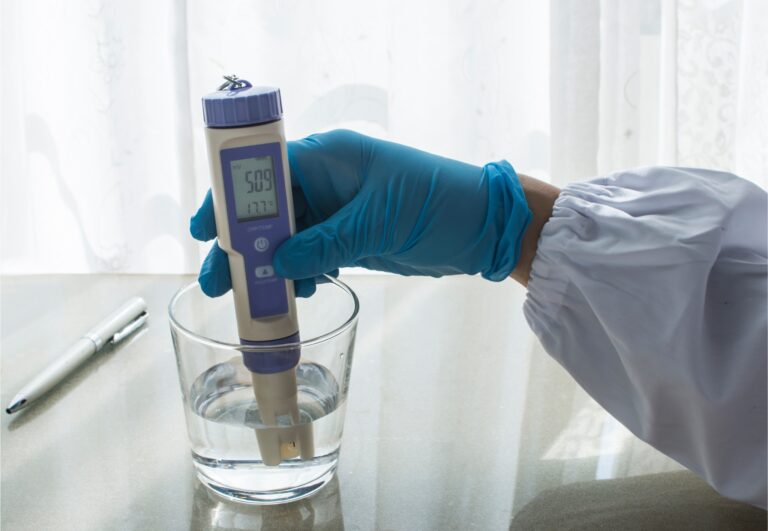
ORP, or oxidation-reduction potential, is an electrical measurement expressed in millivolts. It describes the tendency of a water sample to participate in oxidation or reduction reactions under the conditions of the measurement.
A negative ORP can indicate reducing conditions in the sample. It does not, by itself, prove that the water will neutralize free radicals inside the body, reach a particular tissue, slow aging, improve immunity, prevent cancer, or treat another disease.
ORP is affected by the complete water chemistry and by measurement conditions. Product claims still require independent testing of the exact water produced by the device and, for health claims, relevant human evidence.
Is Negative ORP the Same as Molecular Hydrogen?
No. Dissolved molecular hydrogen can contribute to a negative ORP, but ORP can also be affected by pH, temperature, dissolved oxygen, minerals, and other reducing or oxidizing substances. Two waters with similar ORP readings may not have the same composition.
That is why an ORP number should not substitute for a direct dissolved-hydrogen measurement when a product is marketed as hydrogen-rich water.
What Does Research on Electrolyzed-Reduced Water Show?
Laboratory and small human studies have examined electrolyzed-reduced water and molecular hydrogen. A review in the International Journal of Molecular Sciences discusses possible mechanisms and research findings.
These studies are not a universal clinical endorsement. Results can depend on hydrogen concentration, production method, storage, study population, outcome, and duration. Evidence from a laboratory experiment or a small trial cannot support a claim that any negative-ORP water prevents a broad list of chronic diseases.
What Does Antioxidant Water Do?
The most certain benefit of any safe drinking water is hydration. A person who prefers the taste may drink more water, but that is different from proving an antioxidant treatment effect.
Current evidence does not justify promises that antioxidant water:
- Prevents cancer, heart disease, diabetes, or neurological disease
- Reverses aging or removes wrinkles
- Detoxifies the body
- Strengthens the immune system in a clinically meaningful way
- Treats fatigue, digestive disease, or inflammation
The NCCIH’s current antioxidant guidance notes that even antioxidant supplements have not been shown to prevent most chronic diseases, and high doses can sometimes cause harm. Water claims should be evaluated with at least the same level of caution.
How to Evaluate an Antioxidant Water Claim
- Ask what makes the water “antioxidant”: ORP, hydrogen, pH, minerals, or an additive.
- Check whether ORP and dissolved hydrogen were measured at the time of consumption.
- Look for independent testing of the exact device or product.
- Separate water-quality claims from medical claims.
- Be cautious when a laboratory measurement is presented as proof of disease prevention.
- Do not replace medical care, medication, or a balanced diet with a water product.
Where TipaTech Fits
According to TipaTech’s current product information, the Lotus DY under-sink system is designed to produce water with lower ORP values and dissolved molecular hydrogen. Actual values depend on the source water, system configuration, storage, and the time of measurement.
These are measurable water characteristics, not proof that the system prevents or treats disease. Product-specific testing should report pH, ORP, dissolved hydrogen, flow, mineral content, and contaminant reduction under defined conditions. For a deeper explanation of the measurement, see TipaTech’s guide to ORP in water.
The Bottom Line
Free radicals and oxidative stress are real biological concepts. ORP is a real water-quality measurement. The leap from those facts to broad health promises about antioxidant water is where caution is needed. Hydration, verified water quality, and transparent product data are meaningful benefits. Disease prevention and treatment claims require strong clinical evidence that an ORP number alone cannot provide.
Frequently Asked Questions
What is antioxidant water?
Antioxidant water is a marketing term that may refer to alkaline water, negative-ORP water, electrolyzed-reduced water, molecular hydrogen water, or water with added ingredients. The exact composition matters.
What does antioxidant water do?
Its most certain role is hydration. Some products have been studied for possible biological effects, but a negative ORP value alone does not prove that the water prevents disease or neutralizes free radicals inside the body.
Is negative ORP water proven to improve health?
No broad health conclusion can be made from ORP alone. Evidence depends on the exact water composition, hydrogen concentration, product, study design, and clinical outcome.
Is alkaline water the same as antioxidant water?
Not necessarily. Alkaline pH and ORP measure different properties. Alkaline water can have a positive or negative ORP, and negative ORP does not automatically mean the water has a clinically meaningful amount of molecular hydrogen.
Can antioxidant water replace antioxidant-rich foods or medical care?
No. It should not replace a balanced diet, prescribed treatment, or medical advice.