Chlorine in tap water serves a clear public-health purpose: it kills germs during treatment and leaves a residual that continues working as water travels through pipes. At the same time, many homeowners want less chlorine taste or odor at the tap or in the shower.
The right question is not whether chlorine is simply good or bad. It is how much is present, whether the utility uses chlorine or chloramine, what the household wants to improve, and what changes when a whole-house system removes disinfectant at the point of entry.
Why Is Chlorine Added to Tap Water?
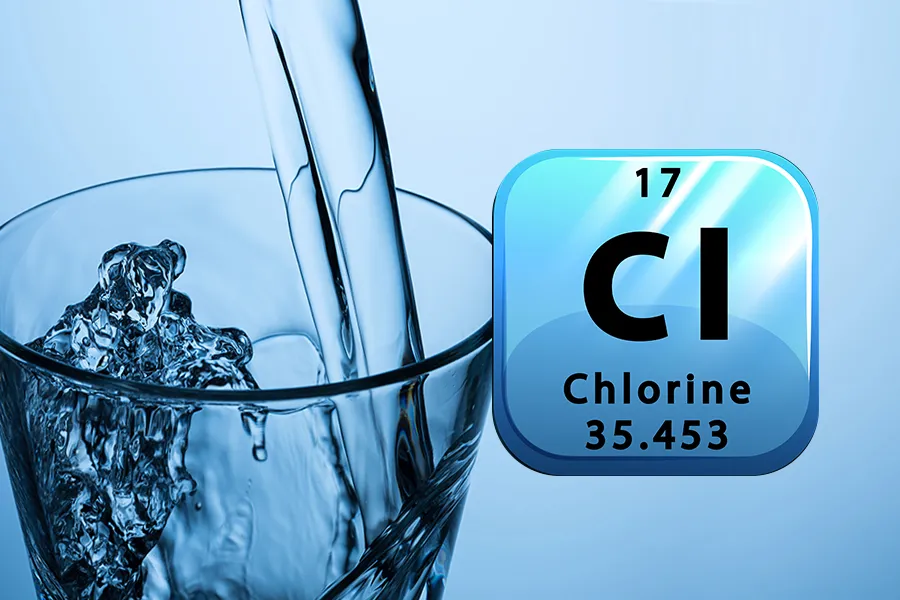
Water utilities use chlorine or chloramine to control microorganisms. The Centers for Disease Control and Prevention explains that low levels of disinfectant continue killing germs as water moves through the distribution system.
In the United States, chlorine or chloramine levels up to 4 milligrams per liter are considered safe under federal drinking-water rules. Utilities must also control disinfection byproducts, which can form when disinfectants react with natural material in the water.
Chlorine and Chloramine Are Not the Same
Free chlorine acts quickly but can dissipate faster. Chloramine lasts longer in distribution pipes and is used by many utilities for that reason. A filter that reduces chlorine may not reduce chloramine to the same degree, so the first step is to check the annual Consumer Confidence Report or ask the utility which disinfectant it uses.
Letting water sit can reduce free chlorine over time, but it does not remove chloramine in the same way. Product selection should be based on the actual disinfectant and the system’s verified performance.
What Happens When Chlorine Is Removed at the Point of Entry?
A point-of-entry system treats water before it travels through most of the home’s plumbing. If it removes the disinfectant completely, the downstream pipes no longer receive that residual protection.
This does not mean that every fully dechlorinated home will develop a bacterial problem. It means the plumbing conditions and maintenance become more important. Warm temperatures, low-use fixtures, long periods of stagnation, sediment, scale, and biofilm can all support microbial growth.
A chlorine residual also does not guarantee that a building is protected from Legionella. Large buildings, healthcare properties, hotels, and other complex systems may need a formal water-management program with temperature control, flushing, monitoring, and corrective treatment.
Why Some Households Choose to Reduce Chlorine
Reducing chlorine can improve taste and odor and may make bathing water more pleasant for people who dislike the smell. Activated carbon is commonly used for this purpose. The result depends on contact time, flow rate, media type, water chemistry, and cartridge condition.
There is a difference between reducing chlorine and making broad health claims about chlorine-free water. The low levels allowed in public tap water are considered safe. A filtration decision should be connected to a specific goal, such as taste, odor, a verified contaminant, or a household process that requires dechlorinated water.
Whole-House Reduction vs. Point-of-Use Filtration
Point-of-Use Treatment
A kitchen or drinking-water filter treats a smaller volume at one fixture. It can reduce chlorine taste and odor where the water is consumed while leaving the utility disinfectant in the rest of the plumbing.
Whole-House Treatment
A whole-house filter treats showers, appliances, and other fixtures. It can deliver a more consistent sensory improvement, but it also requires correct sizing and maintenance. When the design removes nearly all disinfectant, the owner should understand the downstream plumbing conditions and any need for additional microbial control.
How TipaTech Approaches Chlorine Reduction
TipaTech’s current product information describes the T-18 whole-house system as designed to reduce chlorine while maintaining a residual level rather than completely dechlorinating all household water. That approach is intended to balance taste and odor improvement with continued disinfectant presence in the plumbing.
The actual result depends on the incoming chlorine or chloramine level, water flow, media, installation, and maintenance. A product claim should be evaluated against the exact model and test documentation, especially where the utility uses chloramine.
Questions to Ask Before Installing a Whole-House Chlorine Filter
- Does the utility use free chlorine or chloramine?
- What is the current disinfectant level at the property?
- Is the goal taste, odor, shower water, or another specific issue?
- Does the system reduce or fully remove the disinfectant?
- What flow rate and contact time are required?
- How often must the media or cartridge be serviced?
- Are there low-use fixtures, warm-water loops, or other stagnation risks?
- Is additional microbiological water purification needed for a confirmed problem?
The Bottom Line
Chlorine in tap water is a controlled disinfectant, not an accidental contaminant. Reducing it can improve taste and odor, but complete point-of-entry removal changes the conditions inside the home’s plumbing. The best design starts with utility data, a clear treatment goal, verified product performance, and a realistic maintenance plan.
Frequently Asked Questions
Is chlorine in tap water safe?
The CDC states that chlorine or chloramine levels up to 4 milligrams per liter are considered safe in drinking water. Utilities also monitor disinfectant byproducts and must comply with drinking-water rules.
Why is chlorine added to tap water?
Utilities use chlorine or chloramine to kill germs during treatment and to provide continuing protection as water travels through distribution pipes.
Should a whole-house filter remove all chlorine?
Not automatically. Complete removal can improve taste and odor, but it also removes the disinfectant residual from downstream plumbing. The decision should consider the water source, disinfectant type, plumbing conditions, maintenance, and any microbial-control needs.
Does letting tap water sit remove chlorine?
Letting water sit can reduce free chlorine over time, but it does not remove chloramine in the same way. Check which disinfectant your utility uses.
Can chlorine prevent Legionella in a home?
A disinfectant residual can help limit microbial regrowth, but it does not guarantee Legionella control. Temperature, stagnation, biofilm, plumbing design, and maintenance also matter.